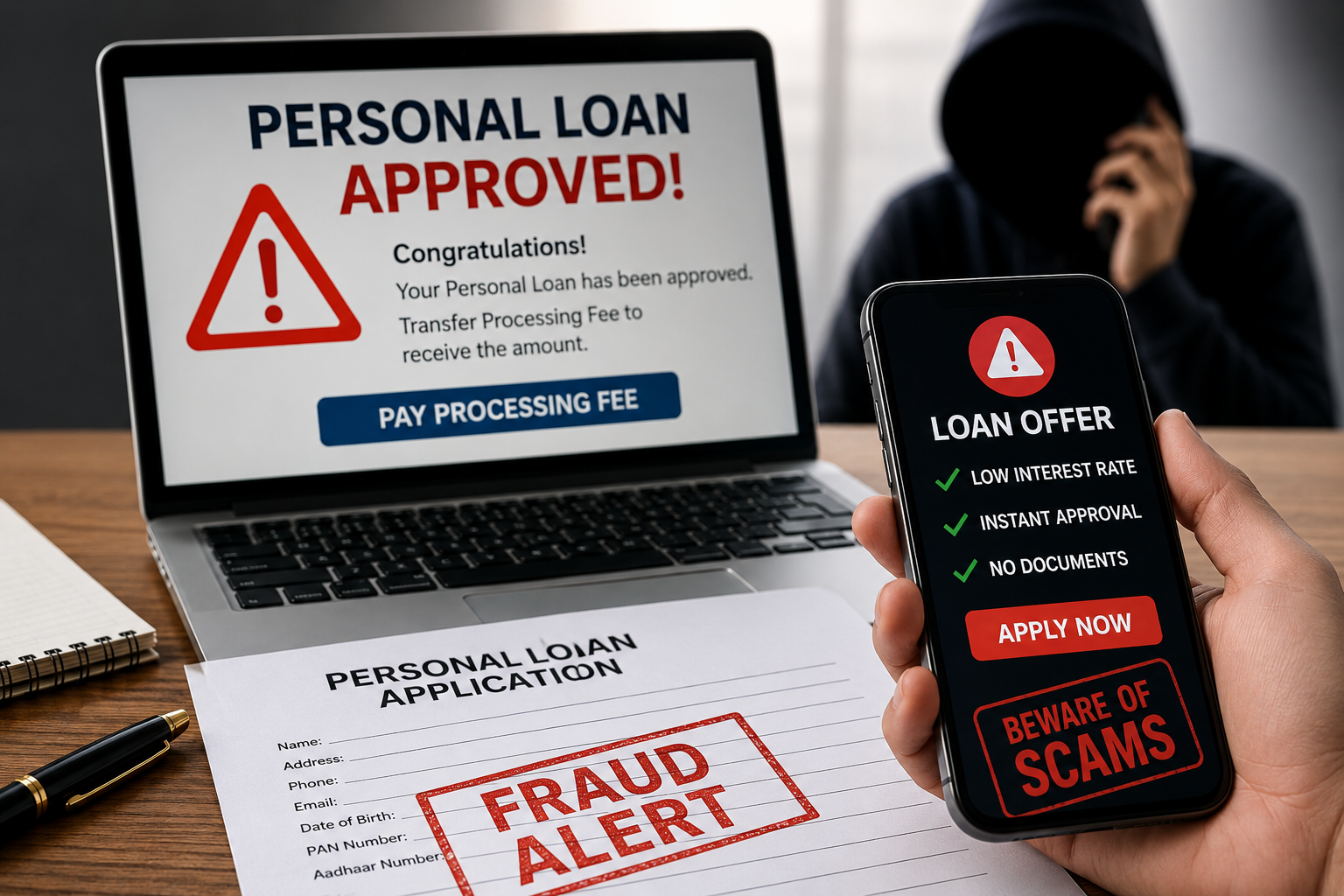
Cyber fraudsters often target borrowers during financial emergencies. Here are the warning signs and simple precautions to protect yourself from fake loan offers.
Key Highlights
- Fraudsters exploit people looking for urgent personal loans.
- Never pay processing fees before receiving loan approval.
- Always verify the lender’s official website before sharing documents.
- Banks and NBFCs never ask for OTP, PIN or CVV over phone calls.
- Instant loans without document verification are a major red flag.
- RBI advises borrowers to deal only with authorised banks and regulated financial institutions.
New Delhi: Personal loans have become one of the quickest ways to arrange funds during emergencies such as medical expenses, education fees or unexpected household needs. However, the urgency to secure money often makes borrowers vulnerable to cyber fraudsters who lure people with fake loan offers and attractive promises.
According to financial experts and the Reserve Bank of India (RBI), borrowers should deal only with authorised banks and regulated financial institutions while applying for a personal loan. Fraudsters frequently contact people through phone calls, SMS, social media advertisements or messaging apps, claiming that a loan has already been approved and asking them to complete a few formalities immediately.
One of the biggest warning signs is a demand for advance payments. Scammers often ask borrowers to deposit processing fees, security deposits or insurance charges before disbursing the loan. Genuine banks and regulated NBFCs generally do not demand such payments simply to release a loan amount.
Another common trick involves fake websites that closely resemble those of well-known banks and finance companies. Before uploading Aadhaar, PAN, bank statements or income documents, borrowers should carefully verify that they are using the lender’s official website. Checking the website address and ensuring it begins with “https” can provide an additional layer of security.
Experts also warn against sharing confidential banking information. Fraudsters may pretend to be bank employees and request OTPs, ATM card numbers, CVV codes or UPI PINs by claiming they are required to complete the loan process. Legitimate banks never ask customers for such sensitive information over phone calls or messages.
Borrowers should also be cautious of lenders offering instant loans without verifying income, employment details or identity documents. Every regulated lender conducts eligibility checks and credit assessments before approving a loan. Claims of “guaranteed approval” without documentation are often signs of a scam.
As digital lending continues to grow, financial awareness has become equally important. Taking a few extra minutes to verify the lender, reading the terms carefully and avoiding rushed decisions can help borrowers protect both their money and personal information.
In case of suspected fraud, customers should immediately contact their bank, report the incident through the national cybercrime helpline or portal, and avoid making any further payments to unknown individuals or entities.