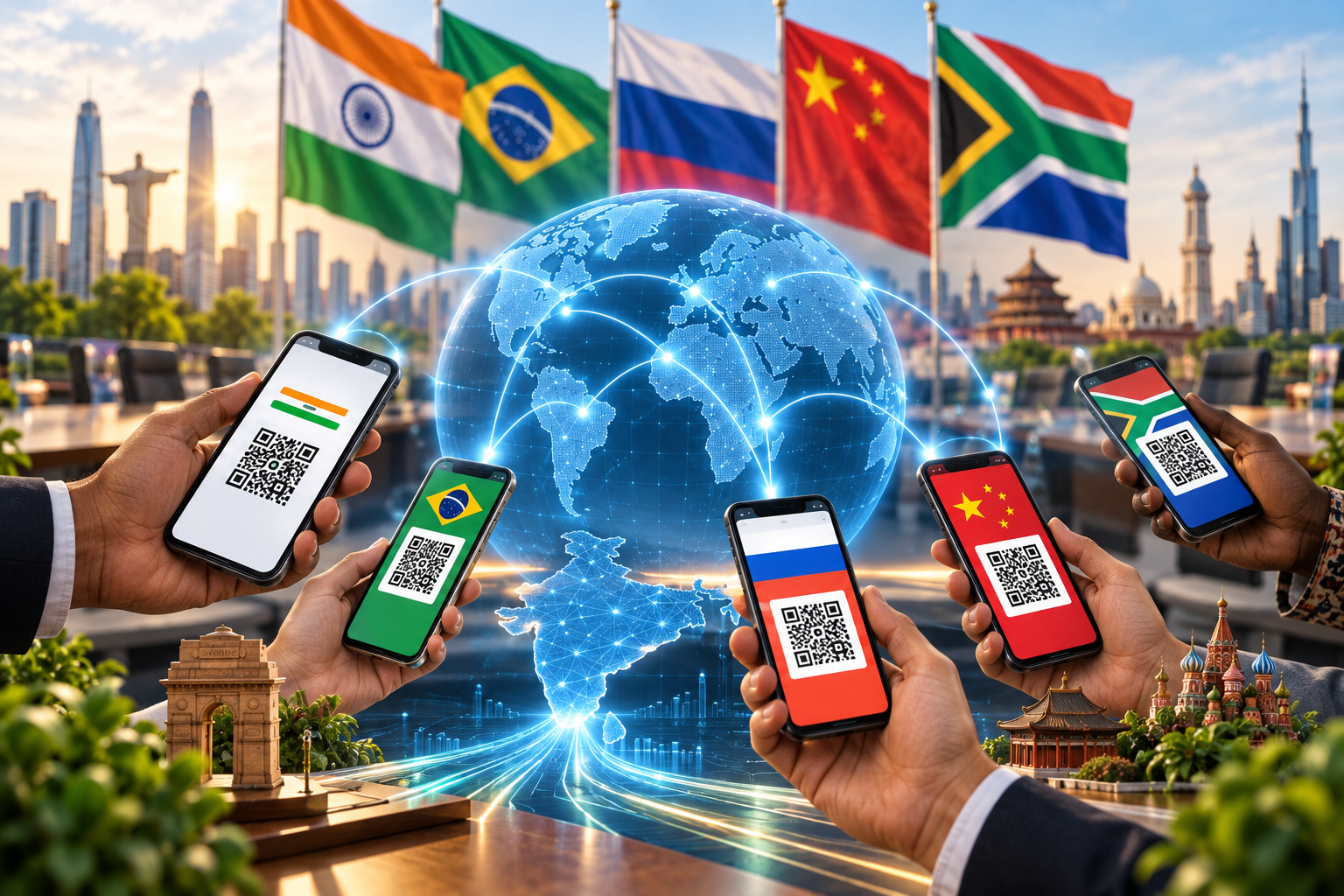
India’s Ministry of External Affairs has clarified that BRICS discussions are focused on connecting national digital payment systems such as UPI for easier cross-border transactions, rather than creating a common BRICS currency.
Highlights
- BRICS is discussing a cross-border digital payment system.
- The proposal could connect domestic payment platforms such as India’s UPI.
- MEA clarified that discussions are not about creating a common BRICS currency.
- The initiative could make payments between member countries faster and more efficient.
New Delhi: BRICS countries are discussing the possibility of developing a unified cross-border digital payment framework that could connect national payment systems such as India’s Unified Payments Interface (UPI), rather than introducing a common BRICS currency.
The Ministry of External Affairs (MEA) has clarified that discussions within the grouping are centred on improving payment connectivity and interoperability between member countries.
The clarification is significant amid speculation around whether BRICS economies could explore a single currency as an alternative mechanism for trade and financial transactions.
Focus on connecting payment systems
Instead of introducing a new currency, the proposal under discussion seeks to make existing national payment infrastructure work more seamlessly across borders.
For India, this could involve linking UPI with payment systems operating in other BRICS economies. Such connectivity could potentially allow businesses and individuals to make cross-border transactions through familiar domestic digital-payment networks.
A more integrated payment framework could also help simplify settlement processes and reduce friction in transactions between participating economies.
Could support cross-border trade
Improved payment connectivity could become particularly useful as BRICS countries seek to strengthen trade and investment ties.
Businesses currently conducting international transactions often have to navigate multiple payment intermediaries, settlement mechanisms and currency-conversion processes. Greater interoperability between domestic payment networks could make certain transactions faster and more convenient.
India has already been expanding UPI’s international presence through partnerships and payment-linkage arrangements with overseas markets.
No common BRICS currency
The MEA’s clarification draws an important distinction between a unified payment mechanism and a unified currency.
A common currency would involve a substantially deeper level of monetary integration among participating economies. The payment initiative being discussed would instead focus on connecting existing systems while countries continue using their respective currencies.
The proposal is therefore more about building digital financial infrastructure for cross-border transactions than replacing national currencies.
If BRICS members move ahead with greater payment-system interoperability, it could provide another avenue for strengthening financial connectivity and facilitating trade across the expanding economic grouping.