China is rapidly deploying AI-powered humanoid robots across factories and service industries to address labour shortages caused by its ageing population and shrinking workforce.
Key Highlights:
- China is accelerating the deployment of AI-powered humanoid robots.
- Robots are being used across factories and service industries.
- Labour shortages caused by an ageing population are driving automation.
- China aims to install at least 10,000 humanoid robots in commercial settings this year.
- The country already leads the world in industrial robot installations.
- Automation is expected to play a key role in sustaining China’s manufacturing sector.
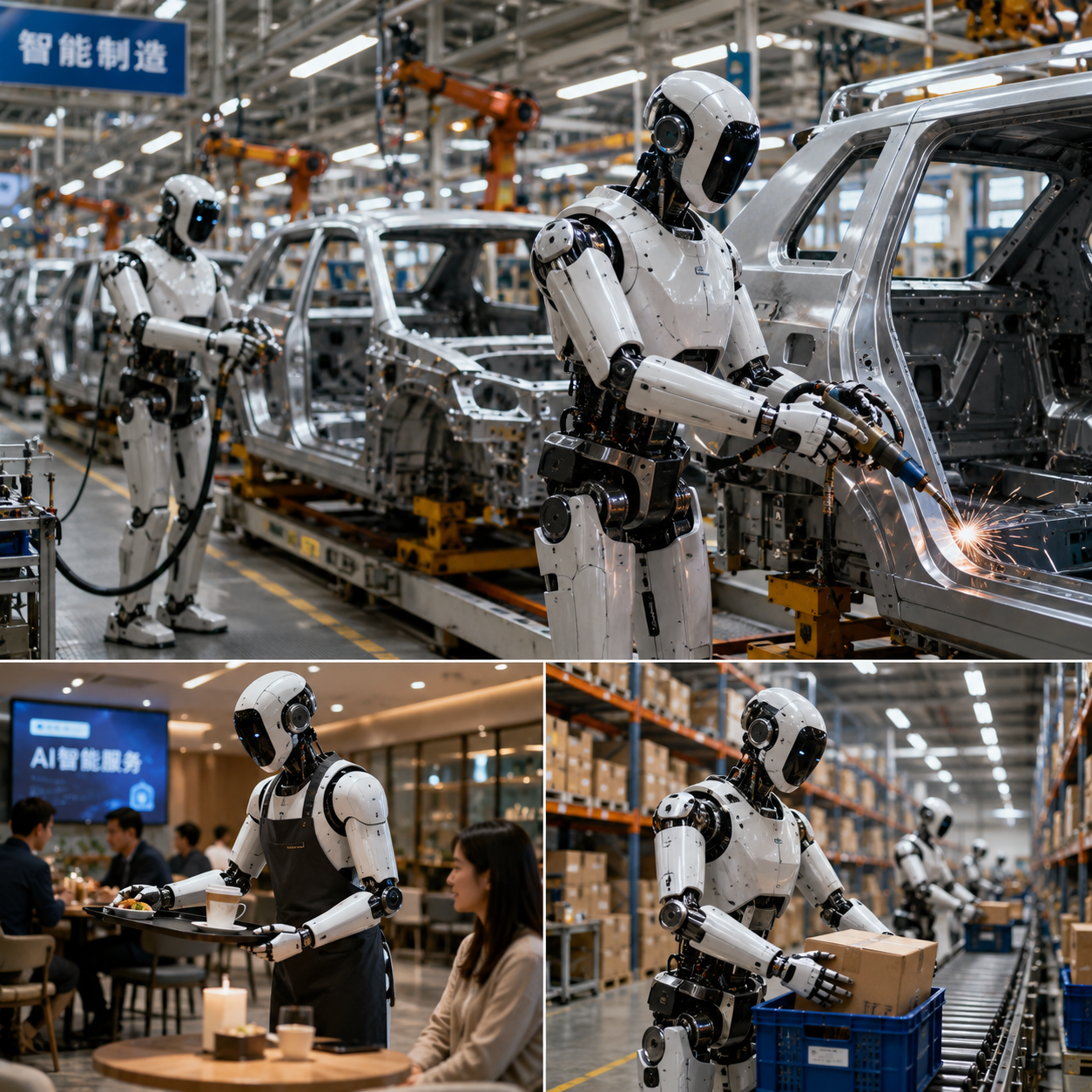
China is rapidly expanding the use of AI-powered humanoid robots as it looks to tackle the challenges of an ageing population and a shrinking workforce. The government is encouraging businesses to adopt “embodied artificial intelligence” across manufacturing facilities and service industries to improve productivity and reduce dependence on manual labour.
At manufacturing facilities such as Sany Truck Manufacturing in Changsha, Hunan Province, humanoid robots are increasingly being deployed to perform labour-intensive tasks in vehicle assembly. The initiative is part of China’s broader strategy to automate industrial operations and maintain its manufacturing competitiveness amid demographic changes.
According to the United Nations, China’s working-age population, aged between 15 and 64 years, is expected to decline significantly over the coming decades, falling from a peak of nearly one billion people to around 300 million by the end of the century. The demographic shift has prompted policymakers to accelerate investments in robotics and artificial intelligence.
China has already established itself as the global leader in industrial robot installations and is also emerging as one of the world’s largest producers of humanoid robots. The government has set a target of deploying at least 10,000 AI-powered humanoid robots in commercial environments during 2026.
Industry experts believe wider adoption of humanoid robots could help address labour shortages, improve production efficiency, and support economic growth as the country’s workforce continues to contract. Beyond manufacturing, China is also exploring the use of humanoid robots in logistics, healthcare, hospitality, and other service sectors.
The growing push for automation highlights China’s long-term strategy to combine artificial intelligence, advanced robotics, and industrial innovation to offset demographic challenges while strengthening its position as a global technology leader.