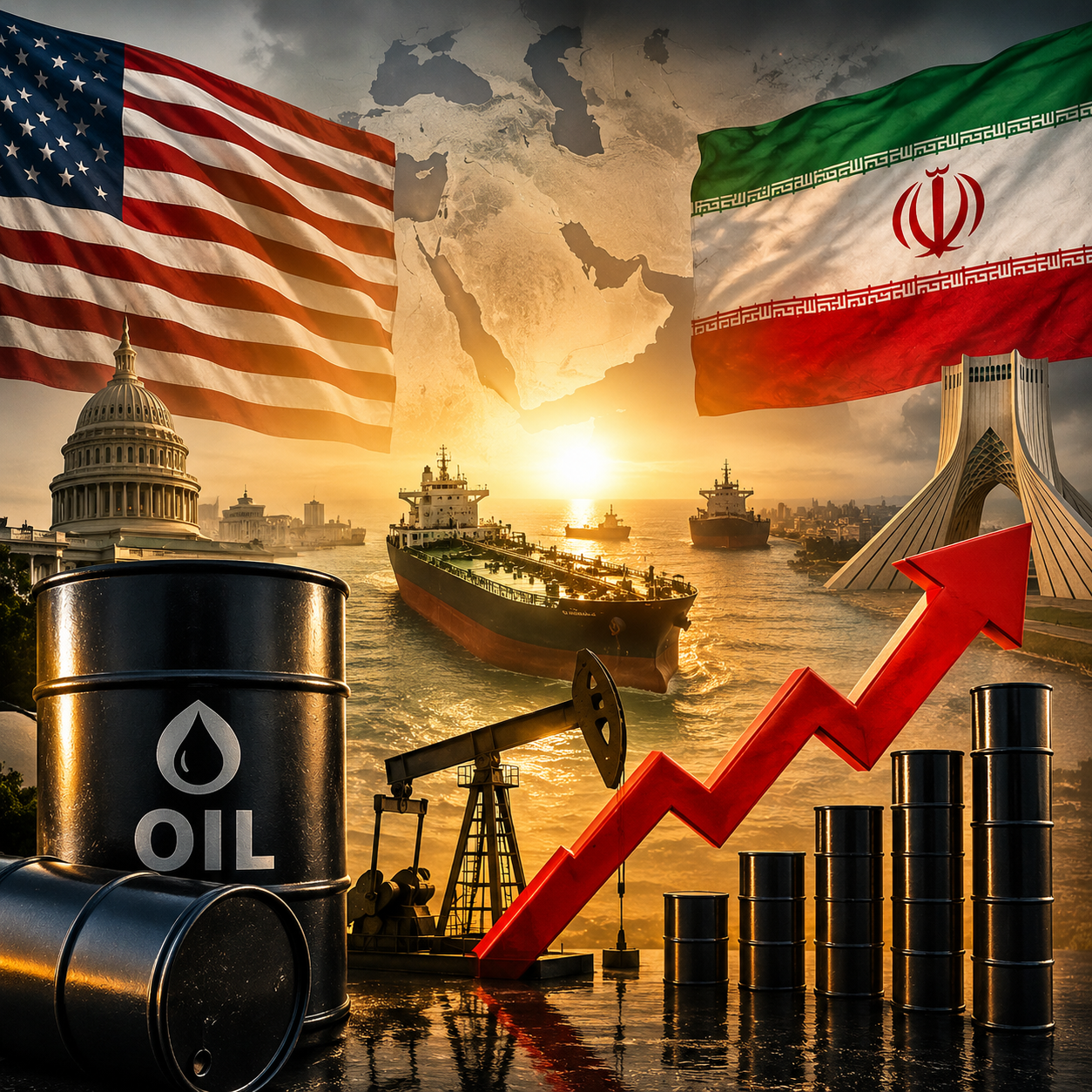
Renewed geopolitical tensions between the US and Iran have pushed crude oil prices higher again, raising concerns over fuel prices and inflation in India.
Highlights
- Crude oil prices climbed after fresh US-Iran tensions.
- WTI crude returned to around $70 per barrel, while Brent traded near $72.
- Peace talks are expected, but recent airstrikes have kept markets on edge.
- Any sustained rise in crude prices could impact India’s fuel import bill.
- Petrol and diesel prices in India may come under pressure if oil continues to rise.
Global crude oil prices started the week on a stronger note as renewed geopolitical tensions between the United States and Iran unsettled energy markets. Although both countries are expected to resume peace talks on Tuesday, recent military actions have once again highlighted the fragile situation in the Middle East.
As of Monday morning, West Texas Intermediate (WTI) crude was trading around $70 per barrel, while Brent crude hovered near $72 per barrel, recovering from the lows seen during the previous week’s conflict. The rebound suggests that traders are once again factoring geopolitical risks into oil prices.
The latest surge comes after reports of attacks involving oil tankers near the Strait of Hormuz and fresh airstrikes exchanged by the US and Iran. While commercial shipping through the strategic waterway has resumed, vessels continue to operate under heightened security due to the risk of further escalation. Hundreds of ships remain affected in the Gulf region, raising concerns over global oil supplies and transportation costs.
Adding to market uncertainty, strong statements from US President Donald Trump and continued military tensions have overshadowed diplomatic efforts. Although officials from both countries are expected to meet in Doha to discuss de-escalation, investors remain cautious until concrete progress is made.
For India, the developments are particularly significant because the country imports more than 85% of its crude oil requirement. Any prolonged increase in global crude prices can raise the government’s import bill, weaken the rupee, and increase inflationary pressure. Higher crude costs may also eventually influence petrol and diesel prices if international rates remain elevated for an extended period.
However, experts note that fuel prices in India do not react immediately to every movement in global oil markets. Oil marketing companies consider several factors, including exchange rates, inventory costs, taxes, and overall market conditions before revising retail fuel prices.
The biggest concern now is whether diplomatic efforts will succeed in preventing another round of conflict. If peace talks result in a lasting agreement, crude prices could stabilize. On the other hand, any fresh military escalation or disruption to oil shipments through the Strait of Hormuz could push prices significantly higher, affecting economies worldwide.
For consumers, the coming days will be crucial, as developments in the Middle East could determine not only global energy prices but also the future direction of petrol and diesel prices in India.