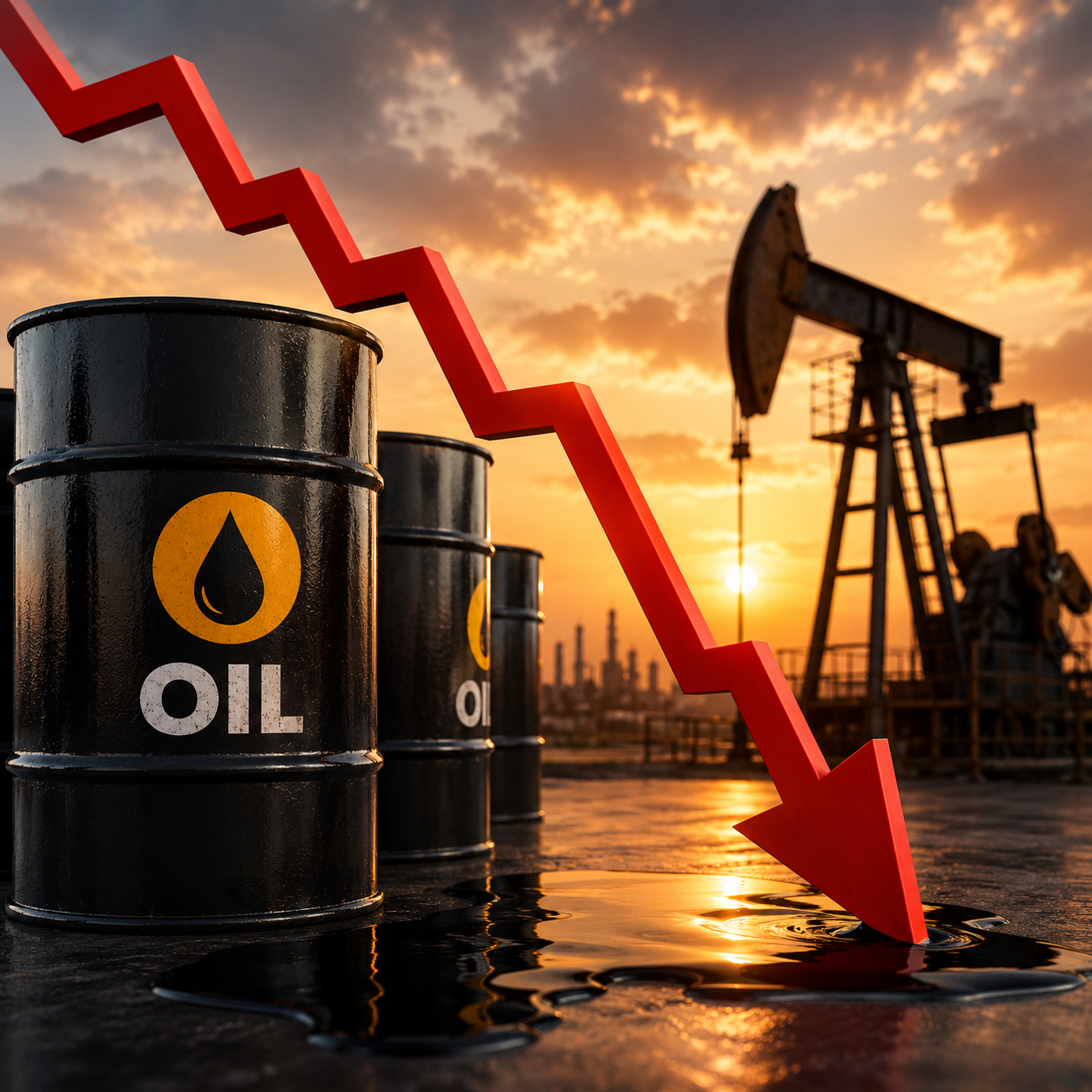
Global oil prices have fallen to their lowest levels since before the Iran conflict, offering relief to India’s economy, though petrol and diesel prices remain unchanged.
Highlights:
- Brent crude slipped to around USD 72-73 per barrel.
- US crude fell below USD 70 per barrel.
- Lower crude prices could reduce India’s import bill and inflation.
- Petrol and diesel prices remain unchanged despite the decline.
- Consumers are awaiting possible cuts in fuel prices.
Global crude oil prices have dropped sharply, returning to levels seen before the Iran conflict and providing a positive signal for the Indian economy. The decline is expected to help reduce inflationary pressures, lower the country’s oil import bill and strengthen the government’s fiscal position.
Brent crude, the international benchmark, is currently trading around USD 72-73 per barrel, while US West Texas Intermediate (WTI) crude has fallen below USD 70 per barrel. The decline has effectively erased the geopolitical risk premium that had pushed crude prices close to USD 120 per barrel during the peak of tensions in the Middle East earlier this year.
For India, which imports more than 85% of its crude oil requirement, lower international prices are generally good news. A sustained fall in crude prices can reduce the cost of fuel imports, improve the country’s trade balance and help keep inflation under control. Lower fuel costs also reduce transportation and manufacturing expenses, which may eventually benefit consumers through stable prices of goods and services.
However, despite the significant correction in global crude prices, Indian consumers have not yet seen any relief at fuel stations. Petrol and diesel prices remained unchanged on Thursday.
State-owned oil marketing companies had earlier increased petrol and diesel prices by around Rs 7.50 per litre during the surge in international crude prices. Since then, they have maintained the existing retail prices even as global oil prices have retreated.
Industry observers believe oil companies may wait to assess whether the decline in crude prices is sustainable before revising retail fuel rates. They also consider factors such as exchange rates, refining margins, inventory costs and government policies while determining pump prices.
For consumers, any future reduction in petrol and diesel prices would provide direct savings on fuel expenses while also helping reduce transportation costs across the economy. If global crude prices remain at current levels or fall further, expectations for fuel price cuts in India are likely to increase in the coming weeks.