Auto unions demand fare revision
Key Highlights
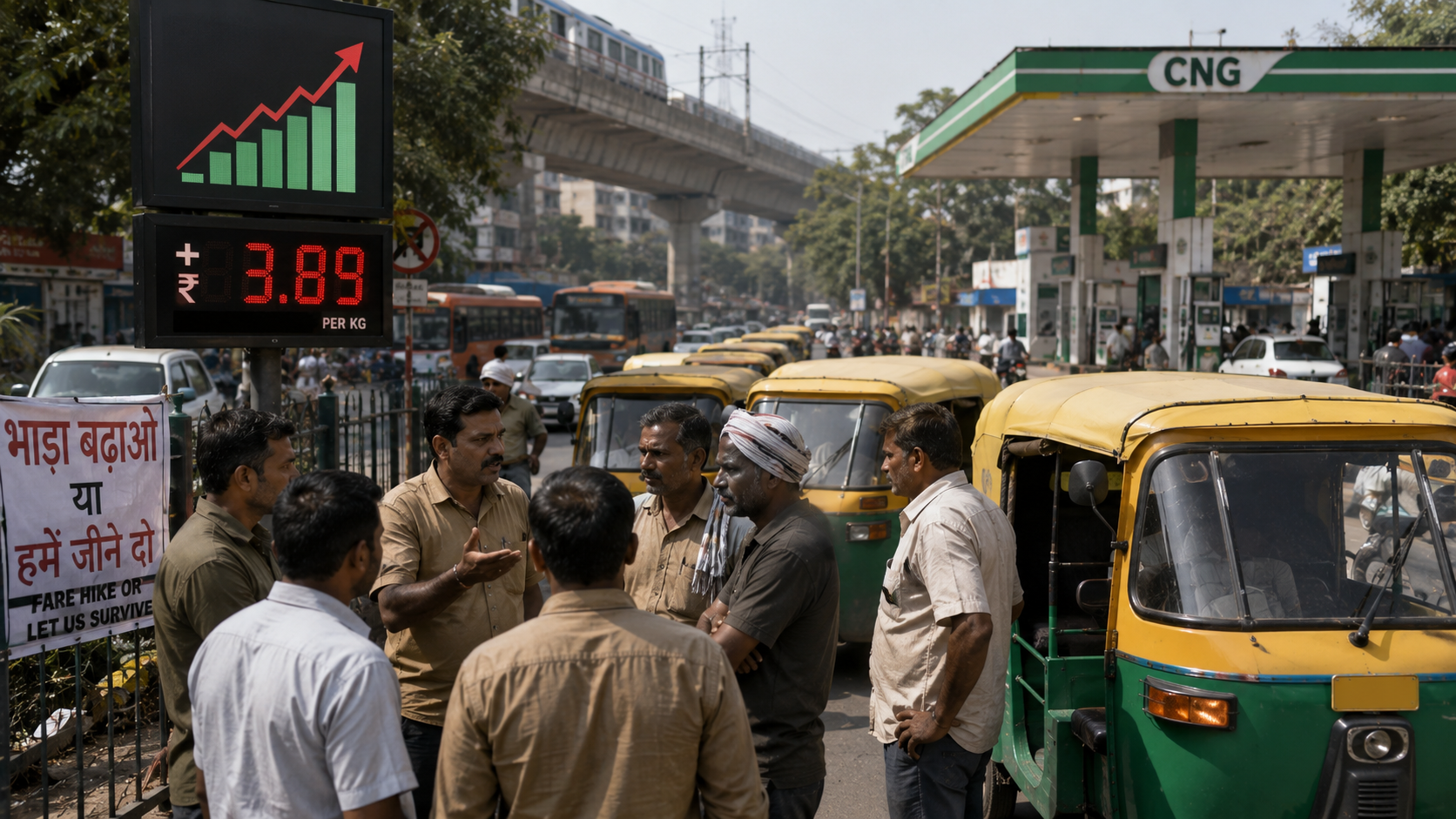
- CNG prices in Delhi have increased by ₹3.89 per kg.
- The revised CNG price in Delhi stands at ₹86.98 per kg.
- Indraprastha Gas Limited implemented the increase from August 29, 2026.
- Auto and taxi unions have demanded a revision in passenger fares.
- Unions have warned of a possible strike on September 9 if their demands are not addressed.
- Drivers have also sought a CNG subsidy as an alternative to a fare hike.
New Delhi, August 30, 2026: The recent increase in CNG prices in Delhi has triggered fresh concerns among auto and taxi drivers, with transport unions demanding a revision in passenger fares and warning of a possible strike on September 9 if their demands are not addressed.
The price of CNG in Delhi has increased by ₹3.89 per kg, taking the retail price to ₹86.98 per kg.
Indraprastha Gas Limited (IGL) implemented the revised CNG prices from 6 am on August 29, 2026.
According to the company, the price revision was introduced to partially offset the impact of rising input gas costs and support the continued supply of CNG.
The increase has added to the operating costs of auto-rickshaw and taxi drivers, many of whom depend on CNG as their primary fuel for daily commercial operations.
Transport unions have said the higher fuel cost is increasing financial pressure on drivers and affecting their daily earnings.
The Auto Rickshaw Association and the Delhi Pradesh Taxi Union have urged the government to revise auto and taxi fares in response to the increase in CNG prices.
Rajendra Soni, General Secretary of the unions, said drivers were already facing economic pressure and that the latest increase in fuel prices would further raise their operating expenses.
The unions have reportedly asked the government to take a decision on revising fares within a week.
They have warned that if no decision is taken, auto and taxi drivers could go on strike on September 9.
Apart from demanding a fare revision, the unions have also proposed an alternative solution.
They said that if the government does not increase passenger fares, it could provide a subsidy on CNG to commercial drivers to help offset the impact of higher fuel prices.
The latest development highlights the growing pressure of fuel costs on Delhi’s commercial transport sector.
A strike by auto and taxi drivers could potentially affect daily commuters across the national capital, making the government’s response to the unions’ demands important in the coming days.