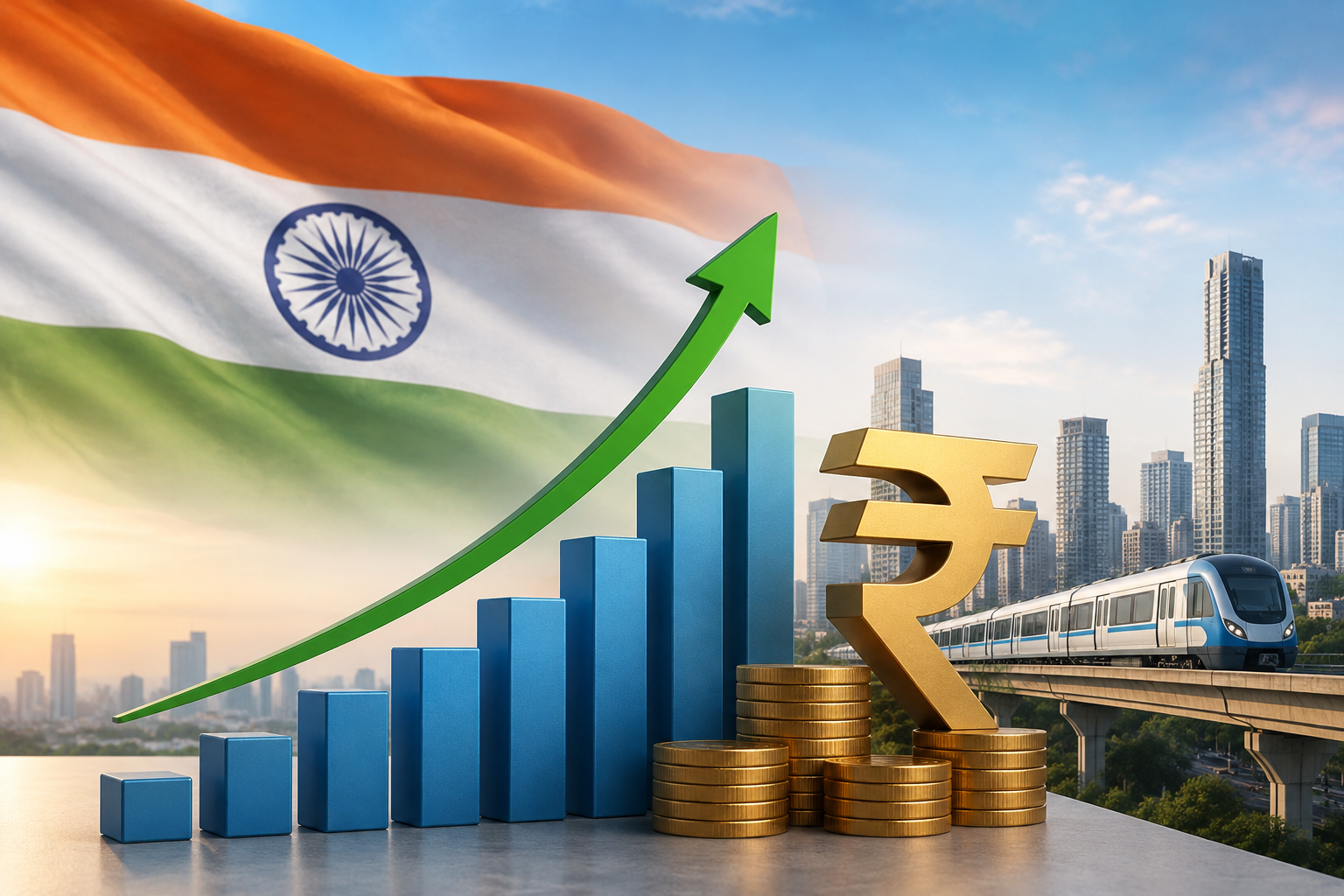
Finance Minister Nirmala Sitharaman said India is likely to maintain its strong economic growth momentum even as geopolitical tensions and supply-chain disruptions continue globally.
The government is also focusing on attracting more overseas capital and pursuing bilateral investment agreements with several countries.
Highlights
- India may record GDP growth of around 7% or more in FY27.
- Finance Minister Nirmala Sitharaman highlighted India’s post-Covid growth momentum.
- Economic Survey has projected 6.8%-7.2% growth for the current financial year.
- RBI has estimated GDP growth of 6.7% for FY27.
- India rerouted key commodity supplies after disruptions in the Strait of Hormuz.
- Government plans to attract more foreign capital through global funds and bilateral investment treaties.
India’s economy may continue growing at around 7% or more in the financial year 2026-27 despite geopolitical uncertainties and global supply-chain disruptions, Finance Minister Nirmala Sitharaman has said.
Addressing members of the Indian diaspora in Chicago, Sitharaman said India has managed to maintain a strong growth trajectory since the Covid-19 pandemic and is likely to remain in a similar growth range this year as well.
The Indian economy had contracted by 5.8% in FY21 during the pandemic. However, it subsequently recorded growth of more than 7% annually for five consecutive years.
For the current financial year, the Economic Survey has projected economic growth in the range of 6.8% to 7.2%. Meanwhile, the Reserve Bank of India has estimated GDP growth of 6.7% for FY27.
Sitharaman said India has been closely monitoring international developments while also focusing on domestic economic requirements. According to her, this approach has helped the country deal with uncertainties that have significantly disrupted economic calculations in several other nations.
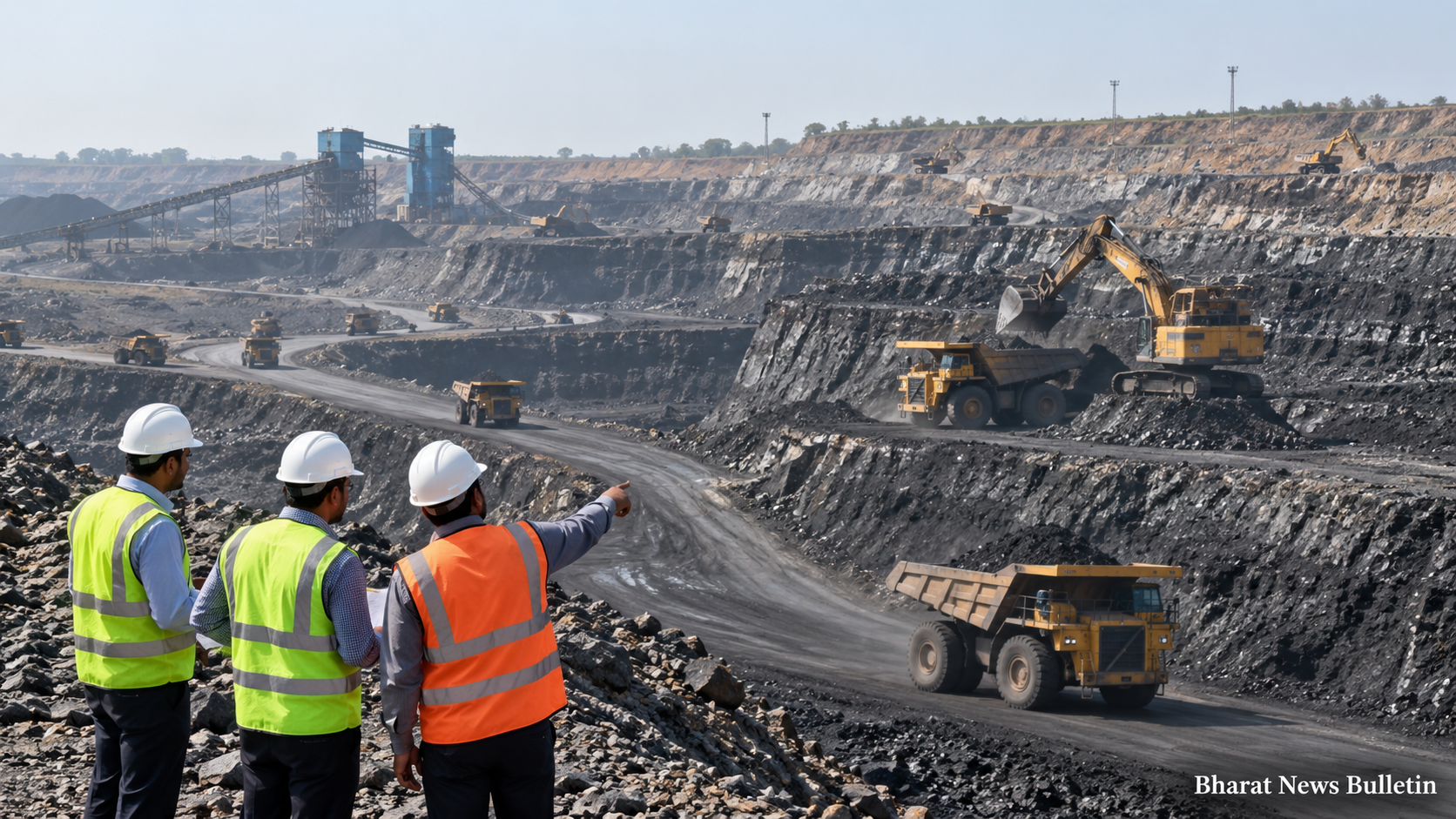
The Finance Minister also referred to supply disruptions caused by geopolitical tensions and the closure of the Strait of Hormuz. The disruption initially affected supplies of important commodities, including petroleum products, natural gas and fertilisers. However, India was able to reroute supplies and reduce the impact.
She added that the government has kept fertiliser prices stable for farmers through subsidies despite a sharp increase in global prices. India is also adequately stocked for the upcoming fertiliser requirement from November.
Sitharaman said the government will continue with systemic reforms while working to mobilise more capital for the economy.
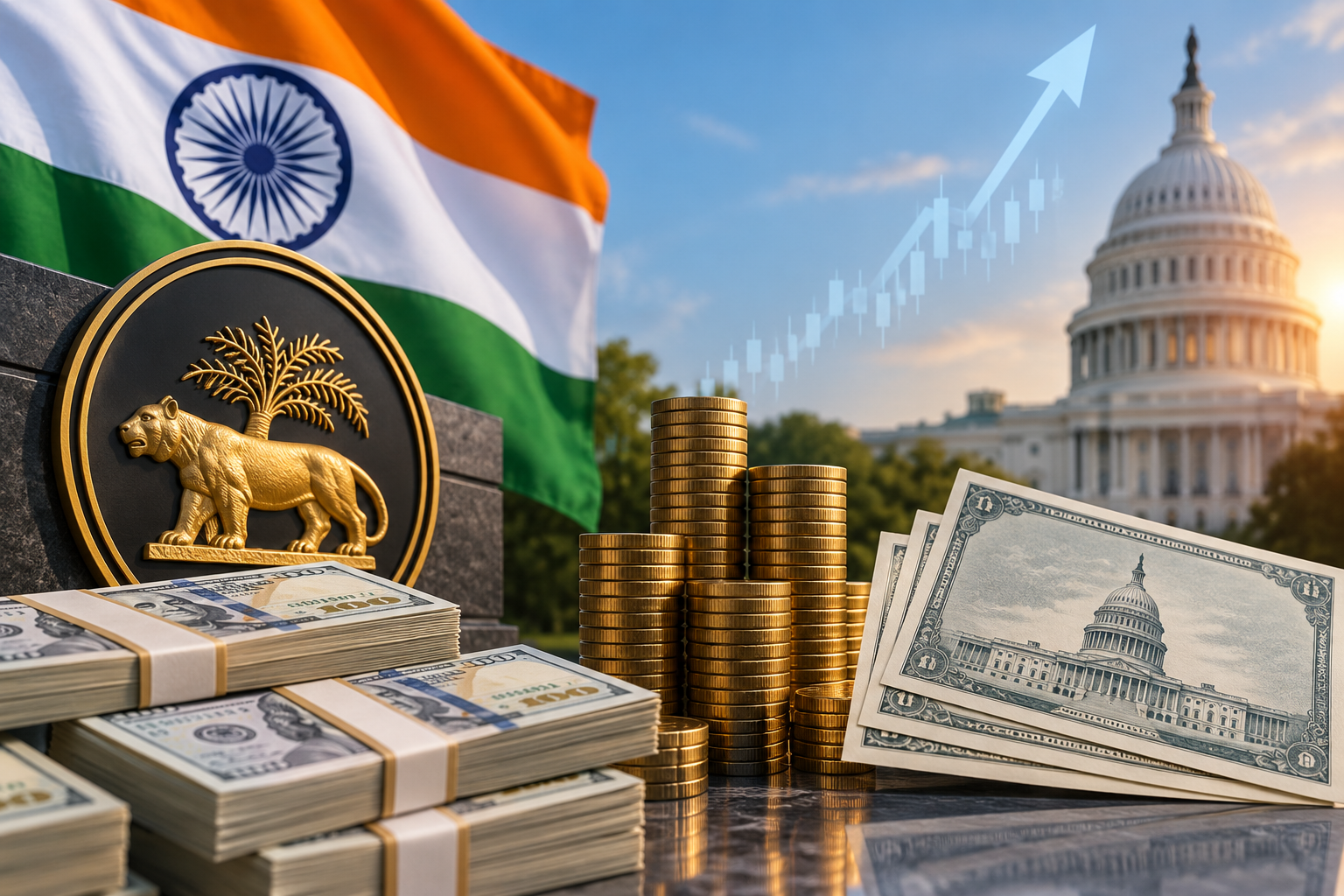
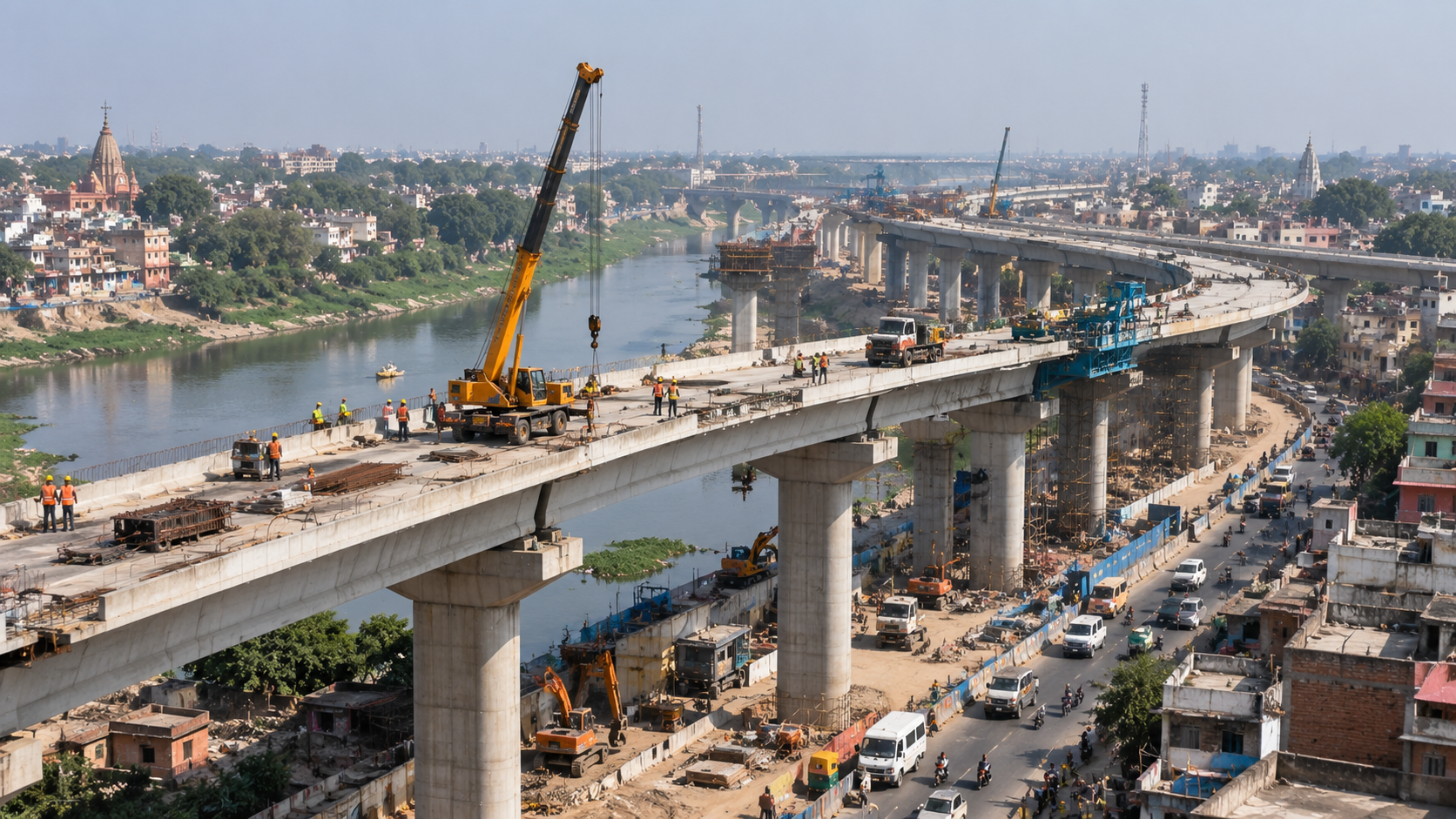
Private investment in India has improved following the government’s continued push on capital expenditure. However, the Finance Minister said the country will also require greater international investment to support its development ambitions.
She said the government, including the Prime Minister and other ministers, is engaging with global investment funds to showcase India’s economic progress and understand investor expectations.
India is also negotiating bilateral investment treaties along with bilateral trade agreements with several countries.
The push for overseas investment comes at a time when net foreign direct investment inflows have weakened. According to RBI data cited in the report, net FDI fell from an annual average of around $40 billion during FY20-FY22 to $6.95 billion in FY26.