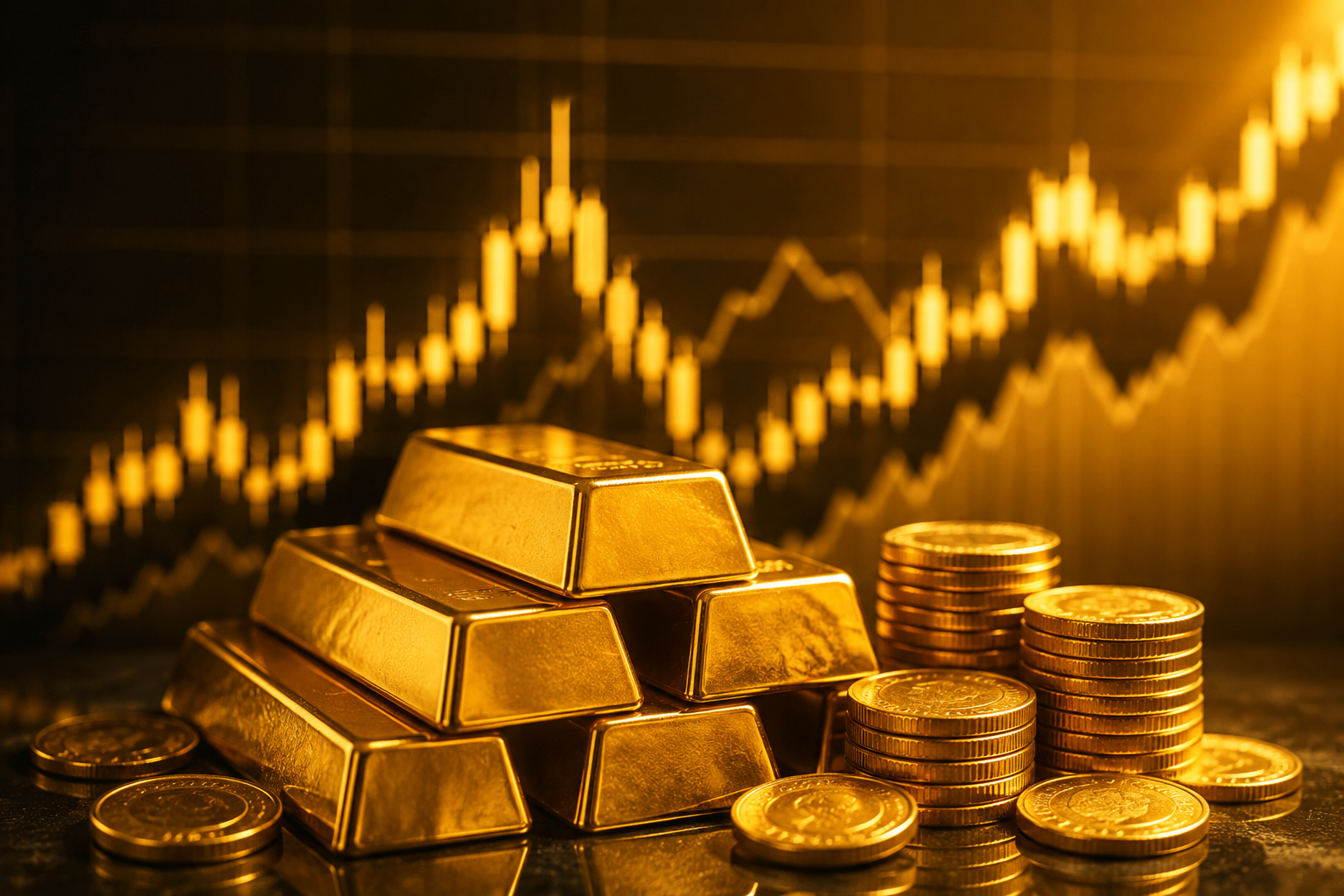
Gold climbed to its highest level since mid-May as a softer US dollar and lower Treasury yields boosted demand for the precious metal.
Investors are now watching upcoming US inflation data and signals from the Federal Reserve at Jackson Hole.
Highlights:
- Spot gold gained 0.6% to $4,677.19 per ounce, reaching its highest level in more than three months.
- Gold futures advanced 0.5% to $4,720.30.
- Gold has gained more than 15% so far in August.
- The US dollar index has declined around 0.8% this month, making dollar-priced bullion more attractive to overseas buyers.
- US Treasury bond buyback plans have helped contain yields, supporting demand for non-yielding gold.
- Silver also benefited from the precious-metals rally, with spot prices gaining 0.4% to $69.19 per ounce.
- Investors are closely watching upcoming US inflation data and Federal Reserve signals for clues on interest rates.
Gold prices climbed to their highest level in more than three months on Tuesday, supported by weakness in the US dollar and the US Treasury’s bond buyback plans, which have helped keep government bond yields under control.
Spot gold rose 0.6% to $4,677.19 per ounce, marking its highest level since mid-May. Gold futures also gained 0.5% to $4,720.30, reaching a more than three-month high.
The precious metal has gained more than 15% so far this month. UOB said gold was on track for its strongest monthly gain since September 1999.
Silver also moved higher alongside gold, with the spot price gaining 0.4% to $69.19 per ounce.
One of the key factors supporting bullion prices has been weakness in the US dollar. The dollar index has fallen around 0.8% so far this month. A weaker dollar generally makes gold cheaper for buyers holding other currencies, potentially boosting demand.
Treasury yields have remained elevated during much of August, but the US government’s bond buyback plans have helped limit their rise. Yields have declined by around three basis points this month.
Lower bond yields can benefit gold because bullion does not offer interest. When yields fall, the opportunity cost of holding non-yielding assets such as gold also declines.
Market attention is now shifting towards upcoming US inflation data and Federal Reserve signals ahead of the Jackson Hole Symposium later this week. Investors will be looking for clues about the future direction of US interest rates.
According to Citi, a hawkish signal from the Federal Reserve could slow the ongoing gold rally. However, a dovish surprise at Jackson Hole could provide another strong boost to bullion as markets reassess expectations for interest rates.
Concerns over US debt sustainability and Federal Reserve independence could also remain important factors influencing investor demand for gold.