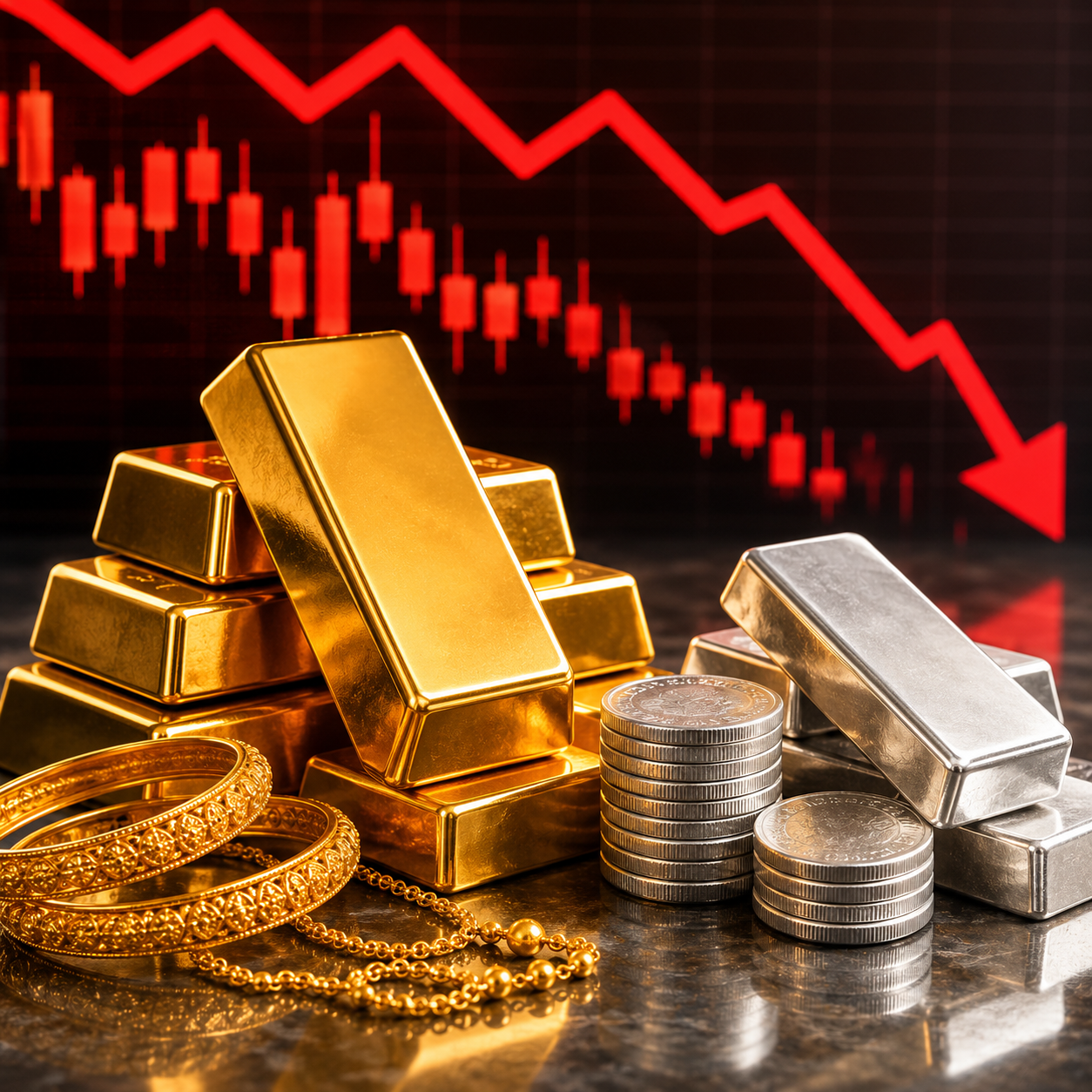
Gold and silver witnessed sharp corrections in June as easing geopolitical tensions, expectations of higher US interest rates, and investor profit booking weighed on precious metal prices.
Highlights:
- Gold prices dropped by up to ₹17,000 per 10 grams during June.
- Silver corrected by nearly ₹51,000, marking one of the sharpest monthly declines.
- US Federal Reserve rate expectations and reduced safe-haven demand triggered the fall.
- Investors shifted money from bullion to equities after easing geopolitical concerns.
- Experts advise buyers to avoid panic and invest based on long-term financial goals.
June has turned out to be a challenging month for investors who purchased gold and silver at higher levels, as both precious metals witnessed a steep correction. However, for fresh buyers, the decline may present an opportunity to accumulate gold and silver at relatively lower prices.
According to market data, gold prices on the Multi Commodity Exchange (MCX) have fallen by nearly ₹17,000 per 10 grams from their late-May levels, while silver has corrected by around ₹51,000 during the month. The sharp decline has surprised many investors, especially since precious metals are generally expected to perform well during periods of global uncertainty.
The biggest trigger behind the correction has been the change in global market sentiment. After tensions between Iran and the United States eased and diplomatic discussions resumed, demand for traditional safe-haven assets such as gold and silver weakened. At the same time, comments from the US Federal Reserve indicating that interest rates could remain higher for longer strengthened the US dollar and reduced the appeal of non-interest-bearing assets like gold.
Another factor contributing to the fall is profit booking. Many investors who had accumulated gold and silver during the earlier rally decided to lock in gains, increasing selling pressure. Improved sentiment in equity markets also encouraged investors to shift funds from bullion into stocks, accelerating the correction.
For retail investors, market experts suggest looking beyond short-term price swings. Gold continues to play an important role as a portfolio diversifier and inflation hedge over the long term. Rather than trying to time the market perfectly, investors may consider staggered purchases through systematic investment strategies if gold aligns with their financial objectives.
While near-term volatility may continue due to global interest rate expectations and economic data, future price movements will largely depend on central bank policies, inflation trends, geopolitical developments, and investor sentiment. Buyers should carefully assess their investment horizon and risk appetite before making fresh allocations to precious metals.