No Return To Pure Petrol
Key Highlights
- Government says there is no plan to bring back regular pure petrol (E0) or E10 fuel.
- Ethanol blending will remain capped at 20% (E20) for now.
- Any future increase beyond E20 will happen only after scientific studies and stakeholder consultations.
- Premium petrol sold by state-run oil companies will continue to remain ethanol-free.
- Government says no verified evidence links E20 to widespread engine failures.
- Older vehicles may experience a 3–5% drop in fuel efficiency, but no major safety concerns have been reported.
- E20 aims to reduce crude oil imports, lower emissions and support India’s biofuel mission.
The Central Government has clarified in Parliament that there is no proposal to reintroduce regular pure petrol (E0) or E10 fuel at petrol pumps. The government also confirmed that it has not taken any decision to increase ethanol blending beyond the current 20% (E20), putting an end to speculation over higher ethanol blends.
According to the Ministry of Petroleum and Natural Gas, the nationwide rollout of E20 fuel was carried out after extensive scientific studies, technical evaluations and consultations with automobile manufacturers and other stakeholders. Officials said any future move to increase ethanol content beyond 20% will only be considered after fresh research and industry-wide discussions.
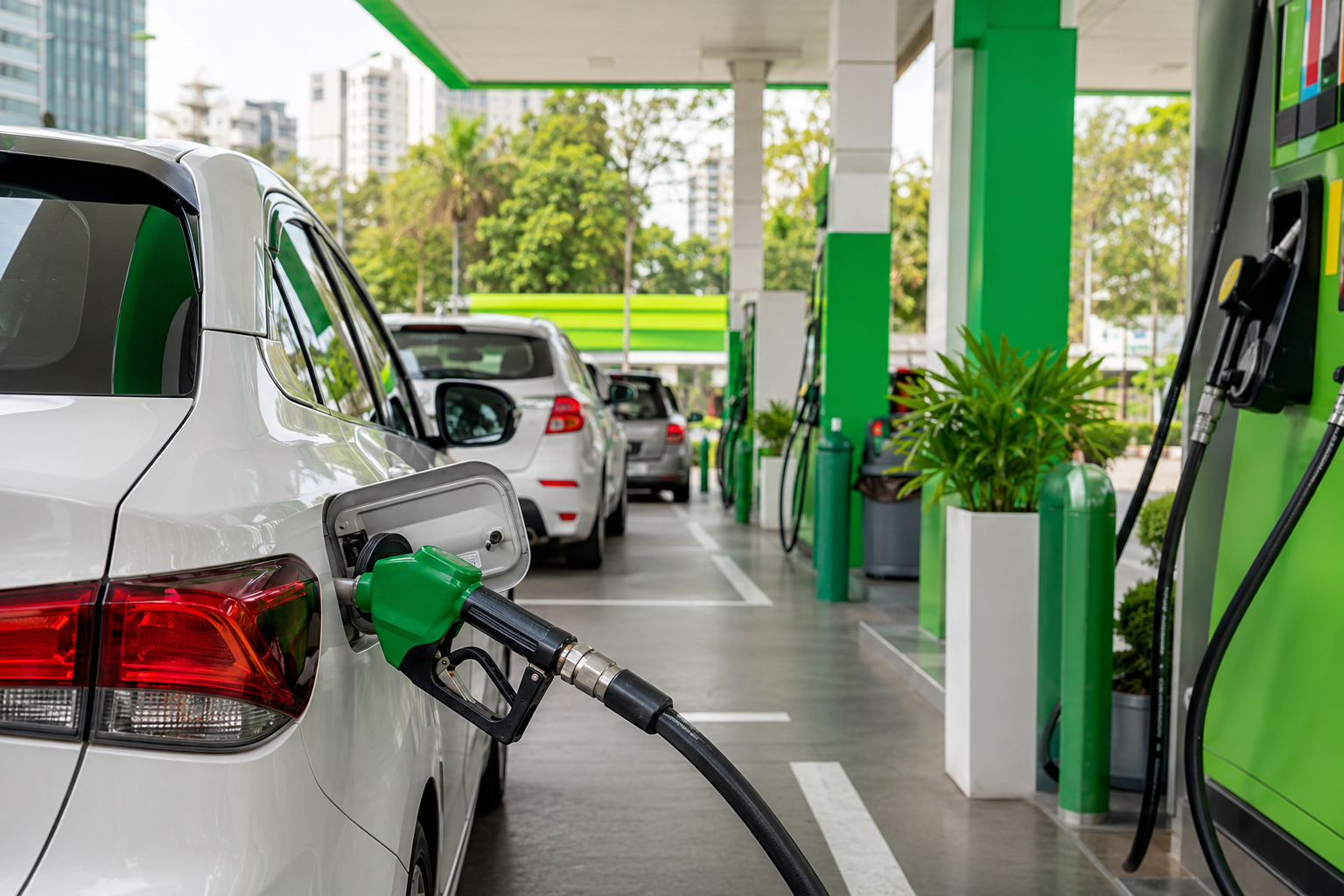
The government also clarified that premium petrol sold by public sector oil marketing companies will continue to remain outside the Ethanol Blended Petrol (EBP) programme, allowing customers who prefer premium-grade fuel to access ethanol-free petrol. However, regular petrol available across the country will continue to follow the E20 blending policy.
Responding to concerns raised by some vehicle owners, the Centre stated that it has not received any widespread or verified complaints of engine damage, breakdowns or reduced vehicle life due to E20 fuel. Data collected from scientific institutions and automobile manufacturers indicates that E20 is safe for use in compatible vehicles and does not pose significant mechanical risks.
The government acknowledged that vehicles originally designed for E10 petrol may experience a marginal fuel efficiency reduction of around 3–5% when running on E20. However, it maintained that this decrease is limited and does not translate into engine damage or major performance issues.
Officials reiterated that the ethanol blending programme is part of India’s long-term strategy to reduce dependence on imported crude oil, lower carbon emissions, support domestic biofuel production and improve energy security. They added that the current policy balances environmental goals with vehicle compatibility and fuel supply logistics while ensuring a stable transition to cleaner fuels.