
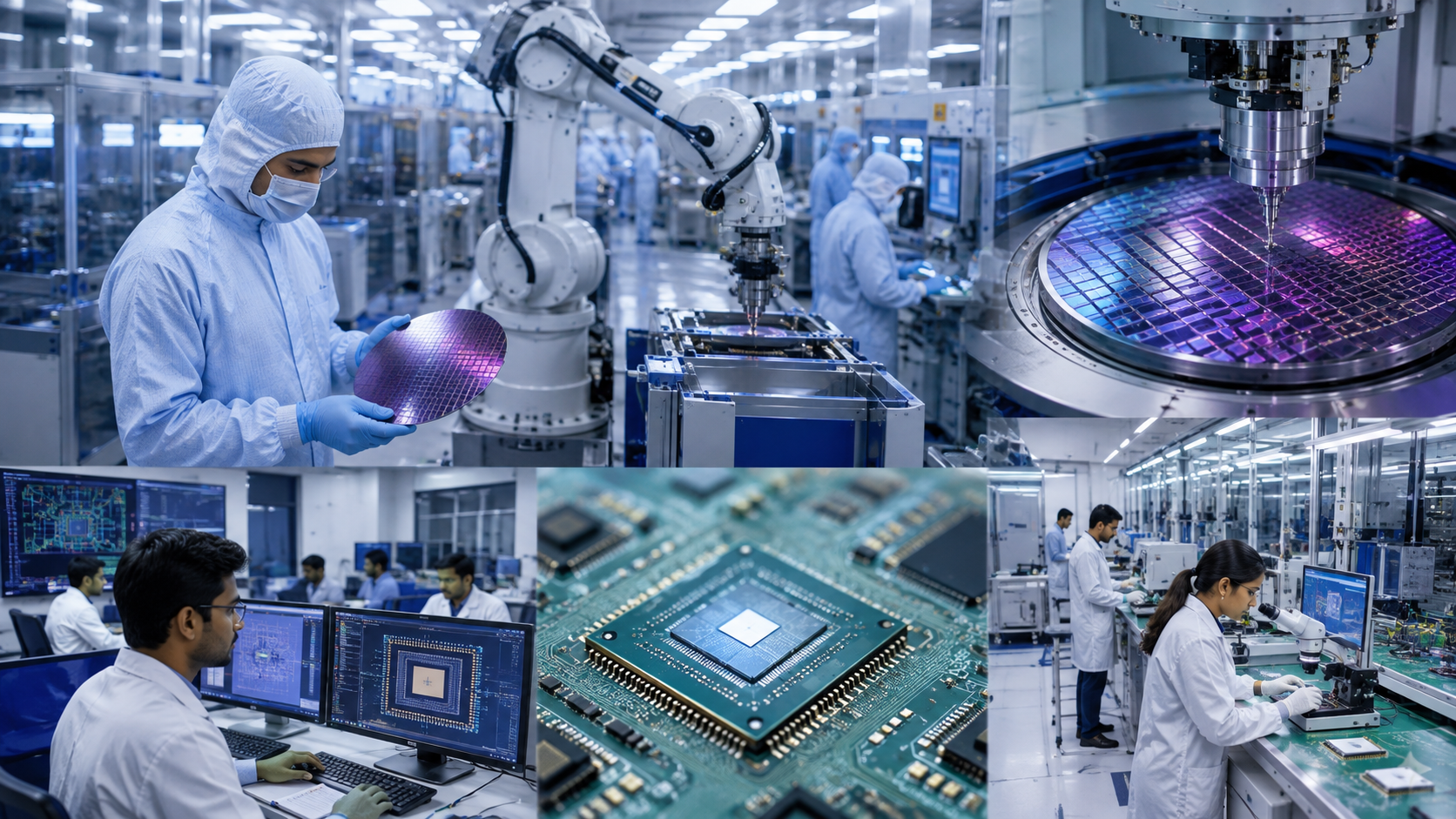
India expands semiconductor ecosystem ambitions
Key Highlights
- The government has notified the ₹1,27,500-crore Semicon 2.0 scheme.
- The programme aims to build a full semiconductor ecosystem in India.
- It covers chip design, IP, equipment, materials, packaging, R&D and talent.
- Silicon fabs can receive fiscal support of up to 40 per cent.
- Advanced semiconductor packaging can receive support of up to 35 per cent of capital expenditure.
- Twelve semiconductor projects have been approved across six states under the earlier phase.
News Story
New Delhi, August 31, 2026: The government has notified the Semicon 2.0 scheme, formally setting in motion a ₹1,27,500-crore programme aimed at expanding India’s semiconductor ambitions beyond chip manufacturing.
The scheme seeks to develop a full semiconductor ecosystem covering indigenous chip design and intellectual property, equipment, materials, advanced packaging, research and development and talent development.
Semiconductors have become an increasingly important strategic resource globally, particularly as artificial intelligence drives growing demand for advanced chips and memory technologies.
The programme was approved by the Union Cabinet on July 15, 2026.
The latest notification outlines the implementation framework, incentive structure and eligibility criteria for different categories under the programme.
For silicon semiconductor fabs, the scheme provides fiscal support of up to 40 per cent.
Compound semiconductor fabs, display fabs and other specialised facilities can receive support of up to 35 per cent.
The programme also provides incentives for semiconductor packaging and testing.
Advanced packaging projects can receive incentives equivalent to 35 per cent of capital expenditure, while conventional packaging can receive support of up to 25 per cent.
The scheme also supports Indian startups and companies working on commercial chip design.
Financial assistance for startups may include grants and equity co-investment, while companies may receive support through royalty financing or equity co-investment.
Under the earlier phase of India’s semiconductor programme, the government approved 12 semiconductor projects across six states.
Three facilities, including Micron’s ATMP plant, Kaynes Semicon and the CG Semi OSAT facility, began commercial production earlier this year.
The Semicon 2.0 programme is expected to further strengthen India’s semiconductor ecosystem and reduce dependence on concentrated global supply chains.