Modi Pushes FTA Farm Exports
Key Highlights:
- PM Modi urged farmers to leverage FTAs for global markets.
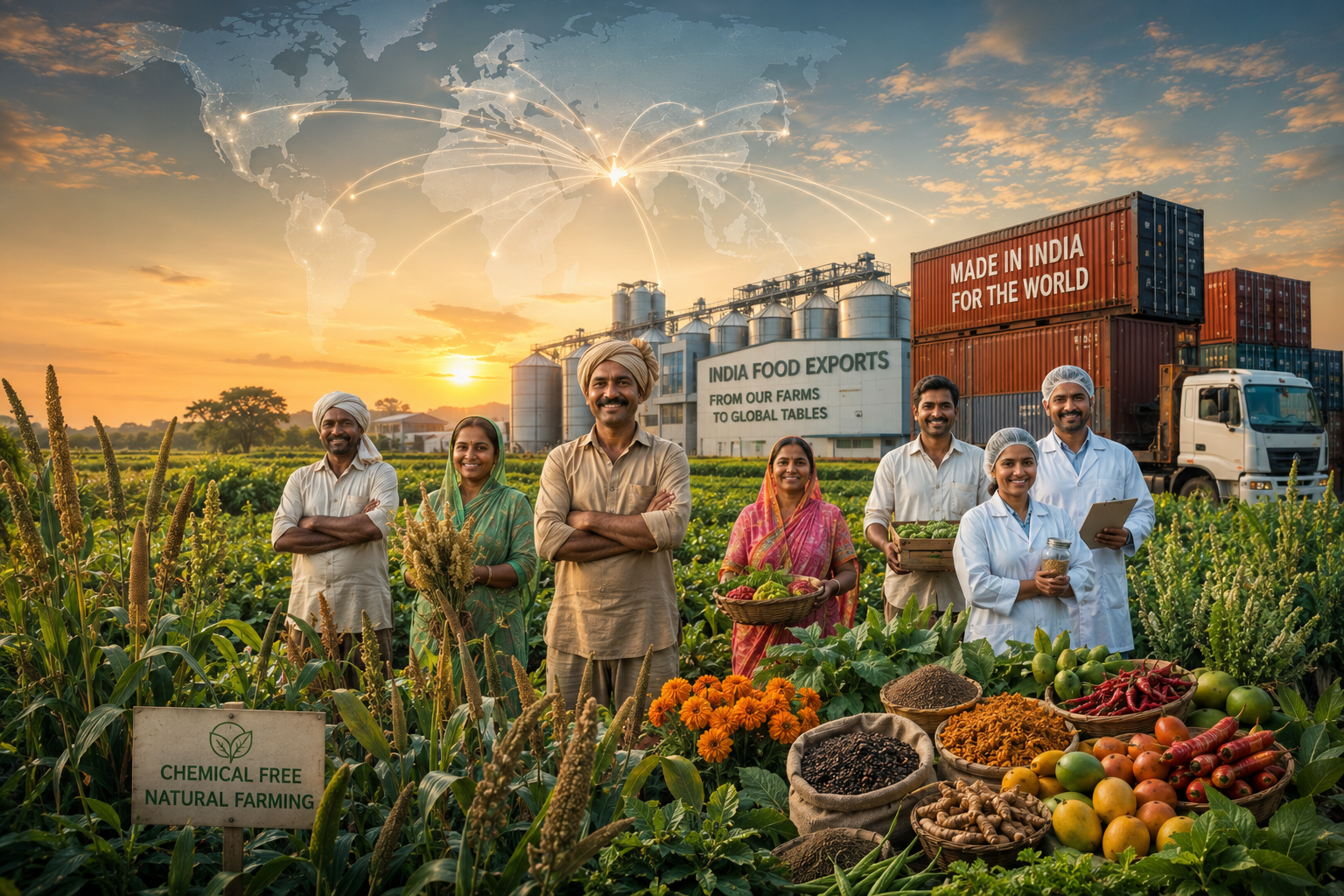
- Traditional foods, millets, spices, fruits and flowers can become global brands.
- Farmers were encouraged to adopt chemical-free farming.
- Modi highlighted growing global demand for chemical-free agricultural products.
- Government continues subsidising urea and DAP amid higher global prices.
- Urea costs around ₹3,000 per bag globally but is supplied to Indian farmers at ₹300.
- DAP prices have reached ₹5,000 globally, while Indian farmers receive it at ₹1,350.
- India has signed nine FTAs in recent years to expand market access.
New Delhi, August 15: Prime Minister Narendra Modi has urged Indian farmers and agro-processors to make greater use of opportunities created by free trade agreements (FTAs) and turn the country’s agricultural products into globally recognised brands.
Addressing the nation from the Red Fort during his 80th Independence Day speech, Modi said India’s recent trade agreements have opened access to larger international markets for farmers and food producers.
The Prime Minister emphasised the need to move beyond farm production and connect Indian agriculture directly with global consumers. He said traditional Indian foods, millets, spices, fruits and flowers have significant potential to become internationally recognised products.
Modi also called for greater adoption of chemical-free farming, pointing to the growing global demand for agricultural products produced without chemical inputs. He said Indian farm products that meet international quality and safety standards would be better positioned to enter overseas markets.
The Prime Minister highlighted the importance of food processing in increasing the value of agricultural production. According to him, India needs to move from the farm to the export market by improving processing capabilities and building strong brands around its agricultural products.
India has signed nine FTAs in recent years with various countries and trade groups. Easier market access for Indian agricultural and processed food products has been an important component of these agreements.
Modi said the country must take advantage of these opportunities by ensuring that agricultural products meet global standards in terms of quality and other requirements.
He also highlighted the government’s efforts to shield farmers from the impact of higher global fertiliser prices.
According to Modi, the global price of urea has risen to around ₹3,000 per bag amid supply pressures. However, Indian farmers continue to receive urea at ₹300 per bag, with the government absorbing a substantial portion of the cost.
Similarly, Modi said the global price of di-ammonium phosphate (DAP) had risen to around ₹5,000, while the government is working to make it available to Indian farmers at ₹1,350.
The sharp increase in international fertiliser prices has increased the pressure on the government’s subsidy bill. Unofficial estimates suggest that India’s fertiliser subsidy could rise to more than ₹2.4 trillion in FY27, compared with the Budget Estimate of around ₹1.7 trillion, following the rise in global prices linked to the West Asia conflict.
The Prime Minister’s push for export-oriented agriculture comes as India seeks to expand its presence in international food and agricultural markets. Greater processing, branding and compliance with global standards could help Indian producers capture more value from exports.
The focus on chemical-free farming could also create opportunities for Indian agricultural producers as international demand for such products continues to increase.
Modi’s message placed agriculture, food processing and exports at the centre of India’s broader economic ambitions, with farmers and agro-processors being encouraged to view global markets as an important avenue for future growth.