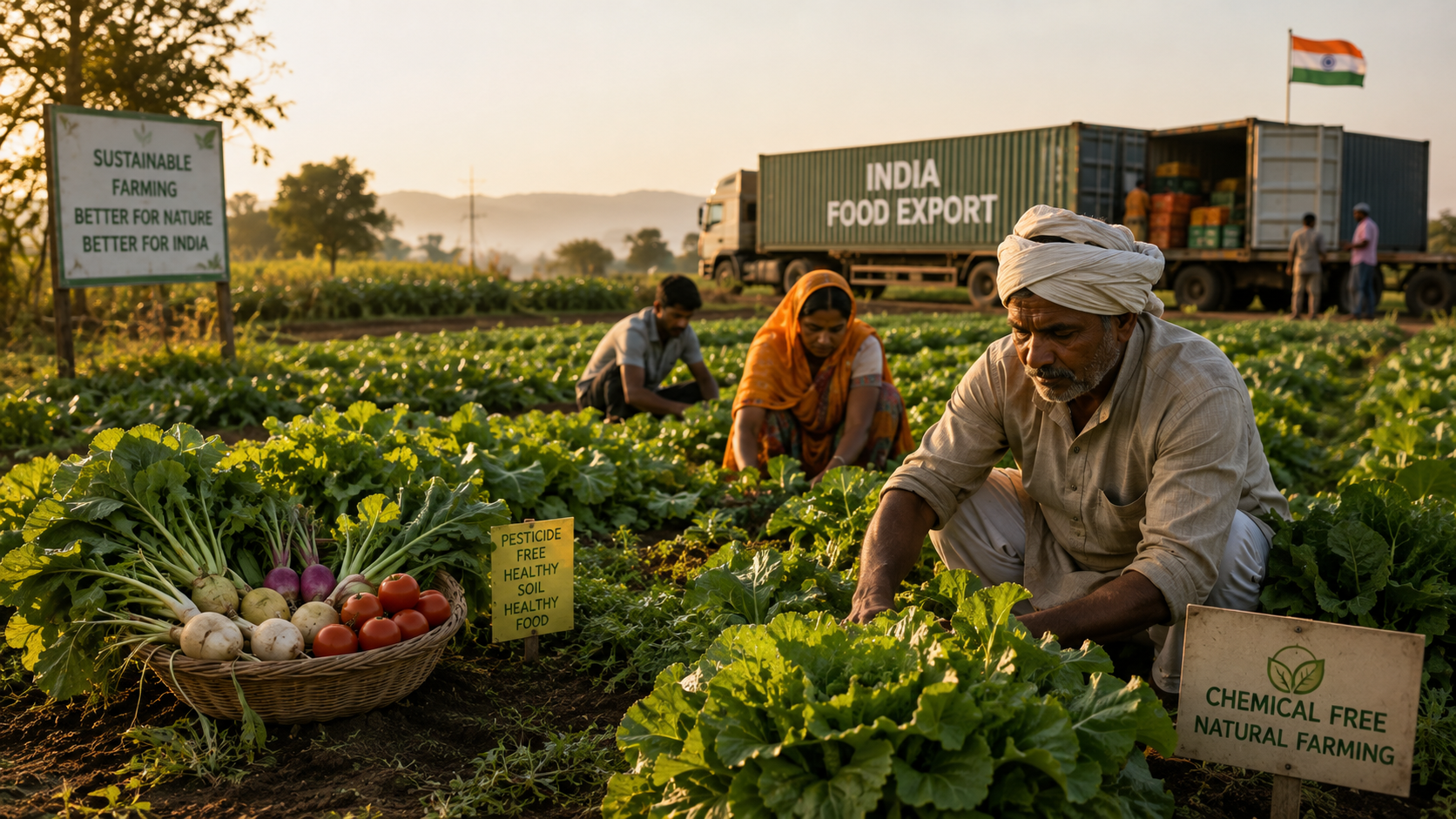
Farmers Urged To Target Global Markets
Key Highlights:
- PM Modi urged farmers to expand chemical-free farming.
- Global demand for chemical-free food is increasing.
- The government wants greater focus on food processing and exports.
- India has access to larger overseas markets through FTAs.
- Foodgrain production reached 376.56 million tonnes in 2025-26.
- Horticulture production increased to 377.78 million tonnes.
New Delhi, August 15: Prime Minister Narendra Modi has urged Indian farmers to adopt chemical-free farming on a larger scale, highlighting growing global demand for food products produced using more sustainable agricultural practices.
Addressing the nation on the 80th Independence Day, Modi said India should make greater use of its agricultural strength and expand the presence of Indian food products in international markets.
Agriculture and food production formed one of the key areas in the seven-point reform framework, or ‘Sapta Dhara’, outlined by the Prime Minister for India’s development journey towards 2047.
Modi said Indian farmers now have greater access to global markets through free trade agreements and should focus on moving beyond farm-level production towards food processing and exports.
He highlighted India’s diverse agricultural base, including traditional foods, millets, spices, fruits and flowers, and said these products have the potential to become globally recognised brands.
The Prime Minister specifically called for greater adoption of chemical-free farming, noting that demand for such products is expected to rise internationally.
He said agricultural products that meet global quality and safety standards can gain easier access to international markets.
India’s foodgrain production has increased significantly over the past decade. According to the figures cited in the address, production rose from 265.05 million tonnes in 2013-14 to 376.56 million tonnes in 2025-26.
Horticulture production also increased from 280.70 million tonnes in 2013-14 to 377.78 million tonnes in 2025-26.
The government’s focus is increasingly shifting towards combining agricultural production with food processing, branding and exports. This approach is aimed at increasing the value generated from agricultural products while providing farmers with access to larger markets.
The push for chemical-free farming also reflects the government’s broader emphasis on sustainable agriculture and meeting changing consumer preferences in international markets.