Horticulture sector must focus on global competitiveness

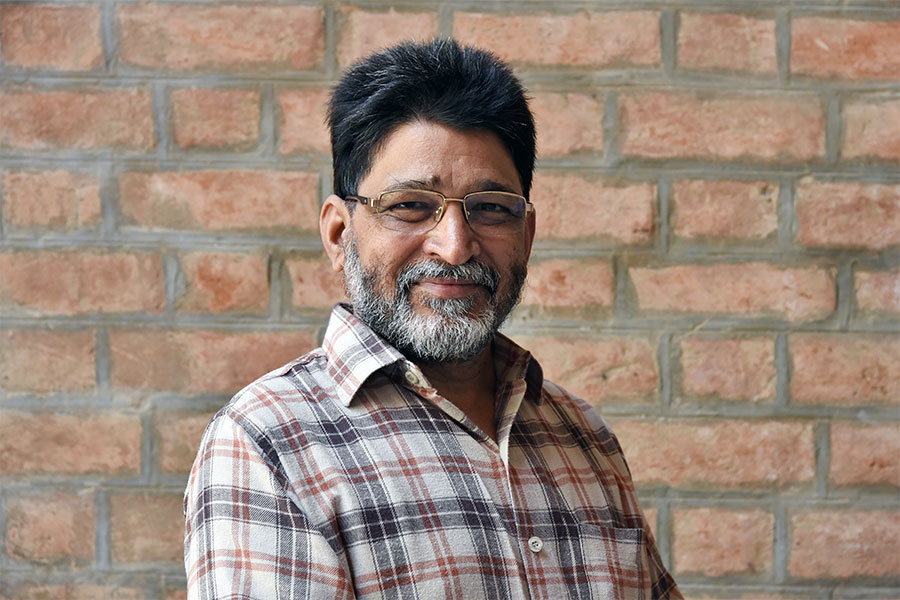
Prof Sukhpal Singh, IIM Ahmedabad, feels that the horticulture Cluster Development Programme introduced by the government should go beyond the focus on production to identifying new markets, improve the product quality and enhance the brand image in the existing markets.

IBT: Recently, the government has zeroed in on 12 districts under its horticulture Cluster Development Programme (CDP). What benefits will this have for the stakeholders – farmers & exporters in the country?

Prof. Sukhpal Singh: When a program like the horticulture Cluster Development Programme is planned and launched, it brings some additional resources with focus on certain crops or the place. So, to that extent, horticulture CDP will certainly strengthen the existing resources, be it on the production side or on the marketing side or the strengthening of value chains.

The programme targets an investment of Rs 10,000 crore across all the 53 districts over a span of 5-7 years. This amounts roughly to around Rs 188 crore per district. This model can bring about “agglomeration economies”; wherein many facilities are located in one place, which can be centrally utilized by a stakeholder, whether exporters or processors or packers or farmers.

This way, farmers and exporters can make use of common infrastructure facilities dedicated to those crops and value chains and can benefit from WTO compliant production/export subsidies.

Thailand had a similar model, called “One Tambon- One Product” that focuses on a given geography and on a given product or crop, to get economies of scale. India too, has had similar programmes. For example, Small Farmers Agribusiness Consortium (SFAC) had a scheme to encourage farmers in Gujarat and Maharashtra to grow white onions through the processing and exporting units. Equity grants, credit and help with infrastructure were given to small scale processing units for making value added products for exports like onion powder & onion flakes. So, this scheme is not that new; however, what makes it novel is the sheer volume of products that it encompasses.

IBT: How can CDP help in boosting the global competitiveness of the Indian horticulture industry? Which international benchmarks can the country seek an inspiration from in this regard? What can Indian horticultural clusters learn from them?

Prof. Sukhpal Singh: Competitiveness refers to the way of doing business, marketing, R&D and so forth. To be globally competitive, the sector needs to have cost competitiveness and quality competitiveness. There is a lot that needs to be done on that front to simultaneously reduce costs and enhance quality. For example, India has seen many discussions on having a countrywide GAP, but those have not materialised. Countries like Mexico, Chile and Thailand have national quality standards of Good Agricultural Practices – how crops should be grown – and that is aligned with global GAP. So, all aspects of the value chain starting from input suppliers to the retail chains need to be considered to boost global competitiveness.

IBT: How can the horticulture CDP be aligned with some of the other schemes of the government such as GI tags, Agriculture Infrastructure Fund and Mission for Integrated Development of Horticulture (MIDH)? What can be the plausible pros and cons of this move?

Prof. Sukhpal Singh: Be it AIF or MIDH, these are all public resources and therefore, a convergence between these schemes is essential. Of the 12 districts selected for CDP, there would be very few products that qualify for GI tag. The issue with the CDP is that it focuses on production without paying much heed to marketing. Unless the produce is marketed, all this abundant production is of no use. Focusing on production only is using our resources in a fragmented way.

So, efforts need to be made to identify new markets, strengthen existing markets, improve the product quality and enhance the brand image in the existing markets. This tilt towards production might be because marketing is not as simple as distributing resources or subsidies to farmers and local companies. Marketing requires soft skills such as research and understanding the entire market environment and then see what can sell where and so on.

IBT: CDP seeks to attract an estimated investment of Rs 10,000 crore across all the 53 districts. What can be done to achieve this target and accentuate the ease of doing agriculture in India ?

Prof. Sukhpal Singh: Around Rs. 188 crore per district over five to seven years is not a big amount because it boils down to basically Rs. 25 to 35 crore in a year. This can be consumed by one or two large players, and maybe a few dozen medium and small scale players, if you’re working with processing units or exporting or packing units and so on. The question at the end of the day really is to put that money in good hands so that the money granted is utilized well. Unfortunately, with the SFAC, it could not really be ascertained if the farmers really got the benefit of market linkage or not.

In that case, since no processors or exporters were approaching the farmers for contract farming, so the farmers did not benefit in a big way. Mandis remained the point of sale for farmers. So, the linkage between the farmers and exporters needs to be bolstered to make this scheme really effective and help raise farmer incomes.

When the government is talking about increasing or doubling farmers’ income, and all these investments are geared towards that, then it’s important to provide for those mechanisms. Instead of giving blanket incentives to various stakeholders, it could make them conditional to buying produce from the farmers directly.

This will help in boosting farmers’ income as it’ll create multiple market outlets for the farmers. The FPOs can also be roped in for aggregating the supply so that the exporters/firms get bulk supply of produce without incurring very high transaction costs .

Another approach to ramp up investments would be to focus on the quality of the product. Helping farmers with organic/GAP certification would help them reach new markets, because individually, farmers find this process to be complex. Group certifications can be an option to consider. Funds can be earmarked towards this.

IBT: Besides certification, what else can be done to ensure that the produce will be in tandem with international quality benchmarks?

Prof. Sukhpal Singh: It is not that India is not able to produce enough. Instead, India is not able to produce enough quality material. And global markets are all about quality. Indian produce has time and again been rejected in overseas markets on the grounds of issues like not being clean or the presence of chemical residues.

In order to rectify this, we need both Good Agricultural practices (GAPs) and Good Agricultural Marketing Practices (GAMPs). Indian farmers don’t do grading, cleaning or proper bagging of the produce before they bring it to the buyer or to the market. So, more work needs to be done to make farmers appreciate that quality does matter, whether in domestic or export market. More importantly, the defaulters on quality in export markets should be penalised, while those following the standards can be incentivised.

IBT: What are some of the challenges that could come in the way of successfully implementing this programme?

Prof. Sukhpal Singh: Only three crops i.e. banana, turmeric and pineapple are amenable to any significant farmer interface . The farmers can be contract growers here because these are short duration crops. These are not plantation crops like mango or grapes. There are limits to how much farmer interface can be there in long life crops like mango or grapes because right now, what we have in these crops are the pre-harvest contractors who go and buy the standing crop, then they just keep selling it over a few weeks or months. Contract farming can be encouraged here, as it will bring quality improvements much faster, besides a stable if not higher price for farmers.

Kerala Horticulture Development Programme, in Kochi can be an excellent source of inspiration here. They had the pineapple value chain lined up right from growing a new variety of pineapple to setting up a processing plant and then exporting and selling in domestic market with a brand name called “Jive”.

The farmers were shareholders in the company. Grapes are another area of learning. Back in 1992, they were rejected in international markets like the Netherlands owing to the presence of chemical residues. And then the grape cooperatives created a company, Mahagrapes, which was a public-private partnership. And then things turned around. So, today you have very successful export of grapes. And, all of them are Global GAP certified.

So, these examples imply that challenges can be resolved, provided the players and stakeholders come together for a sustained effort and work right up to the farmer level to manage the quality. So, farmer engagement in quality improvement is a must.

IBT: How can CDP help in promoting sustainable agriculture/circular economy?

Prof. Sukhpal Singh: Most of the international markets are driven by global standards, which have sustainability as part of their design, while taking into account the economic and societal aspects. So, if we bring these elements into the horticulture CDP, we can manage the sustainability aspect much better.

Also, India has her own national standards for sustainability, whether national organic standards or national labor standards. The only problem, though is the lack of proper implementation. At the same time, there is a need to train farm labour and impart them with the requisite modern skills, because workers are the real s/heroes of Indian agriculture.

Lastly, cooperative or group action needs to be promoted. For instance, there can be common facility centres to make infrastructure available that can also improve the adoption of these mechanisms. All these measures can go a long way to improve the quality of production as well as economic sustainability.


Prof. Sukhpal Singh is Professor, and former Chairperson, Centre for Management in Agriculture (CMA), IIM, Ahmedabad. In the past, he has been associated with numerous prestigious institutions like Centre for Research in Rural and Industrial Development (CRRID, Chandigarh) as its Director General, and IDS Sussex, University of Manchester, and Copenhagen Business School, as visiting Professor.


Previous Post
Next Post

Most Recent Posts

  • All Post
  • 8th Pay Commission
  • Aadhar
  • Aditya Birla Capital
  • Advertising Standards
  • Affordable Housing
  • Agriculture
  • Agriculture & Food
  • AI in Healthcare
  • AI Technology
  • Airlines
  • alcohol industry
  • Android
  • APEDA
  • Apple
  • Artificial Intelligence
  • Ashwini Vaishnaw
  • Asset Management
  • Atmanirbhar Bharat
  • Audio Devices
  • Audio Products
  • Auto Industry
  • Automobile
  • Automobiles
  • Automotive
  • Automotive Industry
  • Aviation
  • Bain Healthcare Report 2026
  • Bank
  • Banking
  • Banking Technology
  • Battery Industry
  • Beverage Industry
  • Beverages
  • Bihar
  • biotechnology
  • Bitcoin
  • BMW Group India
  • Brand Insight
  • BRICS
  • Bullion Market
  • Business
  • Business & Economy
  • Business & Trade
  • Business Leadership Post COVID-19
  • Business News
  • Business Terminology
  • Business Utilities
  • Buyback
  • Capital Goods
  • Capital Markets
  • CarsBusiness
  • CBIC
  • CCI
  • Child Investment
  • China
  • China technology news
  • Citizen Services
  • Clean Energy
  • Clean Technology
  • Cloud Computing
  • coal
  • Commerce
  • Commerce and Industry
  • Commercial Real Estate
  • Commercial Vehicles
  • Commodities
  • Communications
  • Companies
  • Competition Law
  • Compliance
  • Computer Accessories
  • connected cars
  • Consumer Affairs
  • Consumer Electronics
  • Consumer Finance
  • Consumer Goods
  • Consumer Health
  • Consumer Markets
  • Consumer News
  • Consumer Protection,
  • Consumer Rights
  • Consumer Spending
  • Consumer Trends
  • Content Creation
  • Copper
  • Corporate
  • corporate affairs
  • Corporate Earnings
  • Corporate Governance
  • Corporate News
  • Corporate Social Responsibility
  • Cost of Living
  • Country
  • CRED
  • Credit Cards
  • CREDIT RATING
  • Crude Oil
  • Cryptocurrency
  • CSR
  • Culture
  • Currency
  • Customs Duty
  • Cyber Security
  • Cybersecurity
  • Dairy Industry
  • Data & Analytics
  • Defence
  • Delhi Government
  • Delhi-NCR
  • Demographics
  • Derivatives
  • DGCA
  • DGFT
  • DigiLocker
  • Digital Assets
  • Digital Economy
  • Digital Health India
  • Digital Identity
  • Digital India
  • Digital Infrastructure
  • Digital passport for robots
  • Digital Payments
  • Digital Platforms
  • digital services
  • Diplomacy
  • Dixon Technologies
  • DPIIT
  • E Commerce
  • E-commerce
  • E-Governance
  • Ease of Doing Business
  • Economic Growth
  • Economy
  • Edible Oil Industry
  • Editor Choice
  • EdTech
  • Education
  • Electric Mobility
  • Electric Vehicles
  • Electronics
  • Employment
  • ENERGY
  • Engineering
  • Entertainment
  • Environment
  • EPFO
  • Ethanol Economy
  • EV Industry
  • EV Technology
  • Exports
  • EXTER
  • Farmers
  • Fashion
  • FINANCE
  • Finance Ministry,
  • Financial Marketing
  • Financial Markets
  • Financial News
  • Financial Planning
  • Financial Results
  • Financial Services
  • Fintech
  • FnTech
  • Food & Beverage
  • Food & Beverages
  • Food Exports
  • Food Industry
  • Food Manufacturing
  • Food Processing
  • Food Regulations
  • food safety
  • Foreign Exchange
  • Foreign Investment
  • Foreign Policy
  • Foreign Trade
  • Forex Reserves
  • fssai
  • FTA
  • Fuel
  • Fuel Prices
  • Future Energy
  • Gadgets
  • Gadgets & Apps
  • Gaming
  • GDP
  • Generative AI Healthcare
  • Geopolitics
  • GI Products
  • Global Brand Alliance
  • Global Economy
  • Global Markets
  • Global Politics
  • Global Tech
  • Global Trade Policy
  • Global Trends\
  • Gold
  • Gold Market
  • Gold Prices
  • Gols & Silver
  • Government
  • Government & Policy
  • Government Affairs
  • Government Bonds
  • Government Data
  • Government Initiatives
  • Government Policy
  • Government Policy & Regulation
  • Government Scheme
  • Government Schemes
  • Government Services
  • Green Energy
  • Green Mobility
  • GroupGlobal
  • GST
  • GST Council
  • GST Counsil
  • Hair Care
  • Hardware
  • Hatchback Segment
  • Health Supplements,
  • Horticulture
  • Housing
  • HSBC
  • Human Resources
  • humanoid robot market
  • Hyundai
  • IBT Infographics
  • iinvestment
  • Imports & Exports
  • Income Tax
  • India
  • India Auto Market
  • India Business News
  • India Inc
  • India News
  • India Retail
  • India-Canada Relations
  • India-China
  • India-Japan Relations
  • India-Russia Relations
  • India-South Korea Relations
  • India-US Relations
  • Indian Economy
  • Indian Navy
  • Industrial Pollution
  • Inflation
  • Infra
  • Infrastructure
  • Innovation
  • Instagram
  • Insurance
  • international
  • International Affairs
  • International Cooperation
  • International Relations
  • International Trade
  • Internet & Connectivity
  • Internet Policy
  • Internet Regulation
  • Interview
  • Investing
  • Investment News
  • Investments
  • iPhone News
  • IPO
  • IT Industry
  • Jewellery
  • Jio Platforms
  • JioBlackRock
  • Jobs & Careers
  • Joint Ventures
  • Kim Kardashian
  • Labour
  • Latest
  • Launches
  • Leadership
  • Leaderspeak
  • Lending
  • Lifestyle
  • Lifestyle Tech
  • List
  • Loans & Credit
  • Local News
  • Logistics
  • LPG
  • Luxury Cars
  • Machinery
  • Macroeconomics
  • Macroeconomy
  • maharashtra
  • Maharashtra News
  • Make in India
  • Makhana
  • Managed Workspaces
  • Manufacturing
  • Market Outlook
  • Markets
  • Maruti Suzuki
  • Mergers & Acquisitions
  • Meta
  • Microsoft
  • Middle East
  • Mobile Apps
  • Mobile Industry
  • Mobile Launch
  • Mobility
  • Monetary Policy
  • Monsoon
  • MoSPI
  • MSME
  • Mutual Funds
  • Nano Tech
  • National
  • National news
  • NEET 2026
  • NewsElectric
  • NewsTata
  • NPCI
  • NPS Vatsalya
  • Office Market
  • Oil & Gas
  • Oil and Gas
  • Others
  • OTT
  • Packaged Drinking Water
  • Packaged Foods
  • Packaging Industry
  • Packaging Innovation
  • Passenger Vehicles
  • Paytm
  • Pension & Retirement
  • Pensions
  • Personal Care
  • Personal Finance
  • Perspectives
  • Petroleum
  • PFRDA
  • Pharmaceuticals
  • PM Modi
  • PMAY-G
  • PMAY-U
  • PMAY,
  • PMI
  • policy
  • Population
  • PORTS
  • Positive News
  • PPF
  • Precious Metals
  • Pricing
  • Product Labeling
  • Product Labelling
  • Product Launch
  • Property Market
  • PSU
  • PSU Banks
  • Public Health
  • Public Policy
  • Public Safety
  • Public Sector
  • Public Services
  • Public Welfare
  • Quarterly Results
  • Railways
  • Rajasthan
  • Raksha Bandhan
  • Raksha Bandhan Gifts
  • Rare Earths
  • Ratings Agencies
  • RBI
  • Real Estate & Realty Sector
  • Recycling
  • Regulation
  • Regulatory Action
  • Regulatory Affairs
  • Regulatory Updates
  • REIT
  • Reliance Industries
  • Renewable Energy
  • RERA
  • Research
  • Retail
  • Retirement Planning
  • Road Infrastructure
  • Robotics & Automation
  • robotics standards
  • Rupee
  • Rural Development
  • Rural Housing
  • SAIL
  • Salaries
  • Samsung
  • Savings
  • Science & Technology
  • Sebi
  • Security
  • Semiconductor
  • Semiconductors
  • Services Sector,
  • SHIPPING
  • Silver Prices
  • Skill Development
  • Skills Development
  • Small Business
  • Smart Devices
  • Smart Home
  • Smart Mobility
  • Smartphones
  • Social Impact
  • Social Media
  • Society
  • Software Development
  • Solar Energy
  • Space Technology
  • Startups
  • Statistics
  • Steel Industry
  • Stock Market
  • stocks
  • streaming
  • Sugar Industry
  • Sukanya Samriddhi Yojana
  • Sustainability
  • SUV
  • Tamil Nadu Pollution Board
  • Tariffs
  • Tariffs & Duties
  • Tata Group
  • Tata Motors
  • Tata Sons
  • Tax Planning
  • Taxation
  • Tech
  • Tech Branding
  • Technology
  • Telecom & Technology
  • Telecom Industry
  • Top Story
  • Tourism
  • Trade
  • Trade Agreement
  • Trade Basket
  • Trade Partner
  • Trade Policy,
  • Transportation
  • Travel
  • Trending
  • Two-Wheelers
  • UIDAI
  • UPI
  • Urban Development
  • US-Iran Conflict Economic Impact
  • US–India Relations
  • Uttar Pradesh
  • Vaccines
  • VehiclesLuxury
  • vivo
  • Wastewater Management
  • Water Quality,
  • Wealth Management
  • Wearables
  • Wellness
  • WhatsApp
  • Wheat
  • Workplace
  • World
  • World News
  • Worldview
  • Yamaha
  • zLead Slider
    •   Back
    • Healthcare
    • Auto
    • Fmcg
    • Hospitality
    •   Back
    • Cash Crop
    • Organic
    • New Era Agri
    • Processed Food
    •   Back
    • Construction
    • Power
    • Mining
    • Telecom
    •   Back
    • ENERGY
    •   Back
    • Export/Import
    • Trade Deal
    • Trade Fair
    •   Back
    • Policies
    • Industry
    • Finance
    •   Back
    • Others technology
    • Mobile phone
    • Gadgets
    •   Back
    • Manufacturing
    • Services
    • Startup

India Business & Trade is a national media platform decoding the ideas, decisions and shifts shaping India’s growth story—across plicy, business, global commerce and a rapidly evolving marketplace.

Reach Us

India Business & Trade
M-62, Saket, New Delhi-110064, India

Subscribe To Newsletter

Stay ahead in the dynamic world of trade and commerce with India Business & Trade’s weekly newsletter.

Copyright © 2026 India Business & Trade. All Rights Reserved


Fatal error: Uncaught TypeError: Unsupported operand types: string * int in /var/www/sites/indiabusinesstrade.in/wp-content/plugins/royal-elementor-addons/admin/includes/wpr-templates-modal-popups.php:192 Stack trace: #0 /var/www/sites/indiabusinesstrade.in/wp-content/plugins/royal-elementor-addons/admin/includes/wpr-templates-modal-popups.php(128): WprAddons\Admin\Includes\WPR_Templates_Modal_Popups::get_template_settings() #1 /var/www/sites/indiabusinesstrade.in/wp-content/plugins/royal-elementor-addons/admin/includes/wpr-templates-modal-popups.php(106): WprAddons\Admin\Includes\WPR_Templates_Modal_Popups::render_popup_content() #2 /var/www/sites/indiabusinesstrade.in/wp-content/plugins/royal-elementor-addons/admin/includes/wpr-templates-modal-popups.php(64): WprAddons\Admin\Includes\WPR_Templates_Modal_Popups::display_popups_by_location() #3 /var/www/sites/indiabusinesstrade.in/wp-includes/class-wp-hook.php(341): WprAddons\Admin\Includes\WPR_Templates_Modal_Popups->render_popups() #4 /var/www/sites/indiabusinesstrade.in/wp-includes/class-wp-hook.php(365): WP_Hook->apply_filters() #5 /var/www/sites/indiabusinesstrade.in/wp-includes/plugin.php(522): WP_Hook->do_action() #6 /var/www/sites/indiabusinesstrade.in/wp-includes/general-template.php(3224): do_action() #7 /var/www/sites/indiabusinesstrade.in/wp-content/plugins/royal-elementor-addons/admin/templates/wpr-canvas.php(64): wp_footer() #8 /var/www/sites/indiabusinesstrade.in/wp-includes/template-loader.php(132): include('...') #9 /var/www/sites/indiabusinesstrade.in/wp-blog-header.php(19): require_once('...') #10 /var/www/sites/indiabusinesstrade.in/index.php(17): require('...') #11 {main} thrown in /var/www/sites/indiabusinesstrade.in/wp-content/plugins/royal-elementor-addons/admin/includes/wpr-templates-modal-popups.php on line 192