Government empowers authorities to prohibit imports made wholly or partly using forced labour.
The move strengthens ethical trade standards and pushes importers to ensure responsible global sourcing.
Highlights
- India bans imports of goods produced using forced labour.
- Commerce Ministry issues notification granting legal powers to prohibit such imports.
- Rule applies to products made wholly or partly through forced labour.
- Importers will need to verify ethical practices across their supply chains.
- Decision aligns India with global efforts to promote fair trade and workers’ rights.
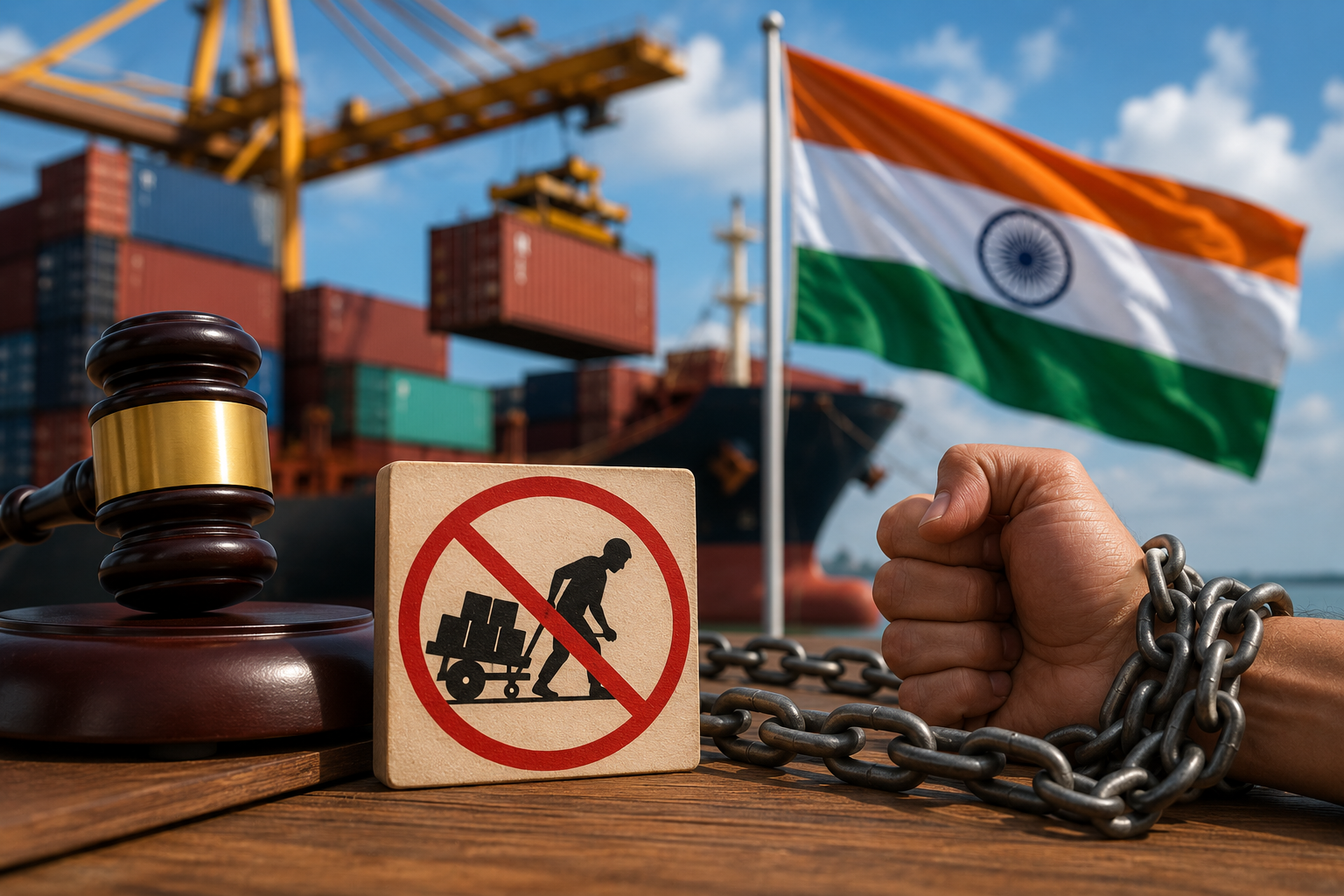
India has tightened its import regulations by prohibiting the import of goods produced using forced labour, marking a significant step towards promoting ethical trade and protecting workers’ rights.
In a notification issued by the Ministry of Commerce, the Central Government has empowered authorities to ban the import of products that are manufactured, either wholly or partially, through forced labour. The measure is aimed at ensuring that products entering the Indian market are free from exploitative labour practices.
The new rule is expected to strengthen India’s import framework and encourage businesses to conduct greater due diligence while sourcing products from overseas suppliers. Importers may now have to verify that their supply chains comply with internationally accepted labour standards.
While the notification does not identify any specific countries or products, it provides the government with the legal authority to act whenever there is evidence or concern that imported goods have been produced using forced labour.
The decision also brings India closer to international efforts to promote responsible sourcing. Several countries have already adopted similar measures to prevent goods linked to forced labour from entering their markets, making ethical supply chains an increasingly important part of global trade.
Industry experts believe the move will encourage greater transparency in international supply chains and push companies to strengthen compliance systems. Businesses importing goods into India may need to work more closely with suppliers to ensure labour standards are met and maintain documentation proving ethical sourcing.
The government expects the new regulation to support fair trade, discourage exploitative labour practices, and reinforce India’s commitment to responsible and sustainable international commerce.