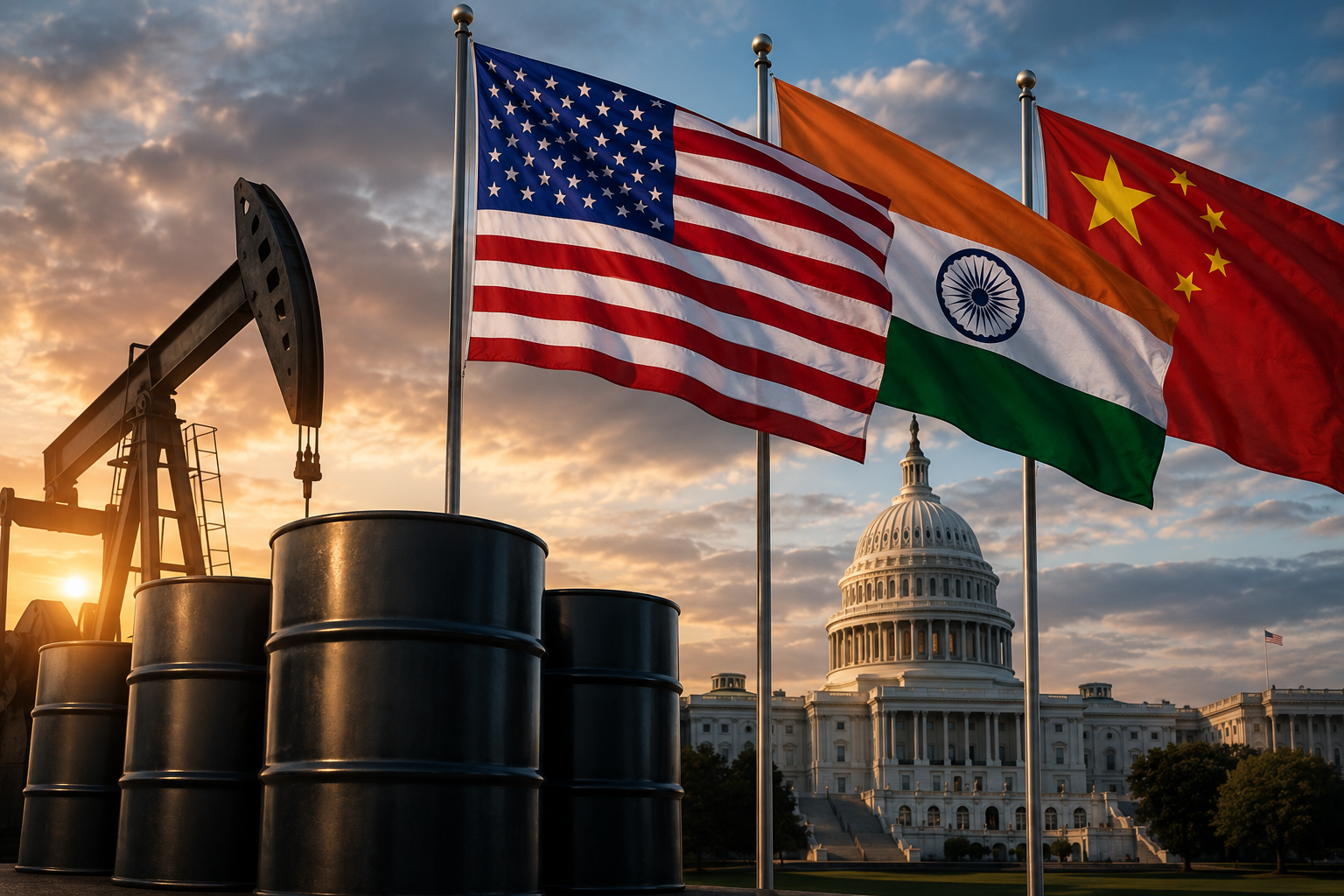
Revised US sanctions bill cuts proposed tariff from 500% to 100% on buyers of Russian oil and gas.
The move could ease pressure on major importers such as India and China while giving President Donald Trump authority to waive penalties in the US national interest.
Highlights
- US Senate revises Russia sanctions bill, reducing maximum tariff to 100% from 500%.
- India and China, the largest buyers of Russian crude, could benefit from the softer proposal.
- The highest tariff would apply only to the top five buyers of Russian oil and gas.
- The bill allows President Donald Trump to waive sanctions if deemed in the US national interest.
- The legislation enjoys bipartisan support and is expected to have a smoother path through Congress.
The United States has significantly softened its proposed sanctions against countries purchasing Russian oil and gas by reducing the maximum tariff from 500% to 100% in a revised bill introduced in the US Senate. The change is expected to provide relief to major importers of Russian crude, including India and China.
The updated legislation, backed by both Republican and Democratic senators, is designed to increase pressure on Russia while avoiding excessive disruption to global energy markets. Unlike the earlier draft, which proposed a blanket 500% tariff on all countries buying Russian energy, the revised bill limits the highest tariff to the five largest importers of Russian oil and natural gas.
Another key change is that the bill grants US President Donald Trump the authority to waive the sanctions if he determines that doing so serves the US national interest. This provision gives the White House greater flexibility in managing diplomatic and strategic relationships.
India has emerged as one of the world’s largest buyers of Russian crude oil since Western sanctions were imposed on Moscow. Russian oil has become a major source of India’s crude imports due to discounted prices, helping domestic refiners reduce import costs.
The revised proposal is therefore seen as less severe than the original version and could reduce the risk of a sharp increase in costs for countries dependent on Russian energy supplies.
The sanctions bill also includes measures targeting Russian officials and aims to discourage continued reliance on Russian energy exports. According to Reuters, Senate aides believe the revised legislation has a better chance of securing approval because of its more balanced approach. The bill currently has 26 bipartisan co-sponsors, with additional support expected as it advances through Congress.
If passed, the legislation could still influence global oil trade, but the lower tariff and presidential waiver provision are expected to provide greater flexibility for countries such as India while maintaining pressure on Russia.