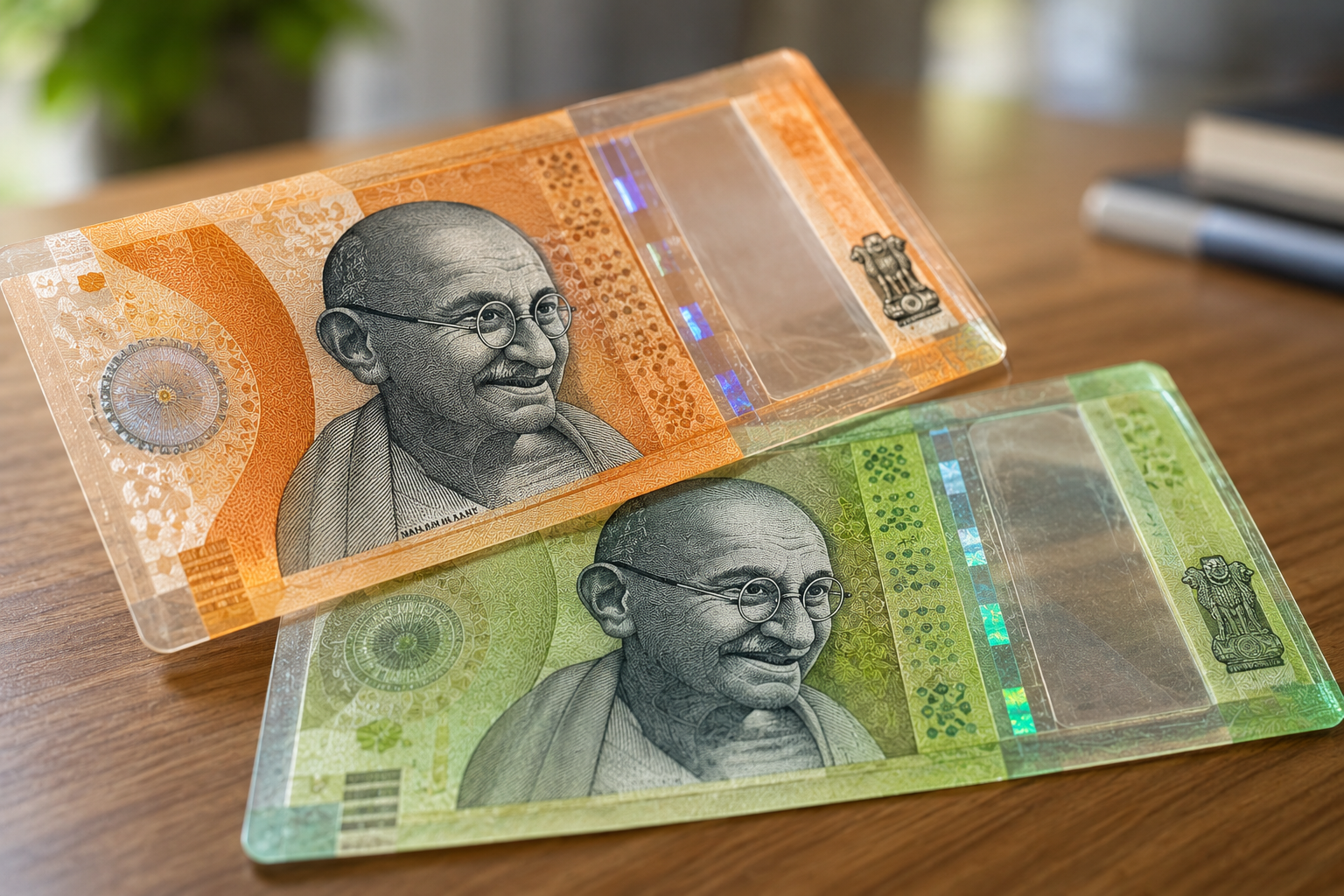
RBI has started preparations for a pilot rollout of ₹10 and ₹20 polymer currency notes.
If the trial is successful, a wider rollout could begin in 2027.
Highlights
- RBI plans a pilot launch of ₹10 and ₹20 polymer banknotes.
- BRBNMPL has invited global bids for polymer substrate supply.
- The new notes will feature advanced security features.
- Pilot trials are expected to begin next year.
- A nationwide rollout could start in 2027 if the trial succeeds.
- Polymer notes are more durable, secure, and longer-lasting than paper notes.
India may soon introduce plastic, or polymer, currency notes as the Reserve Bank of India (RBI) moves ahead with plans to test the new technology. The central bank is expected to begin a pilot project with ₹10 and ₹20 denomination notes, marking the first step towards replacing traditional paper currency with polymer banknotes.
According to reports, Bharatiya Reserve Bank Note Mudran Private Limited (BRBNMPL), RBI’s currency-printing subsidiary, has issued a global Expression of Interest (EOI) inviting manufacturers to supply opacified polymer substrate sheets with built-in security features. These sheets will be used for printing the new banknotes.
The pilot project is likely to begin next year. Based on the results of field trials, the RBI will decide whether polymer notes should be introduced on a larger scale. If the pilot is successful, a nationwide rollout could begin in 2027.
Polymer banknotes are considered more durable than conventional paper notes. They are resistant to water, dirt, and tearing, allowing them to remain in circulation for much longer. They also support advanced security features, making them harder to counterfeit and reducing the risk of fake currency.
Several countries, including Australia, Canada, New Zealand, and the United Kingdom, already use polymer banknotes because of their longer lifespan and improved security. India has explored the idea in the past, and the latest move indicates that the RBI is now taking concrete steps toward testing the technology.
If the pilot proves successful, India could gradually expand the use of polymer banknotes to other denominations in the coming years.