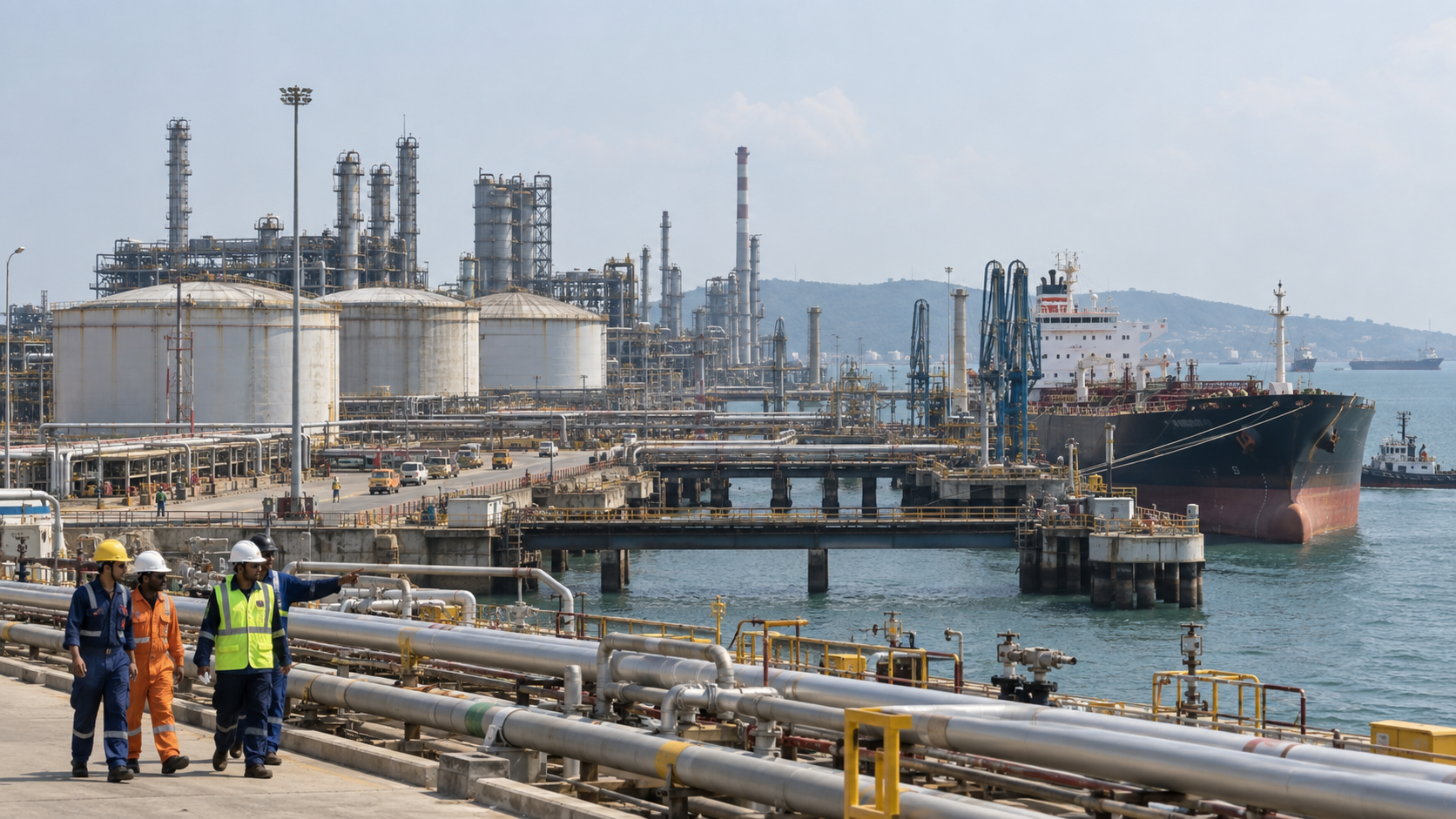
India could face a sharply higher crude oil import bill and renewed inflationary pressure as international oil prices surge, with Brent nearing US$100 a barrel amid escalating tensions in West Asia.
India is facing growing pressure from higher global crude oil prices after Brent futures rose more than 2% to around US$99 a barrel on Tuesday, while US West Texas Intermediate crude climbed nearly 3% to about US$94.
The latest rise followed attacks on Saudi energy infrastructure and heightened tensions involving Iran and the US, raising concerns over possible disruptions to global oil supplies.
India is particularly vulnerable to such price movements as it imports more than 88% of its crude oil requirement. A sustained rise in international prices increases the country’s dollar-denominated import bill and can put pressure on the trade balance and the rupee.
Higher crude prices can also feed into domestic inflation through fuel, transport and other energy-related costs. The extent of the impact will depend on how long prices remain elevated and how much of the increase is eventually passed on to consumers.
Retail petrol and diesel prices have remained unchanged for more than three months. Rates were last revised on May 25, when petrol was increased by ₹2.61 per litre and diesel by ₹2.71 per litre. Across four revisions in the second half of May, petrol prices rose by a total of ₹7.35 per litre and diesel by ₹7.53.
The rise in crude prices is also expected to put pressure on the marketing margins of state-run fuel retailers Indian Oil Corporation, Bharat Petroleum Corporation and Hindustan Petroleum Corporation.
According to data from the Petroleum Planning and Analysis Cell, India’s crude oil import bill surged more than 56% to US$63.4 billion during April-July, compared with US$40.5 billion in the corresponding period last year. Import volumes remained broadly stable at 81.9 million tonnes versus 81.5 million tonnes.
The Indian basket of crude oil averaged US$106.26 per barrel on Monday. Its September average stood at US$100.75 per barrel, compared with US$90.19 in August and US$82.04 in July.
Icra’s Prashant Vasisht said renewed Iran-US tensions pose a risk to crude supplies moving through the Strait of Hormuz and could also threaten additional energy flows if maritime restrictions expand. He added that higher crude prices could push auto-fuel marketing margins into negative territory and increase domestic LPG under-recoveries.
The Strait of Hormuz normally carries about one-fifth of global daily oil and liquefied natural gas supplies. West Asian oil shipments have reportedly declined to around 11 million barrels per day from roughly 18 million barrels per day amid the conflict.
Higher crude prices could also increase costs for refiners, airlines, petrochemical companies and other energy-intensive industries. A short-lived spike may have a limited macroeconomic impact, but a prolonged period of elevated prices could create greater pressure on inflation, the current account and the rupee.