Brief: India’s MICE infrastructure is expanding rapidly, but industry stakeholders say the next phase of growth will depend on building a seamless business-travel ecosystem across airports, hotels, mobility, technology, workforce, and destination experiences.
By Aanchal Sachdeva
InstaffingCE infrastructure is entering a significant expansion phase as demand for conferences, exhibitions, corporate meetings and incentive programmes grows. The country’s MICE market was valued at approximately US$49.4 billion in 2024 and is projected to reach US$103.7 billion by 2030, growing at 13.2% annually. India’s business travel spend also reached US$37.2 billion in 2024, with GBTA projecting 15.5% growth in 2025, more than twice the expected global rate.
The transformation is visible in the scale of infrastructure being developed. Yashobhoomi in Delhi has a convention centre capacity of 11,000, while Bharat Mandapam can accommodate up to 7,000 delegates. The India Expo Centre & Mart in Greater Noida, Mumbai’s Jio World Convention Centre, and convention facilities in Bengaluru and Hyderabad have further expanded India’s ability to host large-scale business events.
But industry stakeholders say the next challenge may not be about building bigger venues. It is about what happens once the delegate leaves one.
“Having seen India’s MICE industry evolve over the years, I would say we are ready in pockets, but we are not yet consistently ready at scale for the next 10 million business travellers,” says Ramanpreet Singh, Vice President, SKIL Events. “The demand is moving faster than the ecosystem around it.”
Physical infrastructure has progressed considerably. India has grown from 74 operational airports in 2014 to 164 today. However, Singh says airports and convention centres alone cannot measure MICE readiness.
“It is the entire delegate journey – visa facilitation, flight connectivity, hotel inventory, airport processing, last-mile transportation, technology, skilled manpower and, above all, consistency of service – that ultimately defines a destination,” he says.
Louis D’Souza, Managing Partner, Tamarind Global, similarly sees integration as central to India’s next phase of MICE growth.
“The real opportunity lies in connecting this infrastructure with seamless airports, hotels, high-speed urban mobility and curated destination experiences,” he says. “If India gets that integration right, we will not just host more conferences — we will become one of the world’s most compelling business events destinations.”
The challenge becomes clearer when you consider accommodation capacity alongside venue growth. India’s hospitality sector signed more than 64,000 branded hotel keys in 2025, but only around 14,200 rooms actually opened during the year, according to Singh.
“That illustrates the difference between planned capacity and capacity available on the ground,” he says. “We now need to think beyond building MICE venues and start building truly MICE-ready cities.”
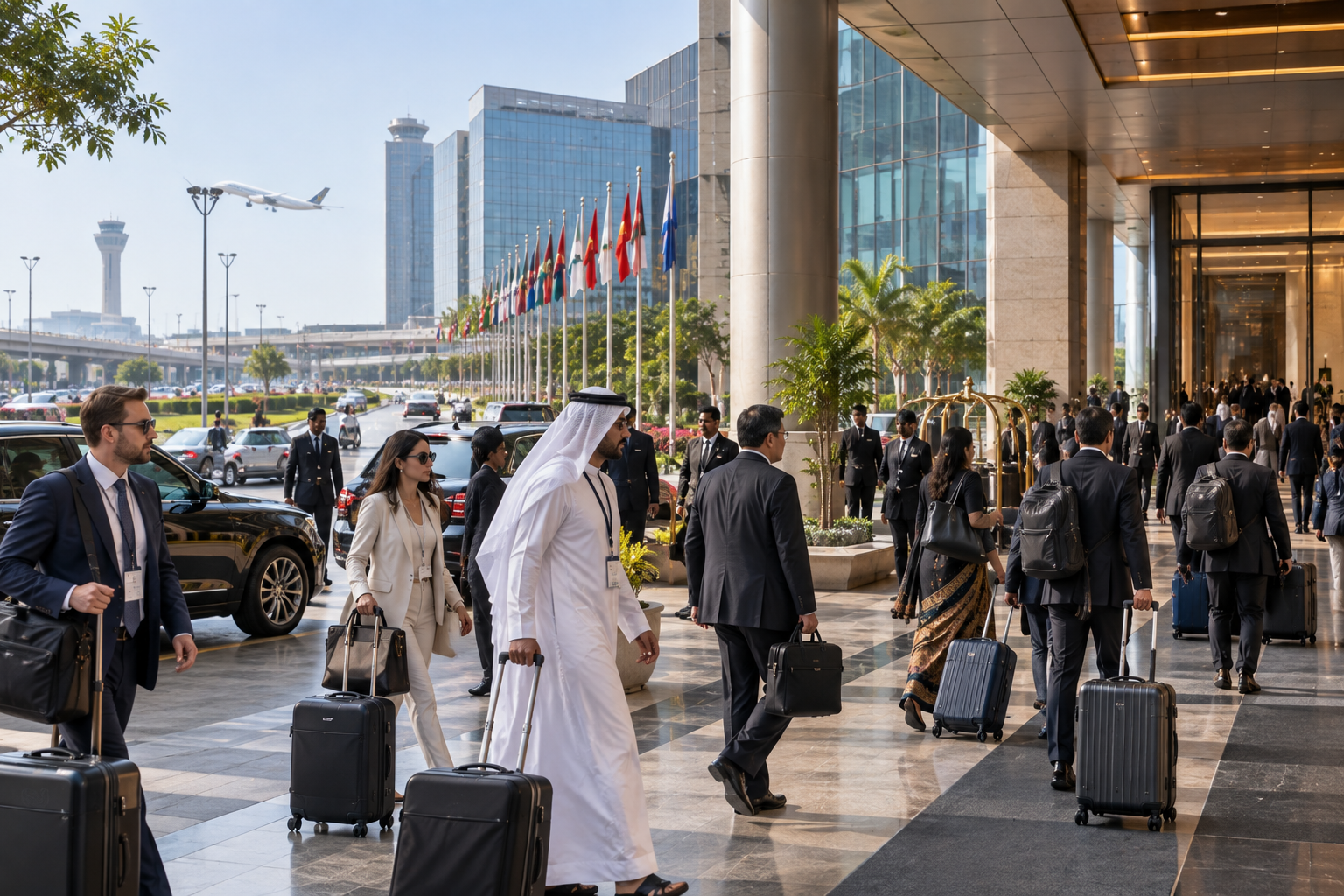
For business travellers, the experience begins well before they enter a convention hall. It includes airport processing, transfers, hotel check-in, commuting to the venue, digital connectivity, dining and meetings, and potentially leisure experiences before departure.
“A business traveller does not judge India by the size of the plenary hall; they judge it by how seamlessly they can move from touchdown to hotel, venue and back,” Singh says.
This also creates an opportunity beyond India’s established metropolitan centres. New convention hubs across Tier 1 and Tier 2 cities could widen the country’s MICE footprint, provided expansion is matched by hotel rooms, air connectivity, trained talent and destination-management capabilities.
India’s ability to combine business with leisure could further strengthen its proposition. Conferences can be paired with heritage, gastronomy, wellness, shopping and cultural experiences, creating opportunities for pre- and post-event stays and bleisure travel. Delhi can connect business events with Agra or Rajasthan;rer Mumbai with its food and cultural landscape; Bengaluru and Hyderabad with their corporate and technology ecosystems; and Goa with a distinct incentive-travel proposition.
For an international delegate, the conference may provide the reason to travel to India, but the experience outside it can influence how long they stay and whether they return.
The Ministry of Tourism’s National Strategy for MICE Industry and Model Guidelines for setting up City MICE Bureaus recognise the need for a more destination-led approach. Bringing convention centres, hotels, airlines, transport operators, tourism authorities and destination-management companies into a coordinated ecosystem could help destinations present themselves as integrated MICE propositions rather than collections of individual services.
For Singh, that is the next test for India’s MICE ambitions.
“For India, the next 10 million travellers are not simply a capacity challenge – they are a consistency and experience challenge,” he says.
India has built the venues to host larger business events. The next question is whether it can build the ecosystem around them to make the entire business journey seamless enough to win the next one.