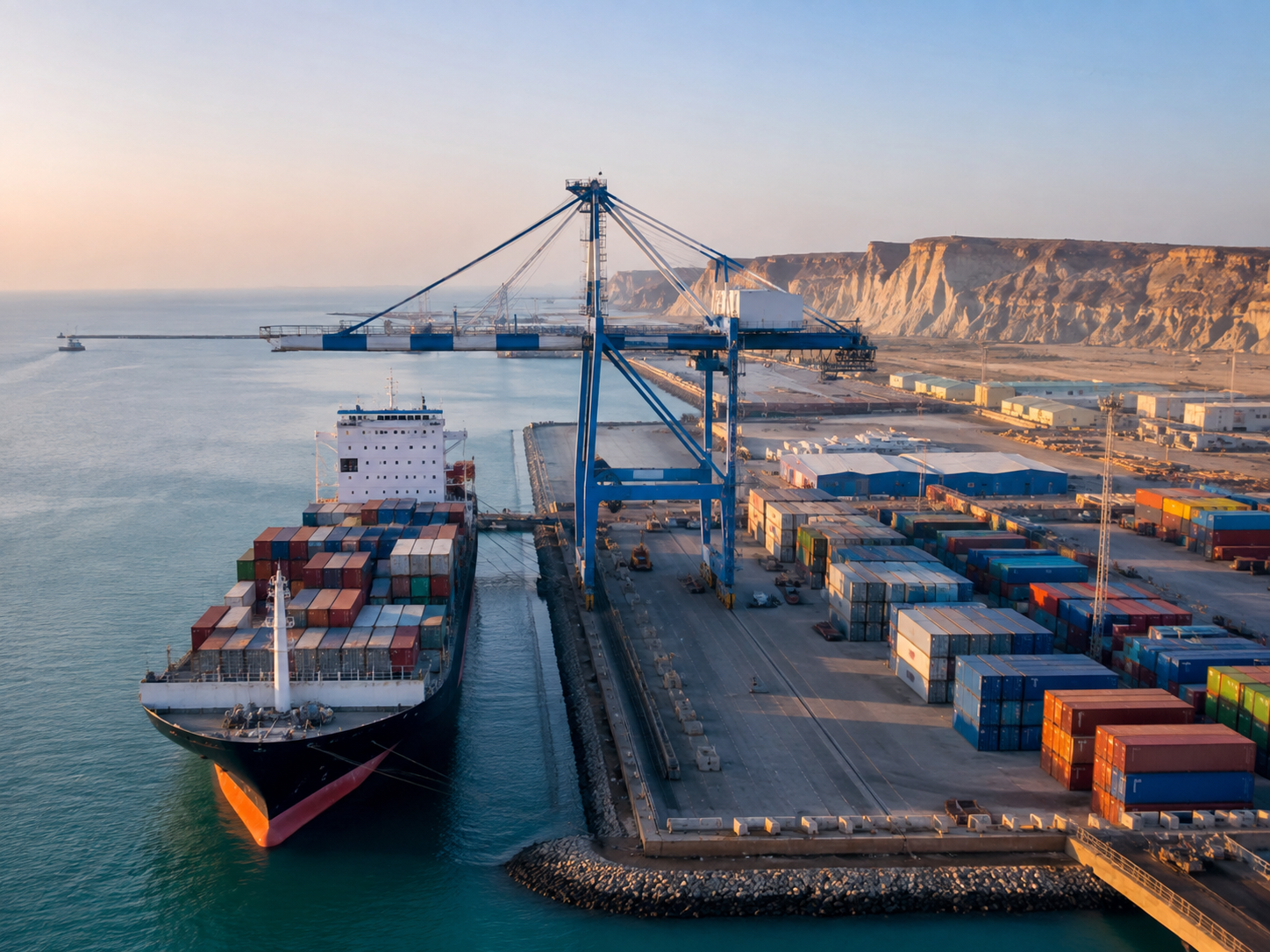
New Delhi is negotiating with Tehran for a new arrangement to manage Chabahar Port.
The move aims to safeguard India’s strategic interests and regional connectivity.
Highlights
- India and Iran have begun fresh negotiations on Chabahar Port management.
- Talks come after the expiry of the previous operating arrangement.
- India is seeking legal assurances despite uncertainty over US sanctions.
- Chabahar remains crucial for India’s access to Afghanistan and Central Asia.
- The port is a key part of India’s regional connectivity and trade strategy.
- Experts say India is determined to retain its strategic presence at the port.
Story
India and Iran have started a fresh round of negotiations to ensure the continued management and operation of the strategically important Chabahar Port. The discussions come as New Delhi seeks to protect its long-term interests in the Iranian port while navigating uncertainty over US sanctions.
According to the report, India is working on a new arrangement with Tehran after the earlier agreement expired. Officials are looking for legal guarantees from the Iranian side to ensure that any new deal remains protected even if US sanctions on Iran are reimposed or tightened in the future.
India had earlier secured a temporary sanctions waiver from the United States for operations at Chabahar, but that exemption expired in April this year. Since then, New Delhi has been exploring ways to continue its involvement at the port without disrupting operations.
Chabahar Port holds significant strategic value for India. It provides direct access to Afghanistan and the landlocked countries of Central Asia while bypassing Pakistan. The port is also seen as an important gateway for expanding India’s trade and connectivity with the Gulf region and beyond.
Officials believe a stable operating framework is essential to keep cargo movement uninterrupted and strengthen regional trade links. The report also notes that India wants assurances from Iranian authorities that any agreement signed now will remain valid even if international sanctions return.
Experts say India has consistently viewed Chabahar as a key pillar of its regional outreach strategy. Despite geopolitical challenges and changing global conditions, New Delhi has not given up its commitment to developing the port. They also warn that if India reduces its presence, China could increase its influence in the region.
The ongoing negotiations reflect India’s determination to preserve its strategic foothold at Chabahar while balancing diplomatic, economic and geopolitical considerations.