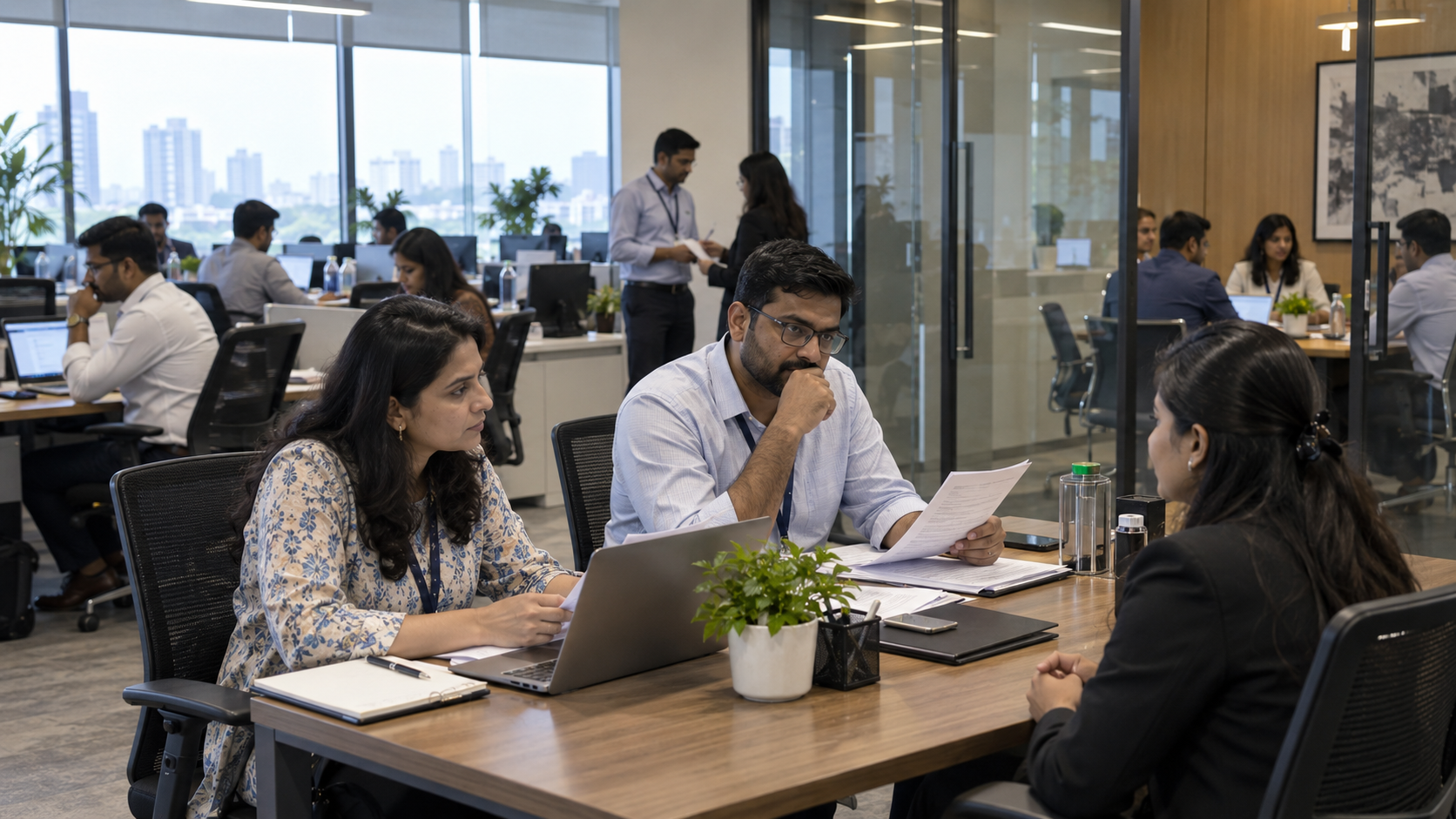
India has emerged as the strongest hiring market globally for the October-December 2026 quarter, with employers reporting a Net Employment Outlook of 54% and a majority planning to expand their workforce.
India has topped global hiring confidence for the final quarter of 2026, according to the latest Employment Outlook Survey by staffing firm ManpowerGroup.
The survey, conducted among 3,055 employers across India between July 1 and July 31, showed that the country’s Net Employment Outlook for Q4 CY2026 stood at 54%. The indicator is calculated by subtracting the percentage of employers expecting workforce reductions from those planning to increase hiring.
Around 65% of Indian employers said they plan to increase staffing between October and December, while 11% expect to reduce their workforce. Another 24% expect staffing levels to remain unchanged during the quarter.
Sandeep Gulati, Managing Director of ManpowerGroup India and Middle East, said employer confidence has strengthened further heading into the final quarter of the year. India’s employment outlook rose six percentage points from the previous quarter and was 11 points higher than the same period last year.
India’s hiring outlook is also 25 percentage points above the global average. Other countries with strong employment expectations include Brazil at 53%, Panama at 49%, Mexico and the UAE at 41% each, and Peru at 40%.
The survey indicated that nearly 70% of employers in India are hiring in response to changing job roles and evolving skill requirements. Expansion of global capability centres, along with growth in sectors such as finance, insurance and hospitality, is supporting demand for workers.
Hiring intentions improved across all four regions of India compared with both the previous quarter and the year-ago period. The eastern region recorded the strongest outlook, with a Net Employment Outlook of 59%.
The report also highlighted the growing role of artificial intelligence in recruitment. Around 57% of employers said their time-to-hire had improved compared with a year earlier, with AI adoption contributing to faster recruitment processes.
However, employers continue to face difficulties in finding candidates with the right capabilities as job requirements change rapidly. Skills shortages, mismatched candidate expectations and AI-driven workforce transformation remain key challenges.
Gulati said sustained investment in upskilling and continuous learning will be critical if companies are to maintain the current hiring momentum and meet future workforce requirements.