USTR Jamieson Greer to Meet Piyush Goyal on June 23-24; Interim Trade Pact May Get Final Shape
Key Highlights
- U.S. Trade Representative Jamieson Greer to visit India on June 23-24.
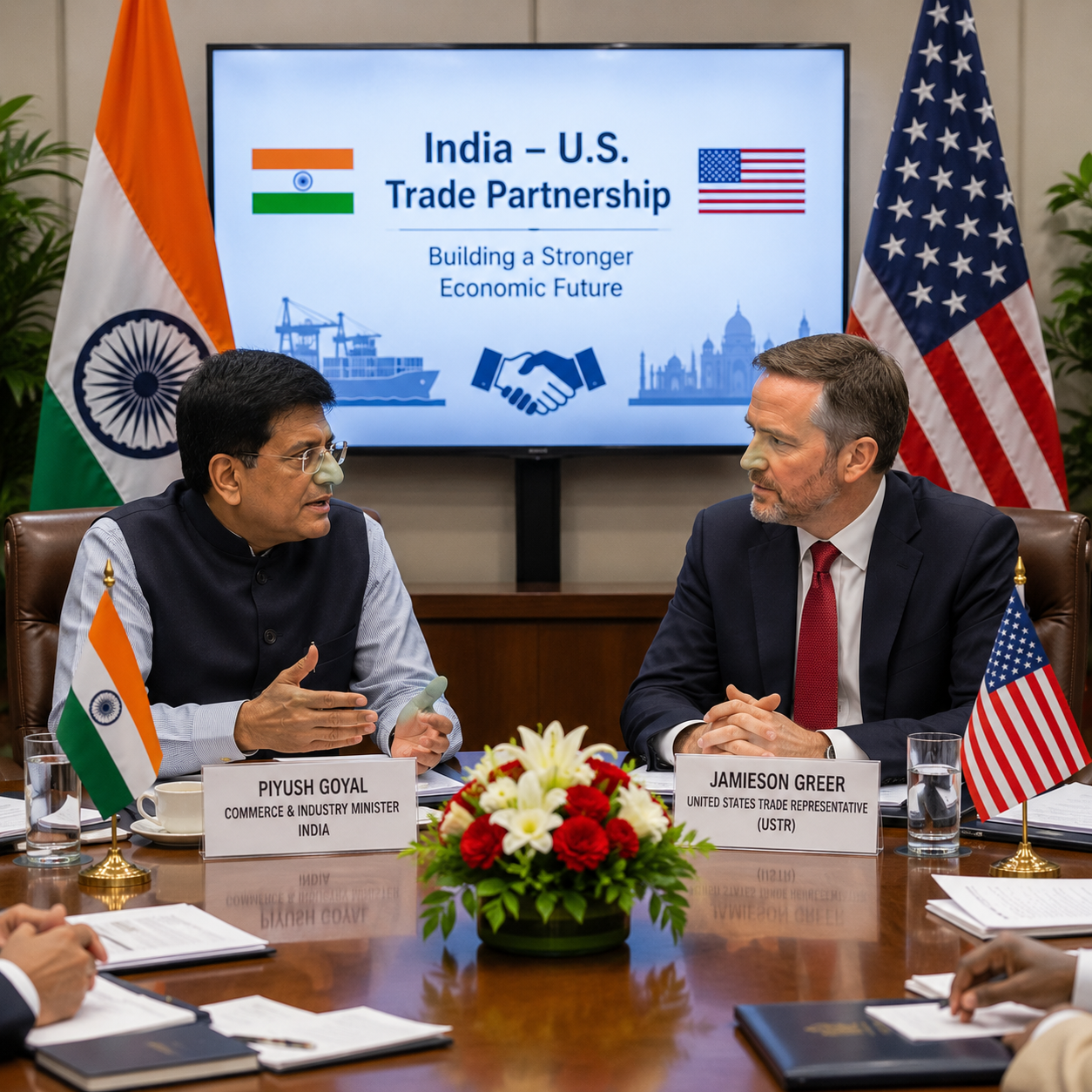
- Greer will meet Commerce Minister Piyush Goyal to discuss the interim trade agreement.
- India and the U.S. aim to finalize the framework of the interim trade deal and advance the broader Bilateral Trade Agreement (BTA).
- Chief negotiators from both countries held detailed discussions earlier this month.
- India seeks tariff advantages over competing nations under the proposed agreement.
- Section 301 investigations and proposed U.S. tariffs remain key issues in negotiations.
- The U.S. currently imposes a temporary 10% tariff on imports from all trading partners until July 24.
- Both sides are working toward a fair, balanced, and mutually beneficial trade framework.
New Delhi, June 15: The India-U.S. trade negotiations are entering a crucial phase as U.S. Trade Representative Jamieson Greer is scheduled to visit India on June 23-24 for discussions with Commerce and Industry Minister Piyush Goyal.
Commerce Secretary Rajesh Agrawal said both sides are expected to focus on finalizing the interim trade framework while also advancing talks on the broader Bilateral Trade Agreement (BTA).
Greer is expected to arrive in New Delhi on June 22, following earlier negotiations held between Indian officials and a U.S. delegation led by chief negotiator Brendan Lynch from June 2-4.
The discussions come amid ongoing trade tensions, particularly surrounding proposed U.S. tariffs under Section 301 of the Trade Act of 1974. The U.S. has proposed additional duties on imports from several countries, including India, citing concerns related to forced-labour-linked supply chains and industrial overcapacity.
Indian officials said New Delhi has already submitted its response to the Section 301 investigations and remains actively engaged with U.S. authorities on the matter.
A key objective for India is securing lower tariff rates than competing manufacturing and export economies, ensuring Indian products remain competitive in the U.S. market.
The negotiations have gained additional significance after the U.S. Supreme Court struck down certain tariff measures introduced under emergency powers earlier this year. The U.S. subsequently imposed a temporary blanket tariff of 10% on imports from all countries under Section 122, which remains in effect until July 24.
Officials believe the interim agreement could provide a pathway for resolving tariff concerns, improving market access, and strengthening economic ties between the world’s two largest democracies.
If successfully concluded, the agreement is expected to boost bilateral trade, improve investment flows, and provide greater certainty for businesses operating across both markets.