Key Highlights
- India-US trade talks begin in New Delhi from June 1–4.
- Interim trade agreement expected to move closer to finalization.
- Discussions to cover tariffs, AI, pharmaceuticals, semiconductors, and critical minerals.
- Bilateral trade has grown from $20 billion to $220 billion in two decades.
- US delegation led by Brendan Lynch; India represented by Darpan Jain.
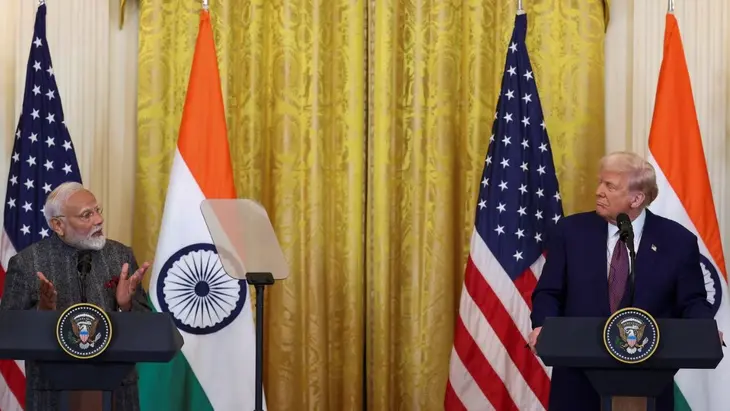
New Delhi: India and the United States have commenced a fresh round of trade negotiations in New Delhi from June 1 to June 4, aiming to finalize an interim trade agreement and advance discussions on market access, customs facilitation, and non-tariff barriers.
The talks come at a crucial stage, with both countries indicating that negotiations have entered the final phase. US Ambassador to India Sergio Gor recently stated that the agreement is nearing completion, expressing confidence that a deal could be signed in the coming weeks or months.
The US delegation is being led by chief negotiator Brendan Lynch, while India’s negotiating team is headed by Darpan Jain, Additional Secretary in the Department of Commerce.
Expanding Economic Partnership
Trade relations between India and the United States have expanded significantly over the past two decades, with bilateral trade increasing from approximately $20 billion to $220 billion. Both countries are now looking to deepen cooperation in high-value sectors, including digital trade, advanced manufacturing, clean energy, healthcare, and emerging technologies.
Union Commerce Minister Piyush Goyal’s recent visit to the United States also focused on strengthening collaboration in financial services, artificial intelligence, digital payments, manufacturing, and healthcare.
AI, Semiconductors and Critical Minerals in Focus
A major area of discussion is expected to be cooperation in strategic technologies such as artificial intelligence, semiconductors, quantum computing, and resilient supply chains.
India and the United States recently finalized a framework for cooperation in the critical minerals sector, a move aimed at reducing supply chain vulnerabilities and addressing concerns related to global dependence on rare earth materials.
Officials believe India could become part of a trusted network of technology and manufacturing ecosystems supporting next-generation industries.
Strong Pharmaceutical Ties
Pharmaceutical trade is also expected to feature prominently during the discussions. The United States continues to rely heavily on Indian generic medicines, with Indian manufacturers supplying a substantial share of affordable medicines to the American market.
US officials have highlighted India’s importance as a trusted pharmaceutical partner, particularly in the supply of essential and life-saving drugs.
Toward a Comprehensive Trade Deal
Industry observers view the current negotiations as a significant step toward a broader trade partnership. Both governments have emphasized the importance of creating a predictable regulatory environment, encouraging investment, and strengthening economic cooperation across multiple sectors.
The outcome of the Delhi talks is expected to shape the next phase of India-US economic relations and could pave the way for a comprehensive trade agreement in the near future.
Business, Economy, International Trade, Global Markets, Policy, Government, Technology, Artificial Intelligence, Pharmaceuticals, Semiconductors,