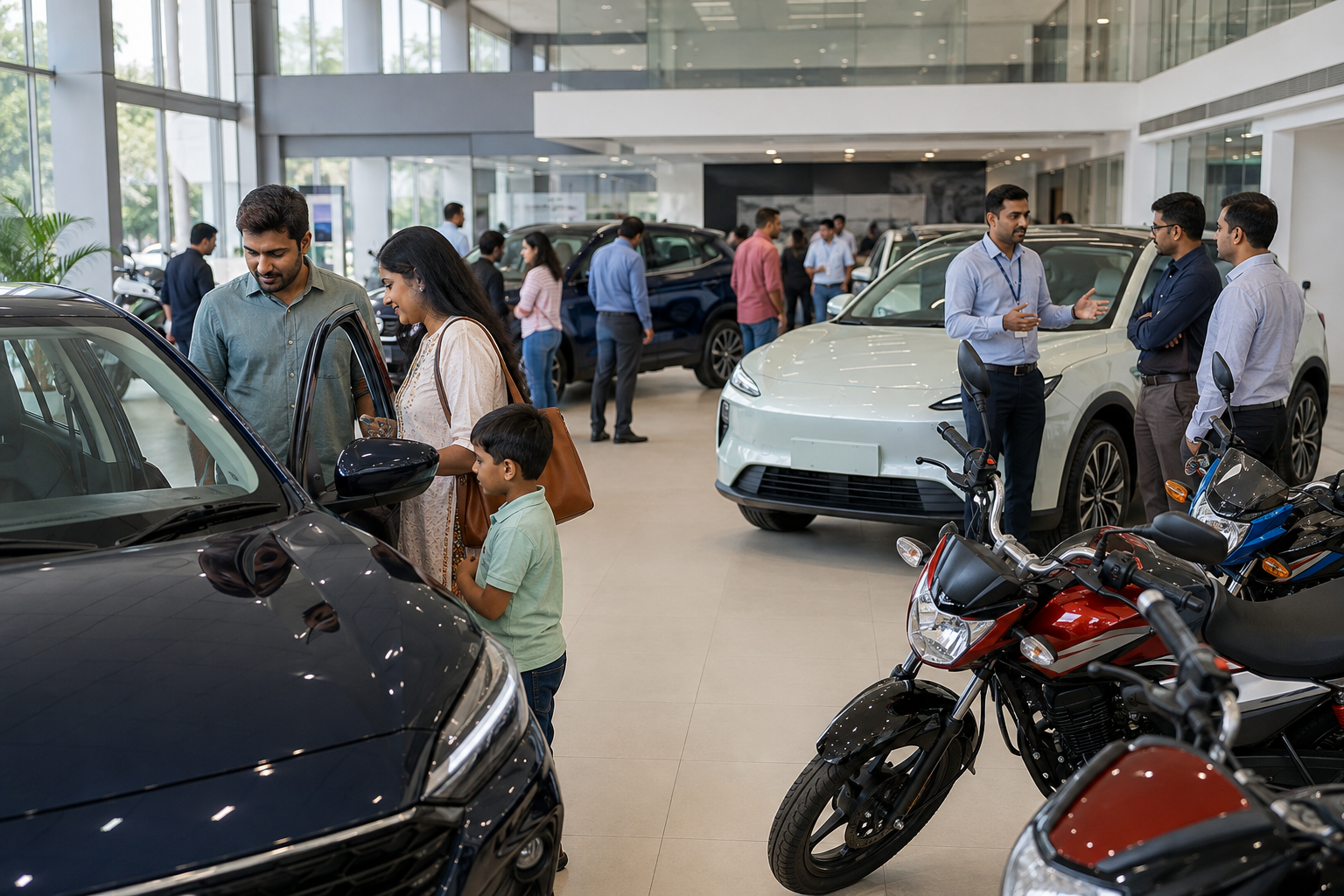
Tax cuts and cheaper loans drive growth
Key Highlights
- Passenger vehicle sales rose 16.8% year-on-year in January-March.
- April-June passenger vehicle sales increased by nearly 23%.
- Two-wheeler volumes grew 14% year-on-year in April-June.
- Vehicle loans expanded between 12.5% and 18.6% year-on-year in recent months.
- EV passenger-vehicle registrations jumped 81.6% in January-June.
- EV penetration reached 10.6% in June, according to FADA data cited in the report.
- Higher petrol prices have strengthened the appeal of electric mobility.
India’s automobile market is continuing to accelerate despite a challenging cost environment, with tax relief, cheaper vehicle financing and growing demand for electric vehicles helping offset the impact of higher petrol prices and rising vehicle prices.
According to the latest industry trends highlighted by Financial Express, passenger-vehicle demand has remained resilient over the past nine months. The momentum follows the GST rate cuts introduced in 2025, which initially reduced vehicle prices and helped stimulate consumer demand.
Tax relief supports consumer demand
The reduction in GST rates gave automakers an opportunity to lower prices and stimulate sales. Several manufacturers, including Maruti Suzuki, reduced vehicle prices by more than the direct GST benefit in some segments last year in an effort to revive demand.
Although vehicle prices have subsequently risen as manufacturers have faced higher input costs, dealers continue to report healthy booking activity.
Passenger-car sales increased 16.8% year-on-year during the January-March quarter, while sales in the April-June period climbed by almost 23%, highlighting the strength of consumer demand.
The market has also benefited from a reduction in borrowing costs. The policy rate fell by 125 basis points from December 2024 to December 2025, helping reduce the cost of vehicle loans and improving affordability for buyers.
Vehicle financing remains strong
Cheaper credit has become an important driver of automobile consumption. Vehicle loans recorded year-on-year growth between 12.5% and 18.6% every month from October 2025 through June 2026, while growth remained above 17% in every month from January, according to the report.
The combination of lower interest rates, higher disposable incomes and improved consumer sentiment has helped maintain demand even as manufacturers have started passing higher production costs on to customers.
The broader employment environment has also supported consumption, with hiring by global capability centres and startups adding to household income and spending capacity.
Higher petrol prices accelerate EV adoption
The increase in petrol prices has also strengthened the case for electric vehicles.
Passenger electric-vehicle registrations rose 81.6% year-on-year to 151,050 units during January-June 2026. Monthly EV passenger-vehicle sales crossed 30,000 units for the first time in June, reaching 33,524 units, while EV penetration reached 10.6% during the month, based on FADA data cited by the report.
The shift is particularly significant because consumers are increasingly considering running costs alongside the upfront price of a vehicle. With petrol becoming more expensive, electric vehicles can become more attractive to buyers looking for lower operating costs.
Two-wheelers also maintain momentum
The two-wheeler segment has remained resilient despite higher fuel prices and inflationary pressures.
Two-wheeler volumes increased 14% year-on-year in the April-June quarter, although growth moderated from the 25% increase recorded in January-March.
The moderation indicates that demand remains healthy but is facing a comparatively stronger base and higher ownership costs.
Rural demand remains a key factor
The outlook for automobile sales will also depend on rural consumption and the monsoon.
While concerns over the pace of the monsoon could create uncertainty for rural demand, economists cited in the report expect agricultural activity to remain supportive of consumption. A weaker crop output could potentially be offset by growth in livestock and fisheries, while agriculture now accounts for less than 30% of rural income.
As a result, a weaker harvest may not necessarily translate into a significant slowdown in rural automobile demand.
Industry analysts remain relatively optimistic. Crisil Intelligence expects passenger-vehicle sales to maintain double-digit growth during the current financial year, provided rural sentiment remains stable.
Outlook
India’s automobile market is therefore facing two opposing forces. Higher petrol prices, rising input costs and more expensive vehicles could put pressure on affordability, but policy support, lower financing costs, tax relief and stronger EV adoption are helping sustain demand.
The latest numbers suggest that consumers have so far been willing to continue purchasing vehicles despite higher costs. If interest rates remain supportive and employment and income conditions stay favourable, automobile demand could remain strong through the rest of the financial year.