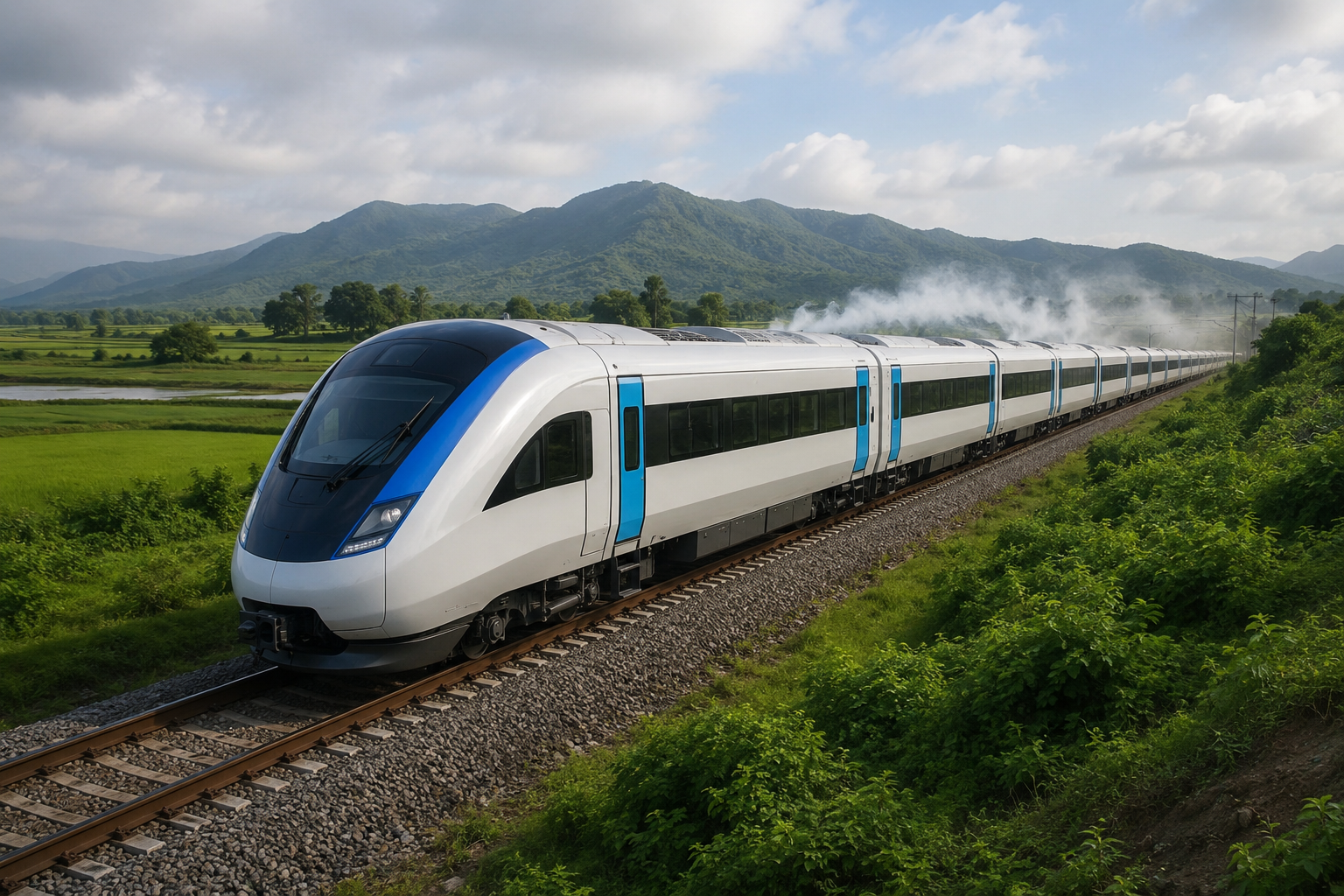
Diesel Replaced By Hydrogen
Key Highlights
- India’s first hydrogen-powered train has travelled over 1,200 km successfully.
- More than 3,200 litres of diesel saved since launch.
- Hydrogen fuel cells generate electricity while emitting only water vapour.
- Indigenous 10-coach train powered by 2,400 kW hydrogen propulsion system.
- Jind now houses Indian Railways’ first dedicated hydrogen storage facility.
- Multiple safety systems monitor leaks, fire and pressure in real time.
- Delhi route trials will begin after successful Jind-Sonipat operations.
- Project marks a major step towards zero-emission rail transport in India.
New Delhi: India has achieved a major milestone in sustainable transportation as the country’s first hydrogen-powered train successfully completed more than 1,200 kilometres of operations between Jind and Sonipat after being flagged off on July 17, 2026. The project has already replaced the use of over 3,200 litres of diesel, showcasing the potential of hydrogen-powered rail transport in reducing fossil fuel consumption and emissions.
Unlike conventional diesel locomotives, the hydrogen train generates electricity onboard through a chemical reaction between hydrogen and oxygen inside fuel cells. The electricity produced powers the train, while the only by-product released into the atmosphere is water vapour, making it one of the cleanest rail technologies currently available. The system produces no smoke and no direct carbon emissions during operation.
Developed entirely by Indian Railways, the indigenous hydrogen train consists of 10 coaches and is powered by two Hydrogen Driving Power Cars capable of producing a combined 2,400 kW of power. The propulsion system is supported by advanced lithium iron phosphate batteries and high-pressure hydrogen cylinders, ensuring efficient and reliable performance throughout the journey.
To support the project, Indian Railways has established its first dedicated green hydrogen storage facility at Jind. The facility can store nearly 3,000 kilograms of hydrogen, with storage pressure reaching up to 500 bar and dispensing pressure of 350 bar, ensuring a continuous fuel supply for train operations.
Safety has been a key focus of the project. The train is equipped with multiple independent monitoring systems capable of detecting hydrogen leaks, excessive heat, flames and smoke. Automatic shut-off mechanisms, continuous ventilation systems and internationally compliant safety standards have been integrated to ensure secure operation under all conditions.
Following the successful completion of the Jind-Sonipat operations, Indian Railways plans to begin trial runs on the Delhi route, marking the next phase of the country’s hydrogen rail programme. Officials believe the project will lay the foundation for a complete indigenous hydrogen rail ecosystem while strengthening India’s commitment to clean, sustainable and zero-emission transportation.
The successful deployment of the hydrogen train is expected to play a crucial role in reducing dependence on diesel-powered locomotives, promoting green hydrogen adoption and positioning India among the global leaders in clean railway technology.