India’s next phase of export growth may depend on helping established small and medium-sized firms scale into globally competitive suppliers, with better access to finance, technology, quality infrastructure and international markets.
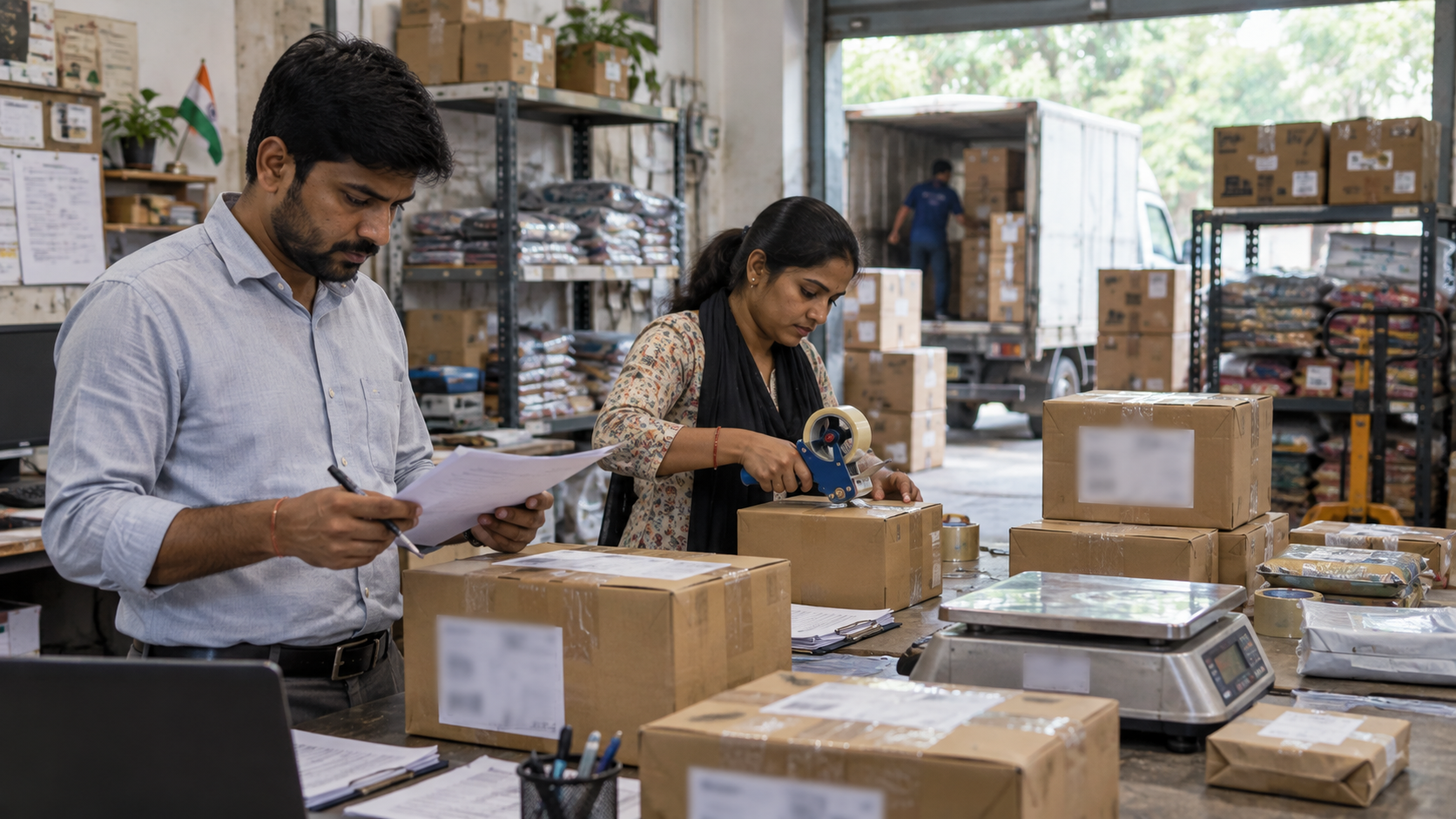
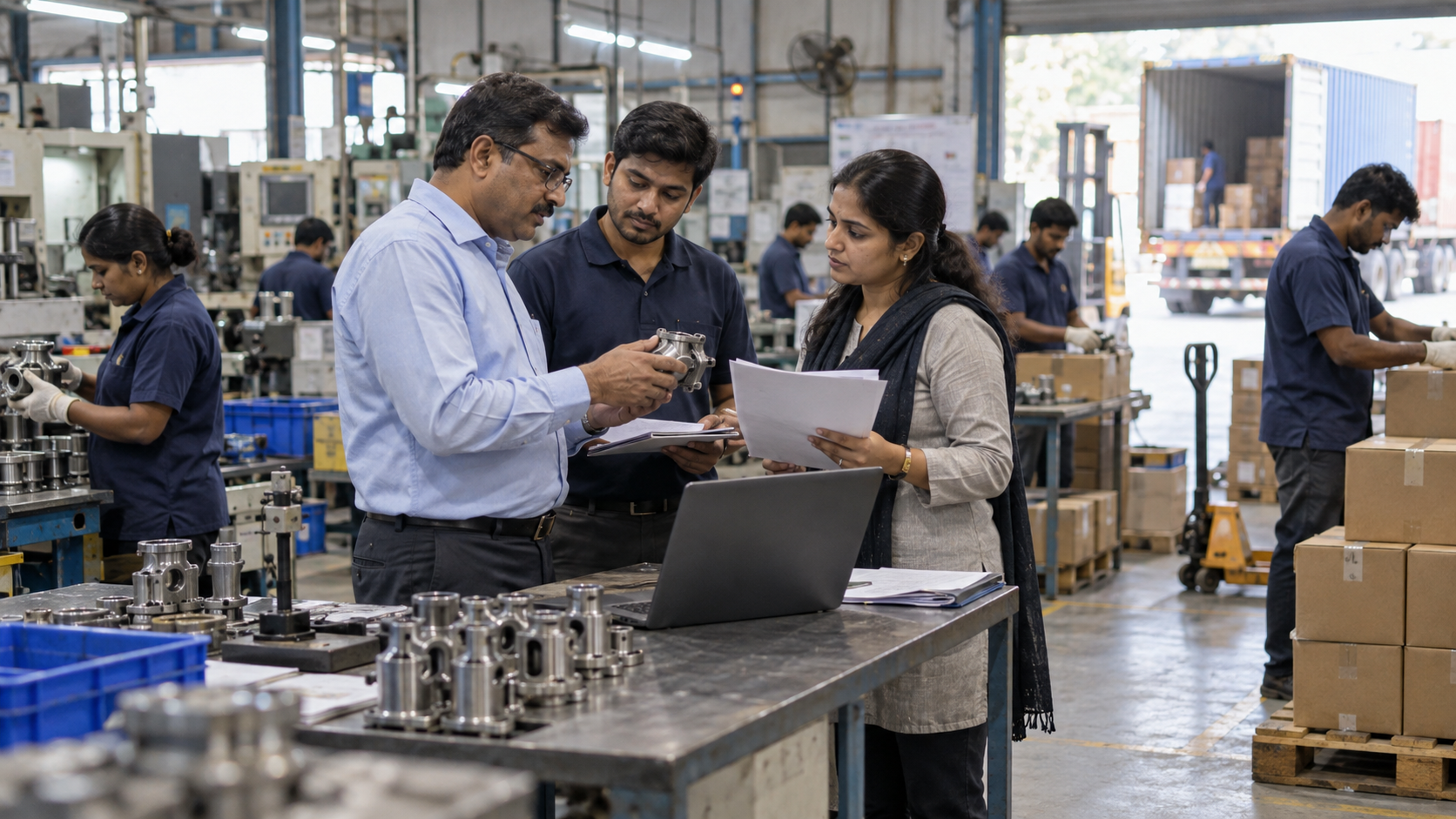
India’s export ecosystem has traditionally been dominated by large companies competing globally and millions of micro, small and medium enterprises supporting domestic production. Between them, however, lies a group of established firms with manufacturing capabilities and some export presence that often struggle to expand internationally.
MSMEs contribute around 40% of India’s exports, but only 1.36% of registered MSMEs are engaged in exports, according to a May 2025 NITI Aayog report. Among exporting MSMEs, 64% record export turnover of less than ₹1 crore.
Micro and small enterprises account for 91% of exporting units but contribute 60% of MSME export value. Medium enterprises, despite representing only 9% of exporting units, contribute 40% of MSME export value.
The revised MSME classification introduced in April 2025 provides greater room for businesses to scale. The investment limit for medium enterprises increased from ₹50 crore to ₹125 crore, while the turnover threshold doubled from ₹250 crore to ₹500 crore.
Firm size also appears closely linked with export participation. ICRIER’s 2025 Annual Survey of MSMEs, covering 2,365 Udyam-registered manufacturing enterprises, found that 16% of surveyed businesses were exporters. Export participation stood at 15% among micro enterprises, 16% among small businesses and 22% among medium enterprises.
Access to international-market information remains a significant barrier. Nearly 46% of surveyed enterprises cited insufficient information about potential international partners, while around 42% reported inadequate information about opportunities and requirements in overseas markets. Other constraints included product-standard compliance and limited financial resources for exports.
NITI Aayog recommendations aimed at addressing such scaling challenges include turnover-linked working capital, a ₹5 crore credit-card facility, SME 4.0 Competence Centres, a dedicated MSME research and development cell, improved quality facilities, specialised training and an Udyam sub-portal providing compliance and AI-based support.
The opportunity also extends beyond individual companies. An Exim Bank study identified 59 districts with annual exports between US$1 billion and US$5 billion as “missing middle export districts”. Less than 2% of India’s districts account for around 40% of the country’s exports, indicating scope to broaden the geographical base of exports through stronger regional clusters.
Digital commerce and India’s expanding network of trade agreements could provide additional routes to international markets. However, the analysis indicates that scaling exports will require more than market access alone, with finance, technology, skills, standards, supply-chain capabilities and sustained institutional support playing important roles.