India’s 7.8% GDP Growth Fuels Modi’s Fresh Push for Swadeshi, Vocal for Local
Highlights:
- India recorded 7.8% real GDP growth in Q1 FY 2026–27.
- PM Modi renewed his emphasis on Swadeshi and Vocal for Local.
- Greater domestic consumption could support Indian manufacturing, jobs and businesses.
- Reducing import-heavy consumption can help limit foreign-exchange outflows.
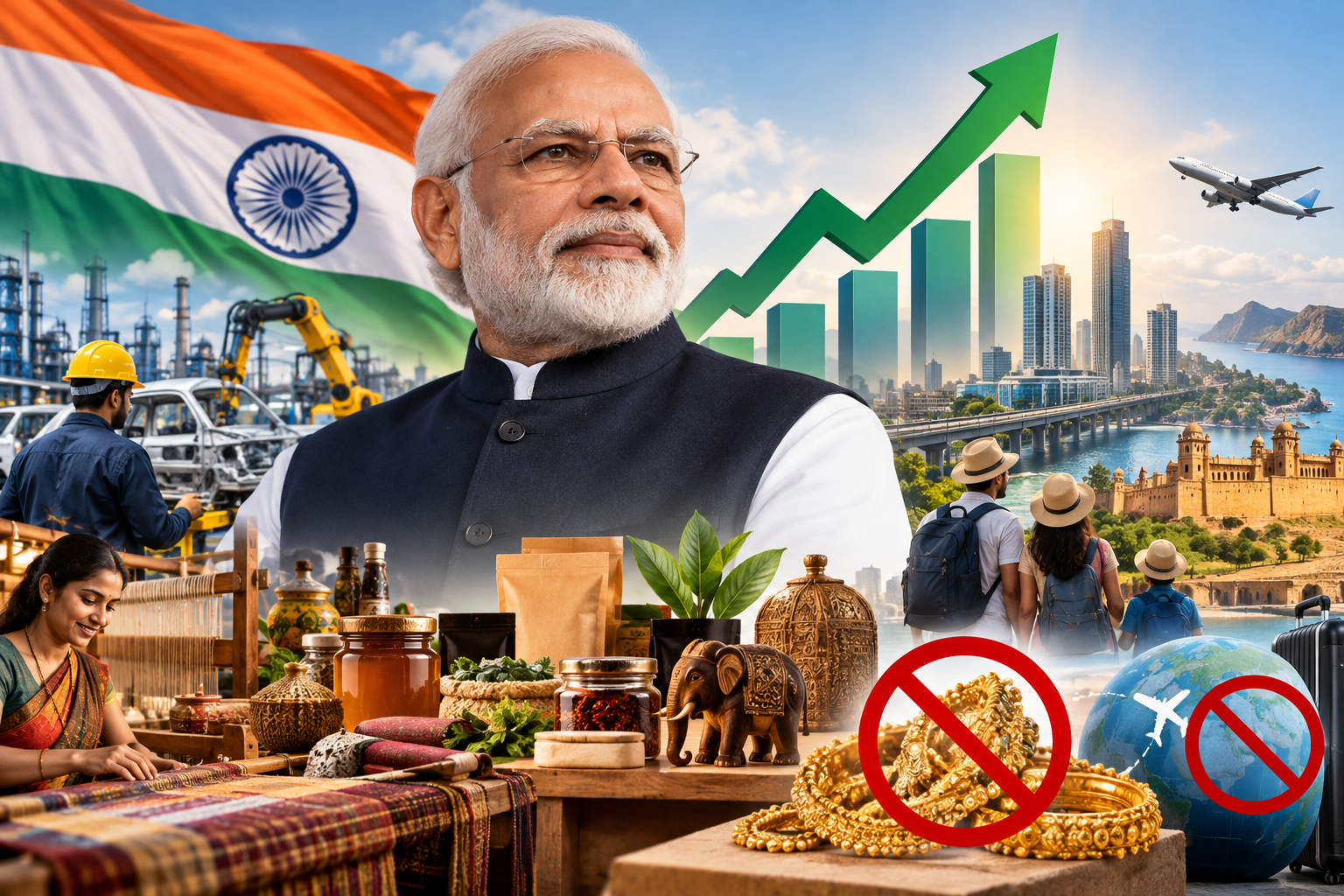
Prime Minister Narendra Modi urged Indians to strengthen domestic demand and support Indian products following India’s 7.8 per cent GDP growth in Q1 FY 2026–27. He reiterated the Swadeshi and Vocal for Local approach and advised citizens to limit non-essential gold purchases and overseas travel to support domestic economic activity and conserve foreign exchange.
Prime Minister Narendra Modi called for continued economic momentum through greater self-reliance, Swadeshi and Vocal for Local, following India’s 7.8 per cent GDP growth in the first quarter of FY 2026–27.
In a social media message, Modi highlighted India’s economic performance amid global uncertainty, including geopolitical conflicts and disruptions to international supply chains. He said maintaining the pace of growth would require greater focus on self-reliance and domestic economic strength.
The Prime Minister also urged Indians to reconsider non-essential purchases of gold and foreign travel, arguing that greater domestic consumption could support Indian businesses while reducing pressure on foreign exchange.
The emphasis on domestic demand comes as global economic conditions remain uncertain. Geopolitical tensions in Europe and West Asia continue to threaten supply chains and energy markets, with potential implications for crude oil prices and consumption in major export markets.
India’s large domestic consumer base provides a significant source of economic demand. Economic experts have argued that greater preference for domestically produced goods could support manufacturing, employment and demand while reducing dependence on imports.
Gold imports are another area highlighted in the discussion, as higher domestic purchases can increase the country’s import bill and foreign exchange outflows. Similarly, spending on non-essential overseas travel results in foreign exchange expenditure outside India, while domestic tourism and consumption can retain a larger share of this spending within the economy.
The Prime Minister also encouraged Indians to consider holding wedding ceremonies within the country, pointing to the potential for domestic spending to benefit sectors including hospitality, tourism, food, retail and services.
The call for greater domestic consumption follows India’s 7.8 per cent real GDP growth in April-June 2026, with domestic economic activity continuing to support overall growth.
The government has continued to promote manufacturing and domestic production through initiatives focused on self-reliance, local value addition and reducing import dependence.