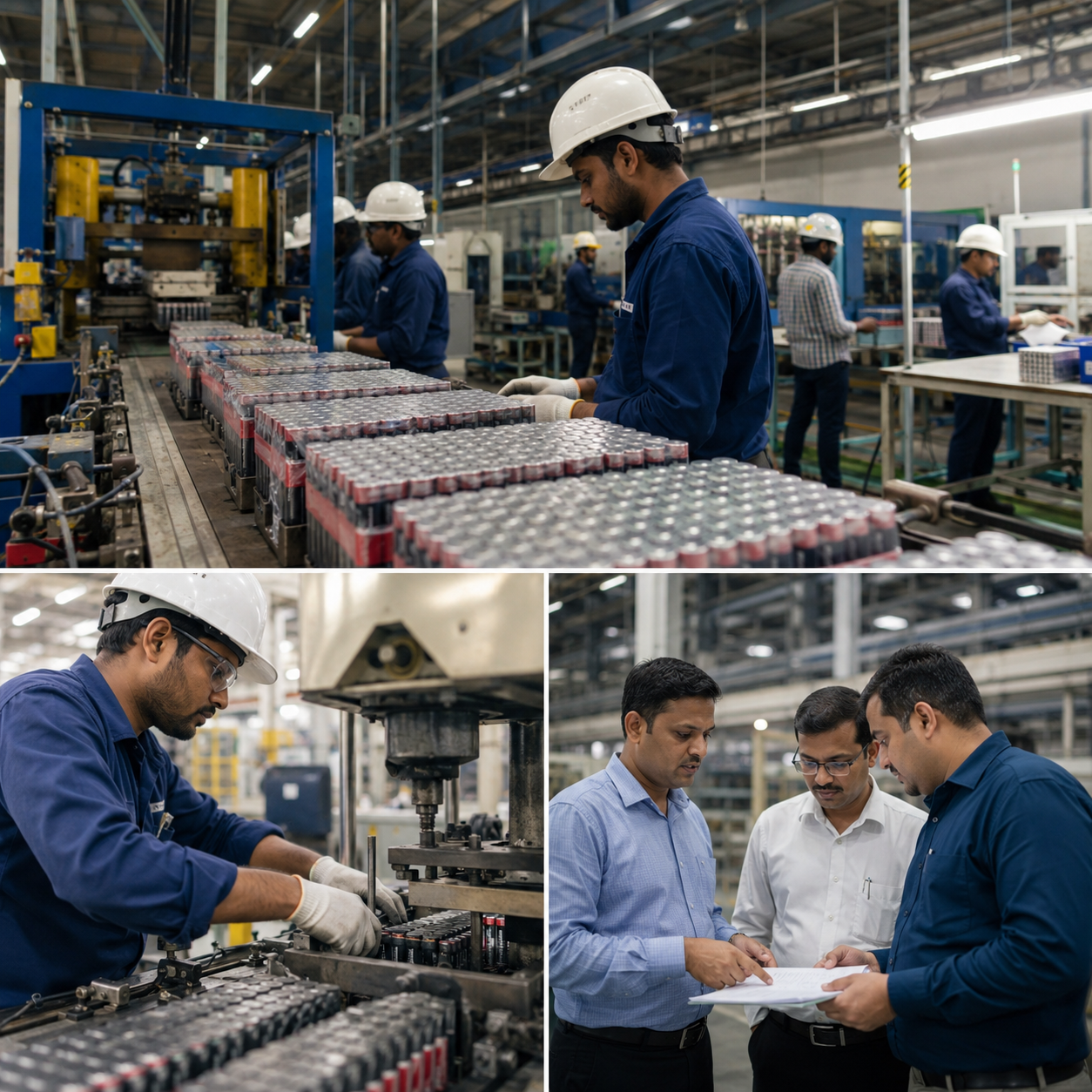
Company says rising compliance costs could threaten viability of its battery manufacturing operations in India.
Key Highlights
- Panasonic Energy India warns of possible plant shutdown.
- Company cites rising compliance costs under Battery Waste Management Rules.
- Sole manufacturing facility is located in Madhya Pradesh.
- Panasonic claims regulatory costs may exceed business profitability.
- Company has reportedly raised concerns with authorities for over a year.
- Battery manufacturing operations in India date back to 1972.
- Industry seeks balance between sustainability goals and ease of doing business.
- Battery Waste Management Rules focus on collection, recycling, and disposal obligations.
News Story:
New Delhi, June 25, 2026: Panasonic Energy India Company has raised concerns over the implementation of India’s Battery Waste Management Rules (BWMR), warning that its long-running battery manufacturing business could face closure if compliance challenges remain unresolved.
Akio Fujita, Chairman and Managing Director of Panasonic Energy India Company, said the company’s sole manufacturing facility in Madhya Pradesh is under increasing pressure due to rising regulatory costs associated with the waste management framework.
According to Fujita, compliance expenses under the Battery Waste Management Rules have reached levels that could potentially exceed the profitability of the company’s dry-cell battery business in India.
Concerns Over Business Viability
The company, a subsidiary of Japanese battery major Panasonic Energy, has been operating in India since 1972 and manufactures dry-cell batteries for the domestic market.
Fujita stated that Panasonic has been engaging with government authorities for over a year to address concerns related to the implementation of the new regulations. However, the company claims that several operational and compliance issues remain unresolved.
“In the worst-case scenario, if there are no changes in the provisions, a manufacturing unit in India surviving since 1972 will be forced to shut down due to compliance complexities and ease of doing business issues,” Fujita said.
Impact of Battery Waste Rules
The Battery Waste Management Rules were introduced to strengthen environmental protection and promote responsible recycling and disposal of used batteries. The framework places obligations on manufacturers regarding collection, recycling, and waste management of batteries sold in the market.
While industry participants support the objective of sustainable waste management, some manufacturers have expressed concerns about implementation challenges, compliance costs, and operational burdens.
Industry Watching Closely
The development highlights the growing debate between environmental compliance requirements and manufacturing competitiveness. Industry observers believe that any potential shutdown of a long-established battery manufacturing facility could have implications for domestic production, employment, and the broader battery ecosystem.
Panasonic Energy India has urged policymakers to address industry concerns and simplify compliance mechanisms to ensure that environmental goals can be achieved without adversely affecting manufacturing operations.