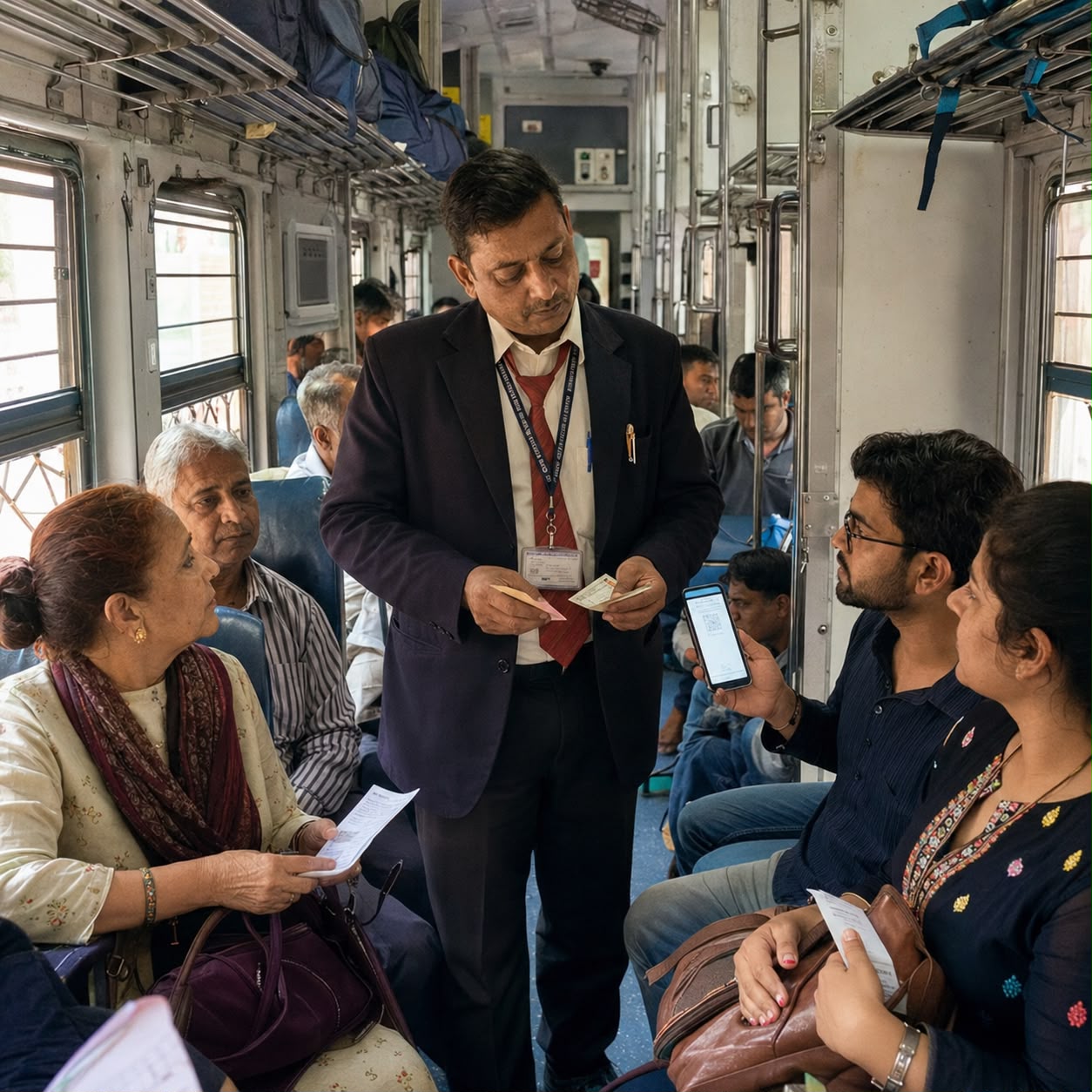
Passengers caught without a valid ticket will now face a minimum ₹500 penalty.
Key Highlights
- New rules come into effect on July 1, 2026.
- Minimum fine for ticketless travel increased from ₹250 to ₹500.
- Applies to passengers without tickets or with invalid tickets.
- Travelers exceeding booked destinations will also face penalties.
- Actual fare plus penalty must be paid.
- Implemented under Sections 137 and 138 of the Railway Act, 1989.
- Maximum punishment remains six months in jail, ₹1,000 fine, or both.
- Railway aims to strengthen ticket compliance and reduce violations.
News Story:
New Delhi, June 24, 2026: Indian Railways has announced stricter penalties for ticketless travel, with the minimum fine set to double from ₹250 to ₹500 starting July 1, 2026.
The move is aimed at strengthening ticket-checking mechanisms, improving compliance with railway regulations, and discouraging unauthorized travel across the railway network.
Under the revised rules, passengers found traveling without a valid ticket, using an incorrect ticket, or traveling beyond the destination mentioned on their ticket will be required to pay the actual fare along with a minimum penalty of ₹500.
Higher Penalty from July 1
Currently, passengers caught without proper travel authorization are subject to a minimum fine of ₹250. From next month, that amount will increase to ₹500 under amendments introduced through the Jan Vishwas (Amendment Provisions) Act, 2026.
The revised provisions have been implemented under Sections 137 and 138 of the Railway Act, 1989.
Rules Apply to Multiple Violations
The enhanced penalty will apply in cases involving:
- Travel without a ticket
- Travel with an incorrect ticket
- Traveling beyond the booked destination
- Other violations related to ticket validity
Railway officials believe the increased penalty will encourage passengers to purchase valid tickets before boarding trains and reduce revenue losses caused by unauthorized travel.
Jail Provision Remains Unchanged
While the minimum fine has been increased, the maximum punishment under the Railway Act remains unchanged.
Passengers found guilty may still face:
- Up to six months imprisonment
- Fine of up to ₹1,000
- Or both, depending on the circumstances and court decision
In most cases, authorized railway staff impose penalties directly. Court proceedings generally arise only when a passenger refuses or fails to pay the prescribed fine.
Focus on Better Compliance
Indian Railways said the decision is part of broader efforts to improve enforcement and make ticket-checking systems more effective across the network.
The new rules are expected to impact millions of rail passengers and serve as a deterrent against ticketless travel.