Indian currency strengthens 53 paise to 94.65 against the US dollar as easing West Asia tensions and falling crude oil prices boost investor confidence.
Key Highlights
• The Indian rupee surged 53 paise to 94.65 per US dollar in early trade on June 15.
• The gain followed the announcement of a US-Iran peace framework, easing geopolitical concerns.
• The rupee opened at 94.70, compared with its previous close of 95.18.
• The level of 94.65 marks the rupee’s strongest position since May 8, 2026.
• Falling crude oil prices improved India’s currency outlook and trade balance expectations.
• Lower oil prices reduce India’s import bill, as the country imports over 85% of its crude oil requirements.
• Improved global risk sentiment could encourage higher foreign portfolio investment (FPI) inflows into India.
• Analysts expect the rupee’s momentum to depend on crude prices, FPI activity, US Federal Reserve signals, and developments in West Asia.
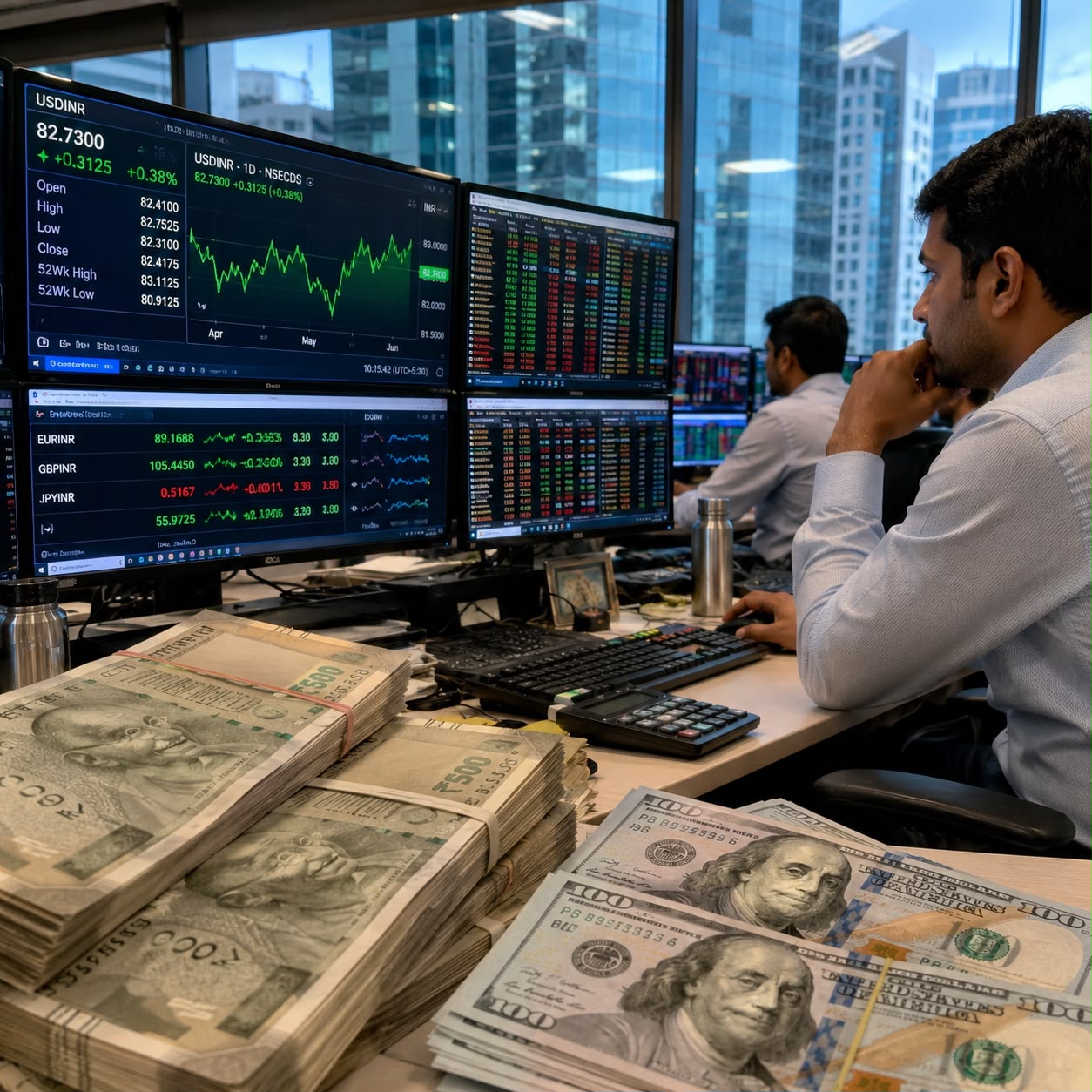
The Indian rupee posted one of its strongest single-day gains in recent months, appreciating by 53 paise against the US dollar in early trade on Monday after geopolitical tensions in West Asia eased following the reported US-Iran peace agreement.
At the interbank foreign exchange market, the rupee opened at 94.70 and strengthened further to 94.65 against the dollar, compared with its previous close of 95.18 on Friday. The move pushed the domestic currency to its strongest level since May 8, 2026, when it had settled at 94.44.
Market sentiment improved significantly after the announcement of a peace framework between the United States and Iran, which reduced fears of prolonged disruptions to global energy supplies. The development triggered a decline in international crude oil prices, offering relief to oil-importing economies such as India.
Lower crude oil prices are particularly beneficial for India, which imports more than 85 per cent of its crude oil requirements. Reduced energy costs help narrow the trade deficit, ease pressure on the current account, and lower the demand for US dollars from oil marketing companies, thereby supporting the rupee.
The improvement in geopolitical conditions has also enhanced investor appetite for emerging markets. Market participants believe foreign portfolio investors could increase allocations to Indian assets if stability persists and global risk perception continues to improve.
Despite the positive momentum, analysts caution that the rupee’s near-term trajectory will remain linked to movements in crude oil prices, foreign fund flows, policy signals from the US Federal Reserve, and any fresh developments in the Middle East.
For now, the easing of geopolitical tensions has provided immediate support to the Indian currency, helping it recover to its strongest level in more than five weeks.