Third-party cover increased for new cars and two-wheelers
Key Highlights
- Supreme Court extends mandatory insurance tenure.
- New cars require four-year third-party cover.
- New two-wheelers need six-year insurance.
- IRDAI directed to issue implementation guidelines.
- ANPR cameras to integrate with insurance databases.
- Court flags 56% uninsured vehicles nationwide.
- Fuel linkage suggested for insurance compliance.
In a landmark ruling aimed at improving road safety and protecting accident victims, the Supreme Court of India has directed that all new cars must be sold with four years of mandatory third-party insurance, while new two-wheelers must carry six years of third-party insurance.
The decision revises the court’s 2018 mandate, which required three years of third-party insurance for new cars and five years for new two-wheelers. The latest order extends the coverage period by one additional year for both categories.
A Bench comprising Justice Sanjay Karol and Justice Augustine George Masih observed that despite the earlier directions issued eight years ago, a significant number of vehicles continue to operate without valid insurance, increasing the financial burden on road accident victims.
The court directed the Insurance Regulatory and Development Authority of India (IRDAI) to immediately issue the necessary implementation guidelines for the revised insurance tenure.
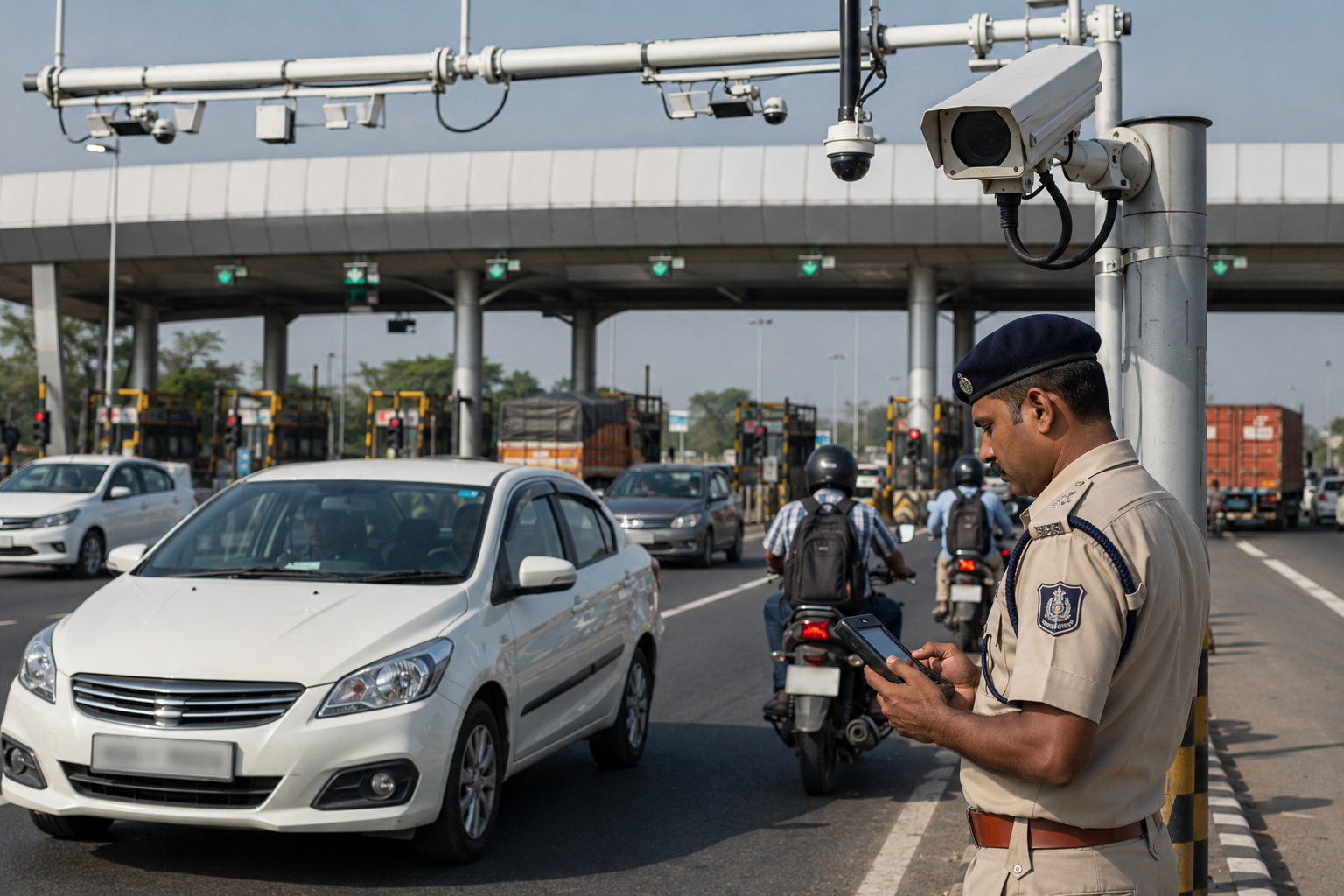
Beyond extending the insurance period, the Supreme Court also proposed several technology-driven measures to strengthen compliance. It ordered the integration of Automatic Number Plate Recognition (ANPR) cameras with the Insurance Information Bureau (IIB) database and the VAHAN vehicle registration portal. This integration would enable authorities to automatically identify uninsured vehicles and generate electronic challans alongside other traffic violations.
The Bench further suggested linking fuel purchases at petrol pumps with valid insurance status through digital verification systems. Under this proposal, uninsured vehicles could be denied fuel until their insurance is renewed, although implementation would require coordination between multiple government agencies.
Additionally, the court directed state police departments to equip enforcement personnel with handheld devices or mobile applications connected to insurance databases, allowing real-time verification of insurance status during routine checks.
The directions were issued while disposing of an appeal filed by National Insurance Company Ltd. in a motor accident compensation case. During the proceedings, the court expanded the scope of the matter to examine broader issues relating to compliance with Section 146 of the Motor Vehicles Act, which mandates third-party insurance for all motor vehicles.
The Supreme Court expressed concern over data indicating that nearly 56% of vehicles on Indian roads are uninsured. Referring to a Parliamentary Standing Committee report, the Bench noted that around 16.54 crore vehicles out of approximately 30.48 crore registered vehicles currently lack valid insurance coverage.
The court observed that mandatory third-party insurance is intended not only to compensate accident victims but also to prevent them from becoming entangled in prolonged legal proceedings. It also highlighted that India recorded more than 4.87 lakh road accidents in 2024, underlining the urgent need for stronger compliance with insurance requirements.
The ruling is expected to significantly strengthen road safety, improve financial protection for accident victims, and encourage wider insurance coverage across the country’s rapidly growing vehicle population.