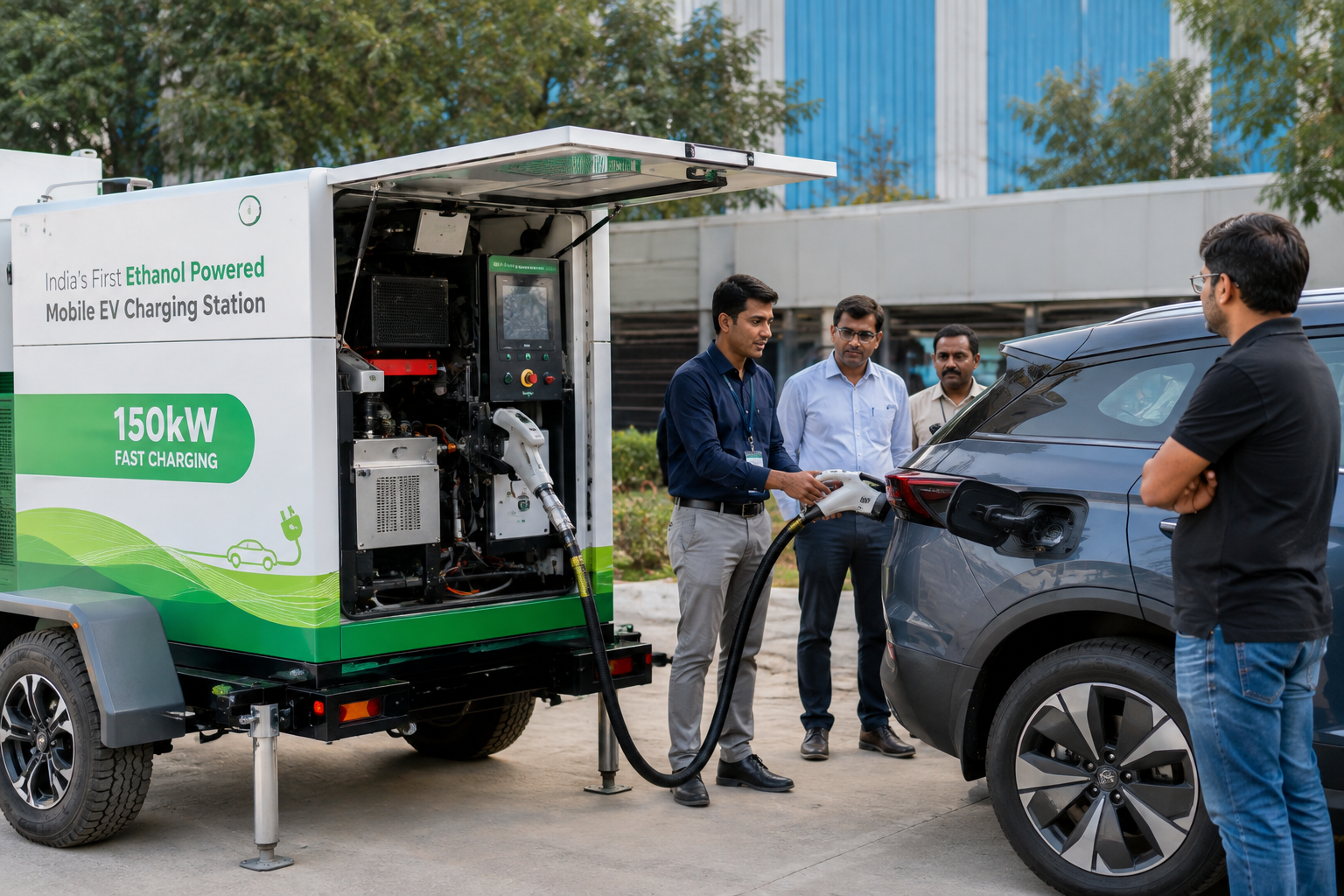
India’s first ethanol-powered mobile EV charging system has been unveiled in Telangana, aiming to provide fast charging without depending on the conventional electricity grid and expanding EV access in remote locations. (India)
Key Highlights
- India’s first ethanol-powered EV charger launched.
- Developed by Hyderabad-based Keto Motors.
- Supports 150 kW DC fast charging.
- Designed as a mobile, grid-independent charging solution.
- Intended for highways, rural areas and remote locations.
- Uses ethanol to generate electricity for EV charging.
India has taken a new step towards clean mobility with the launch of the country’s first ethanol-powered mobile EV charging system in Telangana. The technology, introduced by Hyderabad-based Keto Motors, is designed to address one of the biggest challenges facing electric vehicle adoption—the availability of charging infrastructure in areas with limited or no grid connectivity.
Unlike conventional EV chargers that rely directly on electricity from the power grid, the new system generates electricity using ethanol before supplying power to electric vehicles through a DC fast charger. The mobile unit is capable of delivering up to 150 kW charging output, allowing it to charge EVs on highways, at large public events, industrial sites and remote regions where permanent charging stations are unavailable.
The charging technology was unveiled alongside Keto Motors’ first commercial electric bus, the Urbanova KE9, during an event attended by Union Minister G. Kishan Reddy. The minister described the innovation as an important milestone in India’s transition towards green mobility and reduced dependence on conventional energy sources.
The project also supports India’s ethanol ecosystem by creating additional demand for biofuel while reducing reliance on fossil fuels and expanding charging accessibility beyond major cities. The company believes the solution can complement existing charging infrastructure rather than replace conventional grid-based charging stations.
While the concept has attracted significant attention, detailed technical specifications such as ethanol consumption, system efficiency and operating architecture have not yet been publicly disclosed by the company.