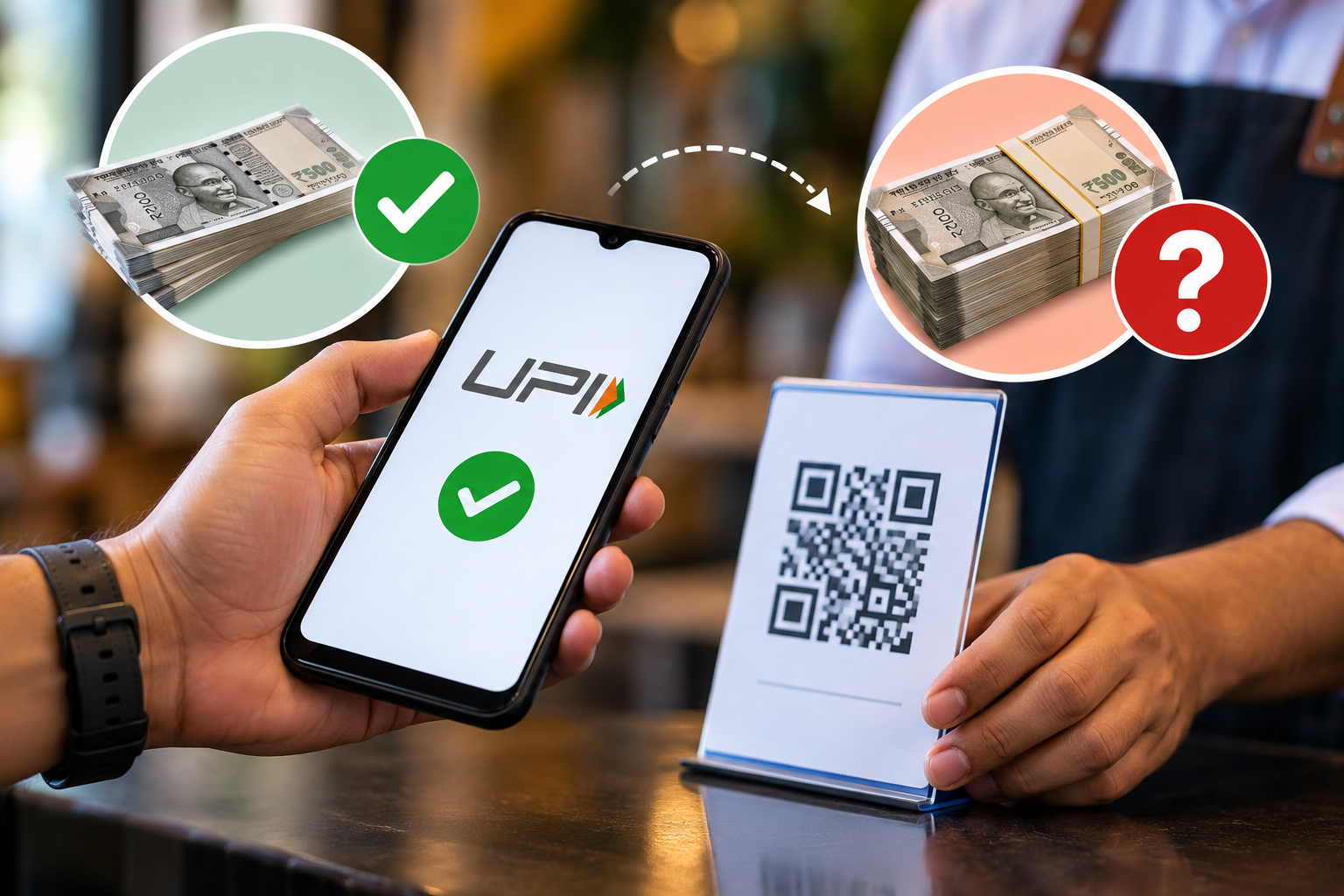
The government has clarified that UPI transactions up to Rs 2,000 cannot attract direct or indirect charges from banks or payment system providers. However, payments above Rs 2,000 do not automatically become chargeable for consumers.
Highlights
- UPI transactions up to Rs 2,000 are protected from direct or indirect bank charges.
- The protection also covers payments made using RuPay debit cards.
- UPI payments above Rs 2,000 do not automatically attract a consumer transaction fee.
UPI Payment Charges: The government has clarified the rules surrounding charges on Unified Payments Interface (UPI) transactions, amid confusion over whether users will have to pay a fee when making payments above Rs 2,000.
According to a Finance Ministry notification dated September 14, UPI transactions of up to Rs 2,000 are among the specified electronic payment modes on which banks and payment system providers cannot impose direct or indirect charges. The protection also applies to RuPay-powered debit card payments.
However, this does not mean that UPI transactions above Rs 2,000 will automatically become chargeable.
At present, there is no government-announced consumer transaction fee that kicks in when a UPI payment crosses the Rs 2,000 mark. Therefore, if a consumer makes a payment of Rs 5,000, Rs 10,000 or even Rs 20,000 through UPI, no additional fee automatically applies simply because the transaction is above Rs 2,000.
The Rs 2,000 threshold is important because the latest notification specifically identifies transactions up to this amount as a protected category. Recent changes to the Payment and Settlement Systems framework, however, provide room for charges to potentially be introduced in certain cases in the future.
One area under discussion is the Merchant Discount Rate (MDR). MDR is a fee associated with processing digital payments and could potentially be applied to certain large merchants accepting higher-value UPI transactions.
Reports have suggested possible MDR rates of around 0.25% to 0.4%, but no such rate has been notified under the latest government notification. Even if MDR is introduced, it would not necessarily mean that consumers would directly pay the charge.
The debate comes as India’s UPI ecosystem continues to expand rapidly. The number of banks live on UPI increased from 44 in FY2016-17 to 741 by July 2026. Monthly UPI transactions also reached a record 2,366 crore in July.
As transaction volumes rise, the government is looking at ways to make the digital payment ecosystem financially sustainable while meeting growing spending requirements for infrastructure, cybersecurity and fraud prevention.
For consumers, the key takeaway is simple: Rs 2,000 is not a new free-payment limit for UPI. Payments above Rs 2,000 remain free for users unless the government announces a specific consumer charge in the future.