What it means for India:
- The report claims the United States has initiated investigations related to alleged forced labour practices in more than 50 countries, including India.
- According to the report, the US could impose an additional 12.5% duty on imports from countries found to have forced labour concerns.
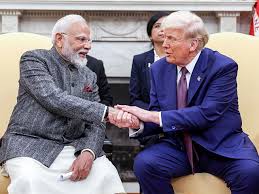
- At the same time, India and the US are continuing negotiations on a bilateral trade agreement in New Delhi.
Key points
- Union Commerce and Industry Minister Piyush Goyal stated that the first phase of the proposed India–US trade agreement could be concluded soon.
- India’s position is that it will proceed with the agreement only if Indian exports receive a tariff advantage over competing countries in the US market.
- The report says a uniform 10% tariff currently applies to imports into the US under an arrangement linked to ongoing legal proceedings, with the present arrangement expected to expire on July 24.
- Under discussions referenced in the report, tariffs on Indian goods could be set at around 18%, although negotiations are still underway.
- Negotiators from both countries met in New Delhi from June 2–4 to work on finalizing the agreement text.
- US Ambassador to India Eric Garcetti has reportedly said that the two countries have reached agreement on most issues under discussion.
Why Section 301 matters
Section 301 is a provision of US trade law that allows the US government to investigate foreign trade practices and, if it determines those practices are unfair or harmful to American commerce, impose unilateral trade measures such as additional tariffs.
Potential impact on India
If an additional 12.5% duty were imposed on certain products:
- Indian exports could become less price-competitive in the US market.
- Sectors such as textiles, apparel, engineering goods, gems and jewellery, and other labour-intensive industries could face pressure.
- The importance of securing favorable terms in the India–US trade agreement would increase.
Bottom line
India is pushing for a trade deal that gives its exporters a tariff advantage over competitors. At the same time, concerns over possible US investigations and additional duties under Section 301 are creating uncertainty for exporters, making the outcome of the ongoing trade negotiations particularly significant.