
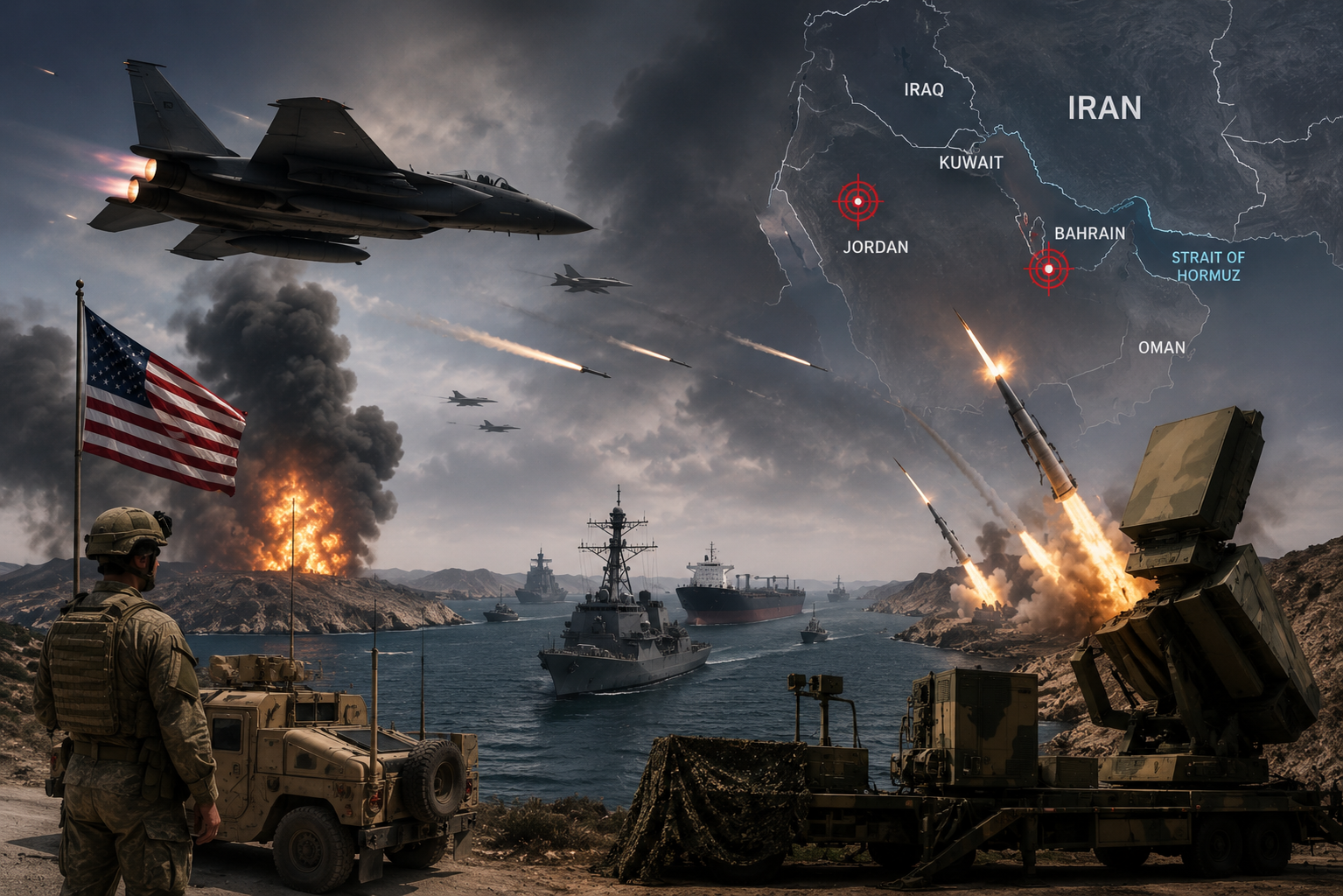
CENTCOM targets key Iranian military sites
Key Highlights
- US Central Command said it completed a new wave of strikes against Iranian military targets.
- The strikes targeted IRGC air-defence sites, radar systems, maritime assets, mine-laying capabilities and communications facilities.
- CENTCOM said the action followed attempted IRGC attacks on commercial shipping in the Strait of Hormuz and US service members.
- Iran alleged that an American strike hit a wedding celebration in Sirik, with more than 50 people killed or wounded.
- Iranian state media claimed retaliatory missile and drone attacks against US-linked military facilities in Jordan and Bahrain.
New Delhi, September 2, 2026 — The United States Central Command (CENTCOM) said it has completed a fresh wave of strikes against Iranian military targets, escalating tensions in West Asia following renewed confrontations around the strategically important Strait of Hormuz.
According to CENTCOM, US forces targeted Islamic Revolutionary Guard Corps (IRGC) installations including air-defence sites, radar systems, maritime assets and facilities, mine-laying capabilities and communications sites. The US military said the strikes followed what it described as recent attempted attacks by the IRGC against commercial shipping in the Strait of Hormuz and against American service members. (Business Standard)
CENTCOM also said more than 50,000 US service members are currently operating across West Asia and remain prepared to continue operations under directions from the US Commander in Chief.
Iran has disputed the US account and accused Washington of causing civilian casualties. Iranian Foreign Ministry spokesperson Esmaiel Baqaei said American strikes hit a residential home in Kuhestak, Sirik, while families were celebrating a wedding. He claimed that more than 50 men, women and children were killed or wounded. Iran said it would respond firmly to what it described as the US strikes. (Business Standard)
Iran’s IRNA news agency subsequently reported claims of retaliatory military action against US-linked positions in the region. It said the IRGC Aerospace Force carried out a ballistic missile operation against the US Prince Hassan Air Base in Jordan, targeting facilities associated with RQ-4 and MQ-9 unmanned aircraft. IRNA claimed several drones were destroyed and that pilots and flight crew members were killed, though these claims were not independently verified in the report. (Business Standard)
IRNA also reported that Iran’s army targeted radar installations and US military concentration points at Bahrain’s Sheikh Isa base using drones. The base is described as a key maintenance and repair centre for helicopters and drone components and also hosts reconnaissance aircraft.
The Iranian agency further claimed that ballistic missiles struck Camp Titin, described as a US Marine base in Jordan, resulting in troop casualties. These claims come amid a rapidly evolving military situation across the region. (Business Standard)
Regional governments have also reported heightened security activity. Bahrain’s Interior Ministry issued an alert over a potential threat and urged residents and citizens to remain calm, move to safe locations and follow official information. Kuwait’s state news agency reported that its air defences were responding to Iranian drone attacks, while Jordanian air defences were reported to have intercepted 13 Iranian ballistic missiles. (Business Standard)
The latest escalation follows US President Donald Trump’s announcement of a fresh wave of strikes against Iranian targets near the Strait of Hormuz. Washington said the action was in response to an Iranian attempt to deploy sea mines in the vital shipping corridor. Trump warned that any Iranian retaliation would draw a stronger US response and indicated that further military action against Tehran could follow. (Business Standard)
The renewed fighting is also increasing concerns for global energy and financial markets because of the potential disruption to shipping through the Strait of Hormuz. Oil prices rose sharply as investors assessed the possibility of further supply disruptions, while Asian equities and global bonds came under pressure amid renewed geopolitical and inflation concerns. (Business Standard)
The latest exchange of strikes and retaliatory claims marks another significant escalation in the US-Iran confrontation, with developments around the Strait of Hormuz likely to remain closely watched because of their potential implications for regional security, energy supplies and global markets.