Delayed rains could make pulses and dairy products costlier after sugar and coffee, as sowing slows and fodder shortages loom.
Highlights
- Weak monsoon is already impacting food prices.
- Sugar and coffee prices are rising due to weather disruptions.
- Delayed sowing could push up pulse and oilseed prices.
- Dairy products may also become more expensive if fodder supply declines.
- Government has begun measures to reduce the impact on farmers.
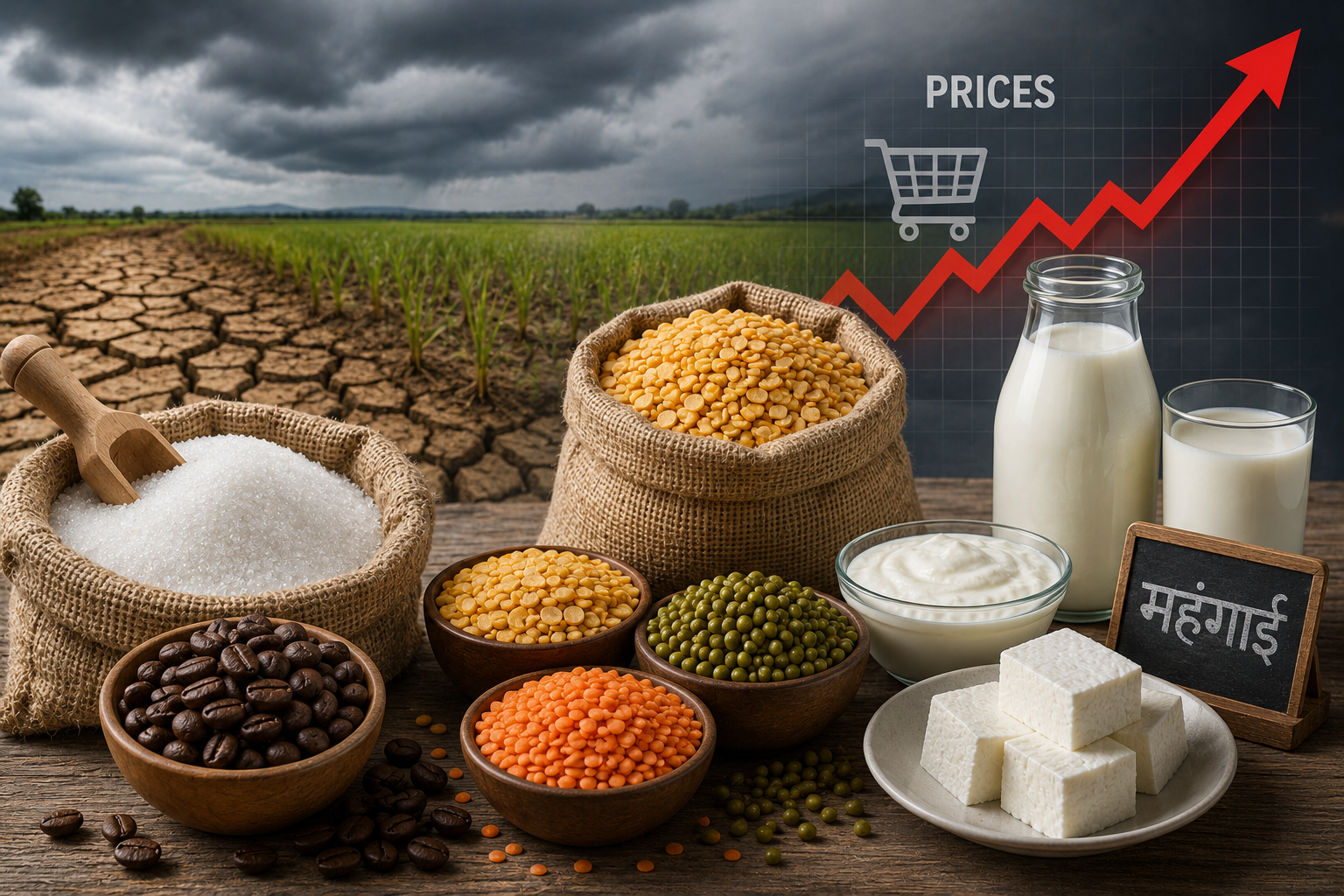
New Delhi: A delayed and weak monsoon could soon affect household budgets, with experts warning that after sugar and coffee, pulses and dairy products may also become more expensive in the coming months.
Weather conditions have already disrupted agricultural activity in India, while excessive rainfall in Brazil has hit sugarcane and coffee harvesting. These developments are tightening global supplies and pushing up prices of sugar and coffee.
In India, the slow progress of the southwest monsoon has delayed the sowing of key kharif crops such as urad, moong, maize and soybean. If rainfall remains below normal, crop production could decline, leading to higher prices of pulses, edible oils and other food items.
The dairy sector may also feel the impact. Lower rainfall affects fodder availability and water supply for livestock, increasing the cost of milk production. As a result, products such as milk, curd, paneer and other dairy items could become more expensive.
The government has already started preparing for a weak monsoon scenario. Farmers are being encouraged to cultivate crops that require less water, while efforts to improve rainwater harvesting and water conservation have been intensified to reduce the impact on agriculture.
Economists say weather-related disruptions usually hit the agriculture sector first, but the effects gradually spread across the economy through higher food inflation. If rainfall does not improve in the coming weeks, consumers may see rising prices across several essential food categories later this year.