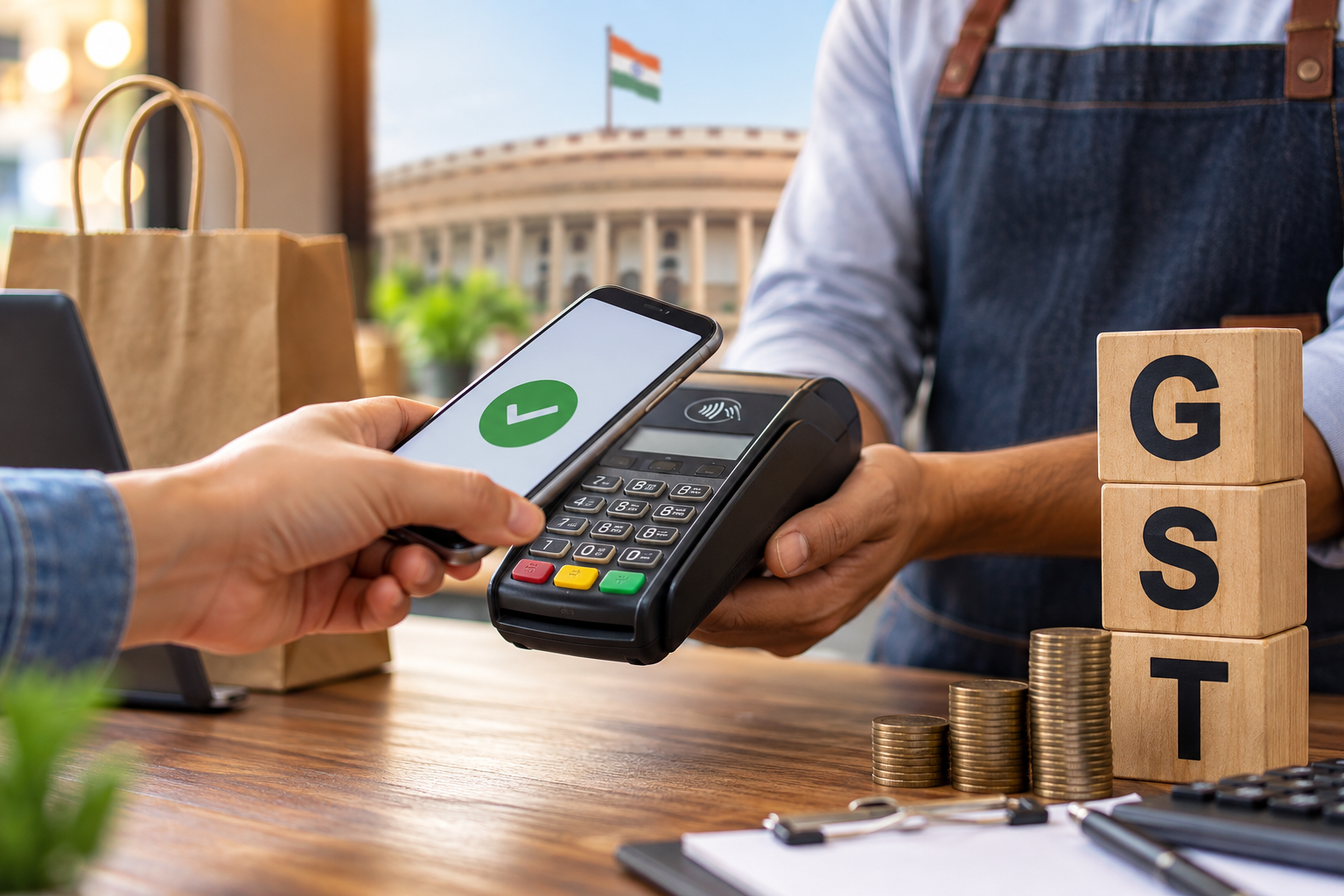
The Lok Sabha has passed amendments to payment laws, but everyday UPI users are unlikely to face charges. Most person-to-person transfers are expected to remain free, while any future merchant charges will be decided by RBI and NPCI.
Key Highlights
- Lok Sabha passed amendments related to UPI payment regulations.
- No decision has been taken yet on UPI merchant charges.
- Person-to-person (P2P) UPI transactions are expected to remain free.
- Merchant charges, if introduced, may apply only to select high-value transactions.
- RBI and NPCI will decide the final framework and applicable rates.
- Around 71% of UPI transaction value is expected to remain exempt from any charges.
New Delhi, August 7: The Lok Sabha has passed amendments to tax-related laws and the Payment and Settlement Systems Act, paving the way for a future framework on UPI merchant charges. However, the legislation does not impose any immediate fee on UPI users, with the final decision now resting with the Reserve Bank of India (RBI) and the National Payments Corporation of India (NPCI).
According to government data, nearly 71% of the total UPI transaction value comes from person-to-person (P2P) transfers. These transactions are expected to remain free, ensuring that everyday users sending money to friends or family will not be affected by any future pricing framework.
Industry experts indicate that any future charges, if introduced, are likely to be limited to person-to-merchant (P2M) transactions, particularly those exceeding ₹2,000. The government has not announced any fee structure, and both the applicable rates and implementation timeline will be determined after consultations between RBI and NPCI.
The amendment also seeks to update the Payment and Settlement Systems Act, 2007, while ensuring that banks or financial institutions cannot independently impose charges on UPI transactions outside the approved framework.
Experts note that banks collectively spend around ₹10,000 crore annually to operate and maintain UPI services. Any future merchant fee could help strengthen payment infrastructure, improve cybersecurity and support continued innovation across India’s rapidly growing digital payments ecosystem.