
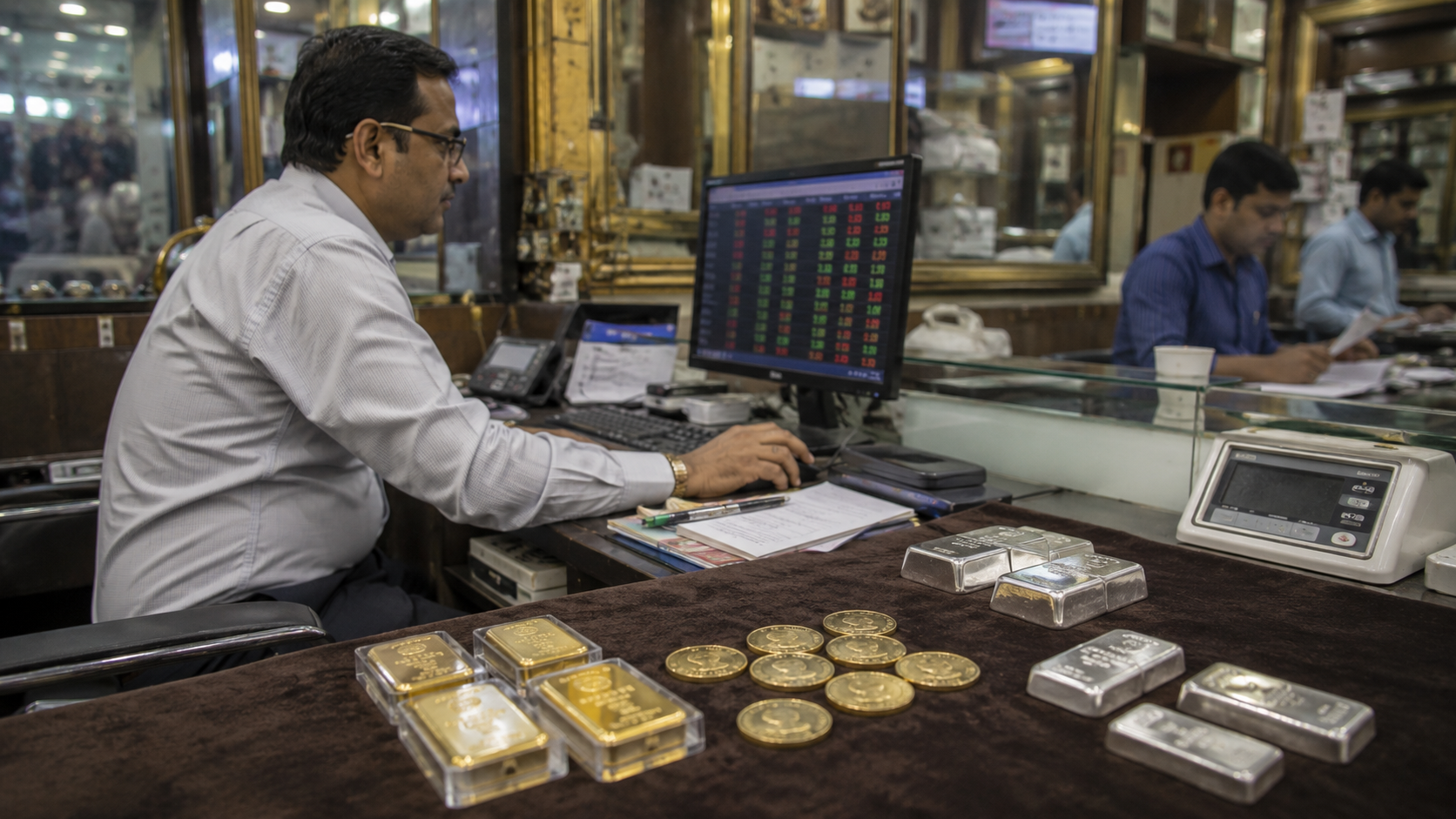
Precious metals retreat in early trade as a stronger US dollar
Key Highlights
- Gold traded around ₹1,59,000 per 10 grams in early Indian futures trade on August 27.
- Gold declined ₹663, or 0.42%, from its previous close of ₹1,59,663.
- Silver traded near ₹2,39,000 per kg, falling ₹638, or 0.27%.
- The US dollar strengthened to an eight-day high following fresh inflation data.
- US PCE inflation rose 3.7% year-on-year in July, slightly above expectations of 3.6%.
- Higher interest-rate expectations can reduce the appeal of non-yielding assets such as gold.
- Gold’s latest decline follows a recent rise to a more than three-month high.
- The rupee, global bullion prices and Federal Reserve signals remain key factors for Indian precious-metal prices.
New Delhi, August 27: Gold and silver prices moved lower in early Indian trade on Thursday as a stronger US dollar and changing expectations around the Federal Reserve’s interest-rate trajectory weighed on precious metals.
Gold was trading at around ₹1,59,000 per 10 grams in the Indian futures market, down ₹663, or 0.42%, from its previous close of ₹1,59,663. Silver also weakened, trading near ₹2,39,000 per kg after declining ₹638, or 0.27%, according to early market data.
The decline follows a volatile period for bullion markets, with gold recently climbing to a more than three-month high. The latest pullback therefore comes after a period of strength rather than signalling a clear reversal in the broader precious-metals trend.
US Inflation Shifts Market Focus
Investor attention has turned towards US inflation data and what it could mean for the Federal Reserve’s next policy decisions.
The US Personal Consumption Expenditures Price Index increased 3.7% year-on-year in July, slightly exceeding the 3.6% estimate. On a month-on-month basis, the index rose 0.2%.
The data contributed to strength in the US currency, with the dollar reaching an eight-day high. It also marginally strengthened expectations that the Federal Reserve could move towards tighter monetary policy.
This matters for bullion because gold and silver are internationally priced in dollars. A stronger US currency can make precious metals more expensive for buyers using other currencies, potentially weighing on demand.
Higher interest rates and bond yields can also create pressure because gold does not generate interest income, making yield-bearing assets relatively more attractive.
Domestic Market Remains in Focus
For India’s physical bullion market, prices published by the India Bullion and Jewellers Association remain an important reference. IBJA publishes daily opening and closing rates for gold and silver, while its indicative retail jewellery prices are quoted before GST and making charges.
Domestic prices, however, are influenced by more than international gold and silver movements. Currency fluctuations, particularly changes in the rupee against the dollar, can affect how global price movements translate into Indian bullion rates.
Volatility Could Continue
The latest decline suggests that precious metals could remain sensitive to incoming US economic data and changing expectations surrounding monetary policy.
For Indian buyers and investors, the next direction in gold and silver is likely to depend on a combination of global bullion prices, movements in the US dollar, the rupee’s performance and signals from the Federal Reserve.
With gold having recently reached a multi-month high, markets will now watch whether the current decline develops into a deeper correction or remains a temporary pullback within the broader trend.