Dealer limits tightened to curb hoarding
Key Highlights
- Sugar stocks fell sharply after the government halved the stockholding limit for dealers.
- The maximum dealer stock limit has been reduced to 2,000 quintals from 4,000 quintals.
- The revised limit will take effect from September 15 and remain until November 30, 2026.
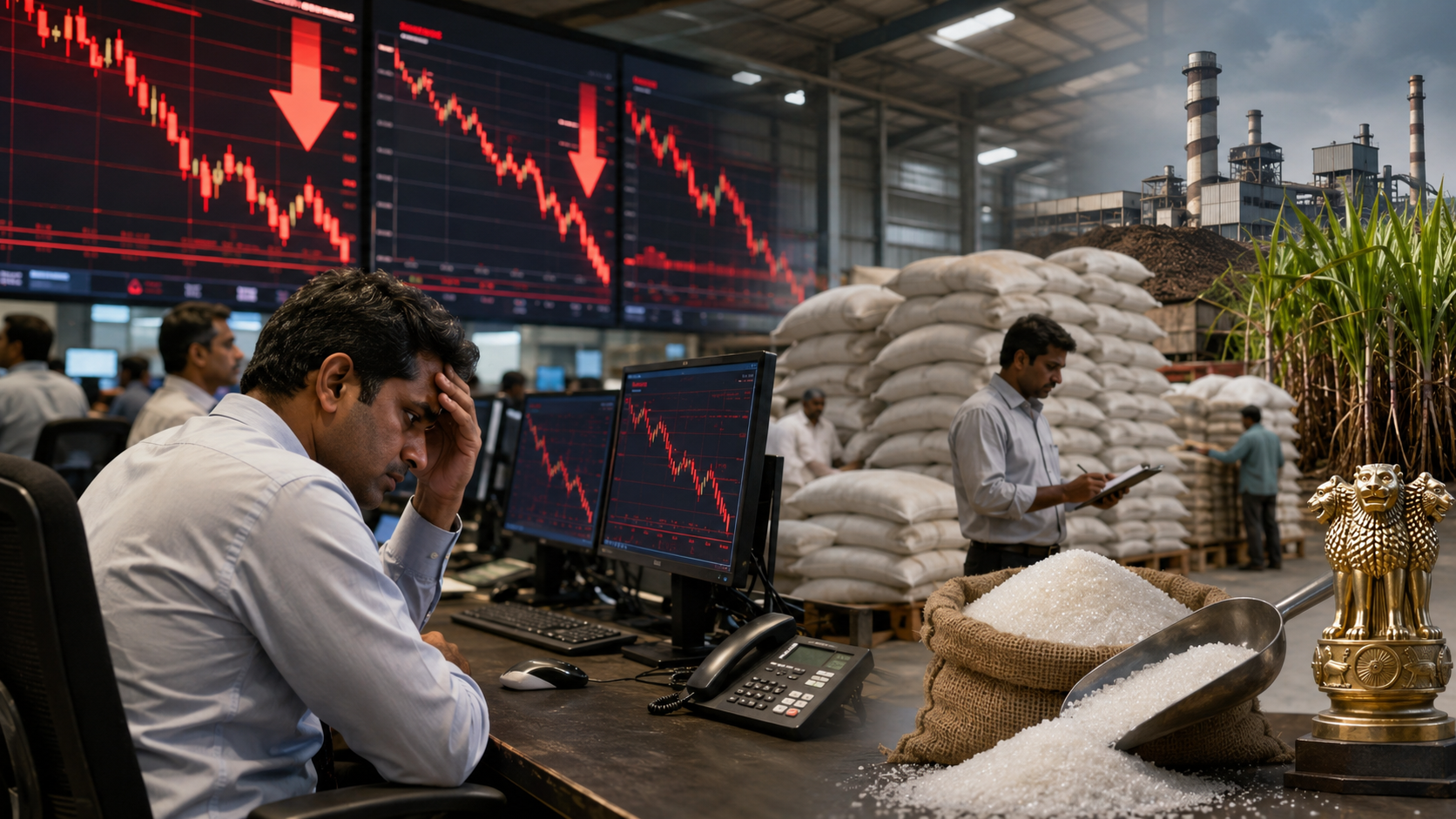
- Dwarikesh Sugar Industries declined around 7%, leading losses among sugar stocks.
- Triveni Engineering, Uttam Sugar Mills and other sugar companies also fell sharply.
- The government aims to curb hoarding and speculative trading while ensuring adequate domestic supplies.
New Delhi, September 1, 2026: Shares of sugar companies came under pressure on Tuesday after the government announced a further reduction in the stockholding limit for sugar dealers, intensifying efforts to curb hoarding and maintain adequate domestic supplies.
The government has reduced the maximum quantity of sugar that dealers can hold from 4,000 quintals to 2,000 quintals, effective September 15, 2026. The revised restriction will remain in force until November 30, 2026.
Under the new rules, dealers will not be permitted to hold sugar stocks for more than 30 days from the date of receipt. They will also be prohibited from holding more than 2,000 quintals at any time or at any location across the country.
The announcement triggered broad-based selling in sugar stocks. Dwarikesh Sugar Industries emerged as the biggest loser, falling 7.02%, while Triveni Engineering & Industries declined 5.76%. Uttam Sugar Mills dropped 5.15%, while Dalmia Bharat Sugar and Balrampur Chini Mills also recorded significant declines.
Other sugar stocks, including Avadh Sugar & Energy, Dhampur Sugar Mills, Shree Renuka Sugars, Bajaj Hindusthan Sugar and Simbhaoli Sugars, also traded lower following the government’s announcement.
The government said the lower stock limit is intended to discourage hoarding and speculative trading, prevent excessive accumulation of sugar and facilitate the orderly movement of stocks through the domestic supply chain.
An exception has been provided for Kolkata and its extended metropolitan areas, where the existing 4,000-quintal limit will remain. The government cited Kolkata’s role as a distribution hub sourcing sugar from Uttar Pradesh and Maharashtra and supplying eastern and northeastern India.
The latest measure follows a series of government interventions aimed at improving sugar availability and controlling prices. Authorities have also intensified stock monitoring and physical verification across sugar mills, dealers and traders.
According to the government, these measures and improved market availability have contributed to a decline of around 20% in ex-mill sugar prices in recent days, while retail prices have also started showing a downward trend.
The latest restrictions are expected to keep the sugar sector under close market watch as the government seeks to balance consumer interests, price stability and uninterrupted domestic supply.