Foodgrain storage losses in India: Waste not, want not

India needs to properly assess and resolve the issue of losses in foodgrains in transit. Besides reducing wastage and improving the lot of farmers, this will also boost its growth prospects in the international market.

• Storage is the major cause of post-harvest losses for all kinds of food in India, which is estimated at around 15% by the Food Corporation of India.
• A key issue is the availability of surplus foodgrains with FCI, well above its buffer capacity. For instance, its rice stocks were at 21 MT in January this year compared to a buffer requirement of 7 MT.
• Use of scientific storage methods, privatisation and development of larger and better distributed storage infrastructure down to the village level will help improve the storage capacities.
• This will reduce wastage, keep farm produce less volatile to market fluctuations and also help India boost its foodgrain exports.

From a net food importer in the 1960s, India has taken great strides towards becoming self sufficient in food production. But this achievement also presents a dilemma of plenty, as the country faces challenges in managing this surplus production.

India achieved a record food grain and horticultural production of 281.37 and 314.67 million metric tonnes (MMT), respectively in 2018-19. Food and Agriculture Organisation of the UN (FAO) estimates that food loss and waste in India is at around 40%, while Food Corporation of India pegs it at 15%.

A study by National Academy of Agricultural Sciences (NAAS) concludes that storage is the major cause of post-harvest losses for all kinds of food in India. This is primarily discussed in the realm of fruits and vegetables, where India faces a critical deficiency of cold storage capacity – this belies the enormous potential of its processed food industry. As of March 2017, India had 7,645 cold storages having an aggregate holding capacity of 34.95 million tonnes. Around 57% of this is based in UP and West Bengal, and 75% of the cold storage capacity is used for potatoes. On the other hand, 30-40% of fruits and vegetables are estimated to be wasted due to lack of proper cold storage facilities.
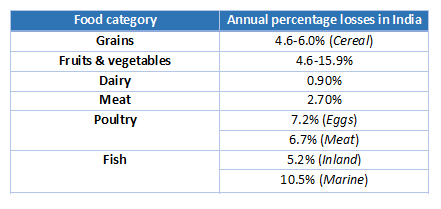
Source: National Academy of Agricultural Sciences

While the situation in grains is supposed to be considerably better, the loss is significant enough to merit concern. India is estimated to have a record production of 291.95 million tonnes of cereals in 2019-20. Out of this, around 4.6-6% is lost, according to National Academy of Agricultural Sciences. This would still imply a loss of around 13-18 million tonnes, though experts caution that the loss could be higher. Out of 1,000 lakh MT of wheat produced every year, around 10% is lost due to improper storage methods. Most of the wheat is stored in bags in warehouses with many associated losses, including spillage, rodent attacks, bird droppings, theft/pilferage, etc. A strong thrust towards modern and scientific means of grain storage is essential.

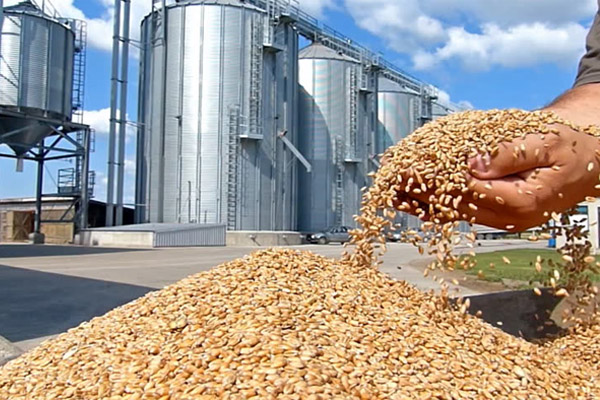
Metal silos have proved to be successful alternatives for reduction in post-harvest grain losses in developing countries. But high procurement costs ranging from US$ 40-350 have been the major stumbling block to the adoption of silos in India. Bulk storage capacity in silos presently is just around 0.2 MMT, which needs to be ramped up aggressively. Due to the lack of storage facilities, farmers have to often sell their surplus produce at throwaway prices. Addressing this will also help keep a local buffer available in crisis situations such as the present pandemic, wherein ensuring timely availability of food supplies across regions is of utmost importance.

An even larger issue is the lack of storage space with the Food Corporation of India. It has food reserves well above the buffer norms, which further leads to food loss during storage. As of December 2019, FCI was holding 56 MT of rice and wheat and 26 MT of paddy (rice equivalent of 17 MT) in its own facilities. FCI’s rice stocks for instance were at 21 MT in January this year compared to a buffer requirement of just 7.6 MT.

Food storage costs have also been rising steadily, as the corporation is compelled to resort to temporary storage facilities like cover & plinth (CAP) or take warehouses on lease. Last year, around 8.79 million tonnes of wheat were estimated to be kept in such temporary storage facilities in Punjab alone. The economic cost of wheat and rice at present is estimated at Rs 2,505.67 and Rs 3,601.91 per quintal respectively. In comparison the price at which FCI supplies rice and wheat to states under NFSA is at just Rs 3 and Rs 2 per kg respectively.

Damage control measures

Ensuring that post-harvest losses of food are minimized merits a calibrated approach. The problem needs to be viewed from various levels – type of storage, overdependence on FCI/CWC, liquidation of surplus stocks, transportation issues, and lack of interest of the private sector. Professor Anupam Varma, President, World Society for Virology, Ex-ICAR National Professor, INSA Emeritus Scientist, Indian Agricultural Research Institute, comments:

“Data on actual losses is the first thing we should have. The official figure of losses is 4.6-6%. Even that is huge at around 5 million tonnes. We cannot afford to lose anything that we can save. Interventions need to be made right from the field.”

There needs to be a rapid scale up in the usage of metal silos, which can also boost our prospects in the international market.
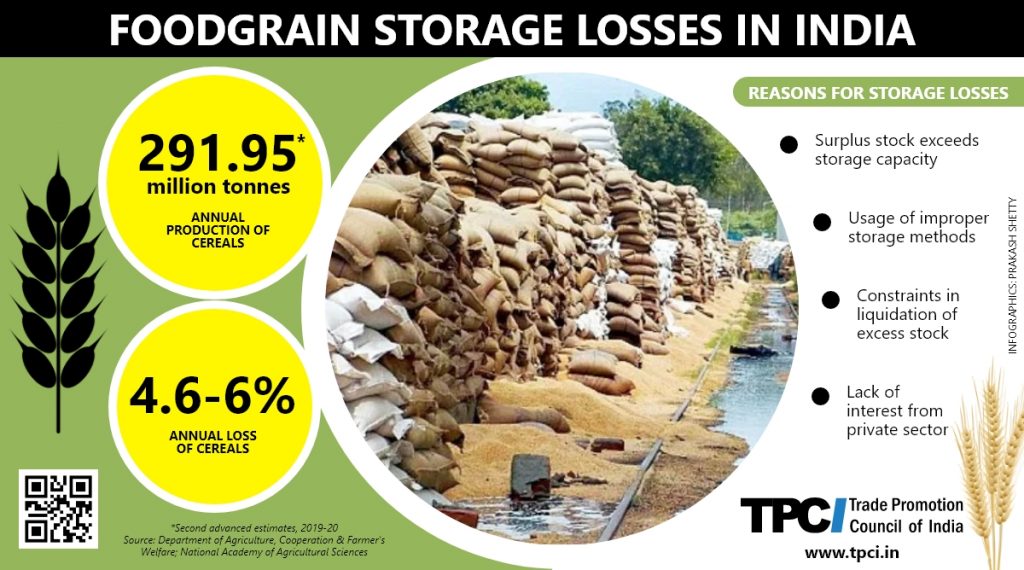
Foodgrain storage losses in India

P K Bhardwaj, Head of Operations – Grain Silos at National Collateral Management Services Limited, states:

“Once you convert all your grain storage into silo storage, you will be saving a lot of grain, which you can export. China converted their entire grain storage into silo storage in 1999, which is why it is exporting a lot of grain. We could also be saving around 10% of grain and exporting it.”

India set up its first metal silo in 1959 in Hapur, UP, but the concept only gained traction when FCI set up its first pilot project in 2006 on PPP basis. However, India still suffers from a severe deficiency in terms of silo storages as discussed earlier. Storing grains in silos is a widely acceptable method to ensure better and more scientific handling of grains.

Prof Gopal Naik, IIM Bangalore also agrees that scientific storage of grains will offer a major boost to exports. He comments to IBT:

“Scientific storages will help our exporters to keep the quality of the produce aligned with international requirements and will reduce losses. This will help in getting better prices in the international markets apart from savings from reduction in losses and rejections by importers.”

Furthermore, this will bring down the issue of Asymmetric Trade Opportunities for India’s exporters. India’s exporters have to take extra care in managing the supply chain properly to meet the requirements of the buyers, whereas in the international market, the produce is readily available. This implies an additional cost to our exporters, thereby reducing the opportunity to export.

However, huge silo storages are not a relevant solution for small farmers, whose production is often in the range of just 20-30 quintals. Dr Basanta Kr Sahu, Associate Professor, IIFT suggests that silos can be set up at the village or panchayat level, which such small farmers can use for a nominal price. He also feels that local and traditional channels of storage need to be given more importance.

Moreover, India needs to move away from the strategy of centralization of storage and overdependence on the FCI. The government’s repeal of the Essential Commodities Act is a vital step in this direction, as it will allow private parties, traders and farmers to store foodgrains. Earlier, this was a major roadblock preventing the agri sector from having excess storage.  It is also essential to relook at the open-ended procurement policy of FCI in the absence of an effective policy to liquidate the grain stocks, as suggested by the Commission for Agricultural Costs and Prices (CACP).

Varun Kumar Das, PhD Research Scholar, IGIDR, agrees that storage needs to be more distributed at the village and gram panchayat level rather than housed within the FCI, and adds, “The recent steps taken by the government under the Pradhan Mantri Garib Kalyan Ann Yojana (PMGKAY) would help in reducing excess stocks with the FCI. The  government could also think of facilitating a storage facility market by encouraging private investments, PPP mode, build operate transfer (BOT), etc. thus bringing in competition and reducing costs. Government can also provide credit facilities for Farmers Producer Organizations (FPOs) to invest in storage warehouses, cold chain storage, etc.

There is a considerable roadblock in liquidating the surplus stock with FCI. One option is towards food security, particularly in times of the pandemic. Prof Gopal Naik, IIM Bangalore, suggests that the government could look at strengthening the mid-day meal across the country. States could also provide ration on similar term as ration card holders to attract migrant labourers.

A major issue in liquidation is that India is a signatory to the WTO and the Agreement on Agriculture. If the government releases surplus stock to the market, it can invite action as a trade distorting subsidy. However, this does not stop the government from exporting it, when prices are at par with the world market, which can be aggressively pursued. Processing and value addition of this surplus stock can also be encouraged in a big way to ensure greater share of value added exports.


Previous Post
Next Post

Most Recent Posts

  • All Post
  • 8th Pay Commission
  • Aadhar
  • Aditya Birla Capital
  • Advertising Standards
  • Affordable Housing
  • Agriculture
  • Agriculture & Food
  • AI in Healthcare
  • AI Technology
  • Airlines
  • alcohol industry
  • Android
  • APEDA
  • Apple
  • Artificial Intelligence
  • Ashwini Vaishnaw
  • Asset Management
  • Atmanirbhar Bharat
  • Audio Devices
  • Audio Products
  • Auto Industry
  • Automobile
  • Automobiles
  • Automotive
  • Automotive Industry
  • Aviation
  • Bain Healthcare Report 2026
  • Bank
  • Banking
  • Banking Technology
  • Battery Industry
  • Beverage Industry
  • Beverages
  • Bihar
  • biotechnology
  • Bitcoin
  • BMW Group India
  • Brand Insight
  • BRICS
  • Bullion Market
  • Business
  • Business & Economy
  • Business & Trade
  • Business Leadership Post COVID-19
  • Business News
  • Business Terminology
  • Business Utilities
  • Buyback
  • Capital Goods
  • Capital Markets
  • CarsBusiness
  • CBIC
  • CCI
  • Child Investment
  • China
  • China technology news
  • Citizen Services
  • Clean Energy
  • Clean Technology
  • Cloud Computing
  • coal
  • Commerce
  • Commerce and Industry
  • Commercial Real Estate
  • Commercial Vehicles
  • Commodities
  • Communications
  • Companies
  • Competition Law
  • Compliance
  • Computer Accessories
  • connected cars
  • Consumer
  • Consumer Affairs
  • Consumer Electronics
  • Consumer Finance
  • Consumer Goods
  • Consumer Health
  • Consumer Markets
  • Consumer News
  • Consumer Protection,
  • Consumer Rights
  • Consumer Spending
  • Consumer Trends
  • Content Creation
  • Copper
  • Corporate
  • corporate affairs
  • Corporate Earnings
  • Corporate Governance
  • Corporate News
  • Corporate Social Responsibility
  • Cost of Living
  • Country
  • CRED
  • Credit Cards
  • CREDIT RATING
  • Crude Oil
  • Cryptocurrency
  • CSR
  • Culture
  • Currency
  • Customs Duty
  • Cyber Security
  • Cybersecurity
  • Dairy Industry
  • Data & Analytics
  • Defence
  • Delhi Government
  • Delhi-NCR
  • Demographics
  • Derivatives
  • DGCA
  • DGFT
  • DigiLocker
  • Digital Assets
  • Digital Economy
  • Digital Health India
  • Digital Identity
  • Digital India
  • Digital Infrastructure
  • Digital passport for robots
  • Digital Payments
  • Digital Platforms
  • digital services
  • Diplomacy
  • Dixon Technologies
  • DPIIT
  • E Commerce
  • E-commerce
  • E-Governance
  • Ease of Doing Business
  • Economic Growth
  • Economy
  • Edible Oil Industry
  • Editor Choice
  • EdTech
  • Education
  • Electric Mobility
  • Electric Vehicles
  • Electronics
  • Employment
  • ENERGY
  • Engineering
  • Entertainment
  • Environment
  • EPFO
  • Ethanol Economy
  • EV Industry
  • EV Technology
  • Exports
  • EXTER
  • Farmers
  • Fashion
  • FINANCE
  • Finance Ministry,
  • Financial Marketing
  • Financial Markets
  • Financial News
  • Financial Planning
  • Financial Results
  • Financial Services
  • Fintech
  • FnTech
  • Food & Beverage
  • Food & Beverages
  • Food Exports
  • Food Industry
  • Food Manufacturing
  • Food Processing
  • Food Regulations
  • food safety
  • Foreign Exchange
  • Foreign Investment
  • Foreign Policy
  • Foreign Trade
  • Forex Reserves
  • fssai
  • FTA
  • Fuel
  • Fuel Prices
  • Future Energy
  • Gadgets
  • Gadgets & Apps
  • Gaming
  • GDP
  • Generative AI Healthcare
  • Geopolitics
  • GI Products
  • Global Brand Alliance
  • Global Economy
  • Global Markets
  • Global Politics
  • Global Tech
  • Global Trade Policy
  • Global Trends\
  • Gold
  • Gold Market
  • Gold Prices
  • Gols & Silver
  • Government
  • Government & Policy
  • Government Affairs
  • Government Bonds
  • Government Data
  • Government Initiatives
  • Government Policy
  • Government Policy & Regulation
  • Government Scheme
  • Government Schemes
  • Government Services
  • Green Energy
  • Green Mobility
  • GroupGlobal
  • GST
  • GST Council
  • GST Counsil
  • Hair Care
  • Hardware
  • Hatchback Segment
  • Health Supplements,
  • Horticulture
  • Housing
  • HSBC
  • Human Resources
  • humanoid robot market
  • Hyundai
  • IBT Infographics
  • iinvestment
  • Imports & Exports
  • Income Tax
  • India
  • India Auto Market
  • India Business News
  • India Inc
  • India News
  • India Retail
  • India-Canada Relations
  • India-China
  • India-Japan Relations
  • India-Russia Relations
  • India-South Korea Relations
  • India-US Relations
  • Indian Economy
  • Indian Navy
  • Industrial Pollution
  • Inflation
  • Infra
  • Infrastructure
  • Innovation
  • Instagram
  • Insurance
  • international
  • International Affairs
  • International Cooperation
  • International Relations
  • International Trade
  • Internet & Connectivity
  • Internet Policy
  • Internet Regulation
  • Interview
  • Investing
  • Investment News
  • Investments
  • iPhone News
  • IPO
  • IT Industry
  • Jewellery
  • Jio Platforms
  • JioBlackRock
  • Jobs & Careers
  • Joint Ventures
  • Kim Kardashian
  • Labour
  • Latest
  • Launches
  • Leadership
  • Leaderspeak
  • Lending
  • Lifestyle
  • Lifestyle Tech
  • List
  • Loans & Credit
  • Local News
  • Logistics
  • LPG
  • Luxury Cars
  • Machinery
  • Macroeconomics
  • Macroeconomy
  • maharashtra
  • Maharashtra News
  • Make in India
  • Makhana
  • Manufacturing
  • Market Outlook
  • Markets
  • Maruti Suzuki
  • Mergers & Acquisitions
  • Meta
  • Microsoft
  • Middle East
  • Mobile Apps
  • Mobile Industry
  • Mobile Launch
  • Mobility
  • Monetary Policy
  • Monsoon
  • MoSPI
  • MSME
  • Mutual Funds
  • Nano Tech
  • National
  • National news
  • NEET 2026
  • NewsElectric
  • NewsTata
  • NPCI
  • NPS Vatsalya
  • Office Market
  • Oil & Gas
  • Oil and Gas
  • Others
  • OTT
  • Packaged Drinking Water
  • Packaged Foods
  • Packaging Industry
  • Packaging Innovation
  • Passenger Vehicles
  • Paytm
  • Pension & Retirement
  • Pensions
  • Personal Care
  • Personal Finance
  • Perspectives
  • Petroleum
  • PFRDA
  • Pharmaceuticals
  • PM Modi
  • PMAY-G
  • PMAY-U
  • PMAY,
  • PMI
  • policy
  • Population
  • PORTS
  • Positive News
  • PPF
  • Precious Metals
  • Pricing
  • Product Labeling
  • Product Labelling
  • Product Launch
  • Property Market
  • PSU
  • PSU Banks
  • Public Health
  • Public Policy
  • Public Safety
  • Public Sector
  • Public Services
  • Public Welfare
  • Quarterly Results
  • Railways
  • Rajasthan
  • Raksha Bandhan
  • Raksha Bandhan Gifts
  • Rare Earths
  • RBI
  • Real Estate & Realty Sector
  • Recycling
  • Regulation
  • Regulatory Action
  • Regulatory Affairs
  • Regulatory Updates
  • REIT
  • Reliance Industries
  • Renewable Energy
  • RERA
  • Research
  • Retail
  • Retirement Planning
  • Road Infrastructure
  • Robotics & Automation
  • robotics standards
  • Rupee
  • Rural Development
  • Rural Housing
  • SAIL
  • Salaries
  • Samsung
  • Savings
  • Science & Technology
  • Sebi
  • Security
  • Semiconductor
  • Services Sector,
  • SHIPPING
  • Silver Prices
  • Skill Development
  • Skills Development
  • Small Business
  • Smart Devices
  • Smart Home
  • Smart Mobility
  • Smartphones
  • Social Impact
  • Social Media
  • Society
  • Software Development
  • Solar Energy
  • Space Technology
  • Startups
  • Statistics
  • Steel Industry
  • Stock Market
  • stocks
  • streaming
  • Sugar Industry
  • Sukanya Samriddhi Yojana
  • Sustainability
  • SUV
  • Tamil Nadu Pollution Board
  • Tariffs
  • Tariffs & Duties
  • Tata Group
  • Tata Motors
  • Tata Sons
  • Tax Planning
  • Taxation
  • Tech
  • Tech Branding
  • Technology
  • Telecom & Technology
  • Telecom Industry
  • Top Story
  • Tourism
  • Trade
  • Trade Agreement
  • Trade Basket
  • Trade Partner
  • Trade Policy,
  • Transportation
  • Travel
  • Trending
  • Two-Wheelers
  • UIDAI
  • UPI
  • Urban Development
  • US-Iran Conflict Economic Impact
  • US–India Relations
  • Uttar Pradesh
  • VehiclesLuxury
  • vivo
  • Wastewater Management
  • Water Quality,
  • Wealth Management
  • Wearables
  • Wellness
  • WhatsApp
  • Wheat
  • Workplace
  • World
  • World News
  • Worldview
  • Yamaha
  • zLead Slider
    •   Back
    • Healthcare
    • Auto
    • Fmcg
    • Hospitality
    •   Back
    • Cash Crop
    • Organic
    • New Era Agri
    • Processed Food
    •   Back
    • Construction
    • Power
    • Mining
    • Telecom
    •   Back
    • ENERGY
    •   Back
    • Export/Import
    • Trade Deal
    • Trade Fair
    •   Back
    • Policies
    • Industry
    • Finance
    •   Back
    • Others technology
    • Mobile phone
    • Gadgets
    •   Back
    • Manufacturing
    • Services
    • Startup

India Business & Trade is a national media platform decoding the ideas, decisions and shifts shaping India’s growth story—across plicy, business, global commerce and a rapidly evolving marketplace.

Reach Us

India Business & Trade
M-62, Saket, New Delhi-110064, India

Subscribe To Newsletter

Stay ahead in the dynamic world of trade and commerce with India Business & Trade’s weekly newsletter.

Copyright © 2026 India Business & Trade. All Rights Reserved


Fatal error: Uncaught TypeError: Unsupported operand types: string * int in /var/www/sites/indiabusinesstrade.in/wp-content/plugins/royal-elementor-addons/admin/includes/wpr-templates-modal-popups.php:192 Stack trace: #0 /var/www/sites/indiabusinesstrade.in/wp-content/plugins/royal-elementor-addons/admin/includes/wpr-templates-modal-popups.php(128): WprAddons\Admin\Includes\WPR_Templates_Modal_Popups::get_template_settings() #1 /var/www/sites/indiabusinesstrade.in/wp-content/plugins/royal-elementor-addons/admin/includes/wpr-templates-modal-popups.php(106): WprAddons\Admin\Includes\WPR_Templates_Modal_Popups::render_popup_content() #2 /var/www/sites/indiabusinesstrade.in/wp-content/plugins/royal-elementor-addons/admin/includes/wpr-templates-modal-popups.php(64): WprAddons\Admin\Includes\WPR_Templates_Modal_Popups::display_popups_by_location() #3 /var/www/sites/indiabusinesstrade.in/wp-includes/class-wp-hook.php(341): WprAddons\Admin\Includes\WPR_Templates_Modal_Popups->render_popups() #4 /var/www/sites/indiabusinesstrade.in/wp-includes/class-wp-hook.php(365): WP_Hook->apply_filters() #5 /var/www/sites/indiabusinesstrade.in/wp-includes/plugin.php(522): WP_Hook->do_action() #6 /var/www/sites/indiabusinesstrade.in/wp-includes/general-template.php(3224): do_action() #7 /var/www/sites/indiabusinesstrade.in/wp-content/plugins/royal-elementor-addons/admin/templates/wpr-canvas.php(64): wp_footer() #8 /var/www/sites/indiabusinesstrade.in/wp-includes/template-loader.php(132): include('...') #9 /var/www/sites/indiabusinesstrade.in/wp-blog-header.php(19): require_once('...') #10 /var/www/sites/indiabusinesstrade.in/index.php(17): require('...') #11 {main} thrown in /var/www/sites/indiabusinesstrade.in/wp-content/plugins/royal-elementor-addons/admin/includes/wpr-templates-modal-popups.php on line 192