Indian Railways is developing an indigenous high-speed train signalling system to reduce dependence on foreign technology and support future bullet train corridors.
Highlights
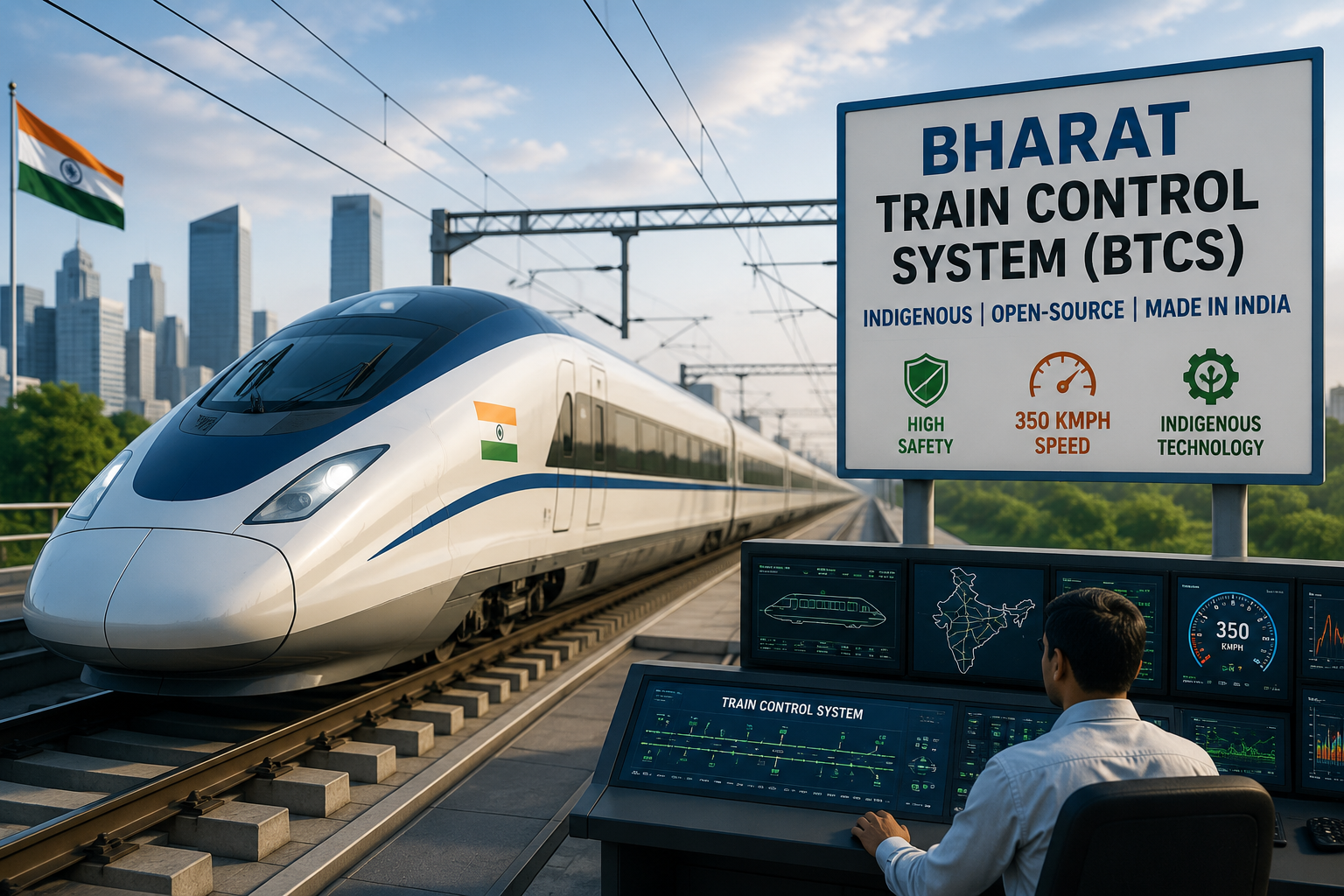
- Indian Railways is developing the Bharat Train Control System (BTCS), an indigenous signalling protocol for bullet trains.
- The system will be tailored to Indian conditions and designed for safe operations at up to 350 kmph.
- BTCS aims to reduce reliance on foreign signalling technologies for nearly 7,000 km of planned high-speed rail corridors.
- The platform will be open-source, enabling wider participation by Indian manufacturers and technology companies.
- Approvals for future bullet train corridor designs and route plans are expected by mid-2027.
- The initiative is expected to strengthen domestic manufacturing and reduce the cost of future high-speed rail projects.
Indian Railways is taking a major step towards self-reliance in high-speed rail technology by developing its own signalling protocol, called the Bharat Train Control System (BTCS). The new system is being designed specifically for Indian operating conditions and is expected to become the backbone of future bullet train projects across the country.
The indigenous signalling platform will reduce India’s dependence on imported train control technologies, particularly for the nearly 7,000 km of planned high-speed rail corridors. Officials say the system will build on the experience gained from the Mumbai-Ahmedabad High-Speed Rail project while creating a solution that is better suited to Indian requirements.
Unlike proprietary foreign systems, BTCS is expected to be an open-source and cost-effective platform. This will allow multiple Indian companies to manufacture compatible equipment, increasing competition and lowering deployment costs. It is also expected to encourage innovation among domestic railway technology firms.
The signalling system is being developed to support train operations at speeds of up to 350 kmph, ensuring high standards of safety and reliability. Officials believe it can eventually be offered to other countries looking for affordable high-speed rail technology.
The government is also expected to finalise approvals for the design and alignment of future bullet train corridors by mid-2027, paving the way for the next phase of India’s high-speed rail expansion.
For passengers, an indigenous control system could lead to faster rollout of bullet train projects, improved safety, lower project costs and greater technological self-reliance. The initiative aligns with India’s broader goal of strengthening domestic manufacturing under the Make in India programme.