
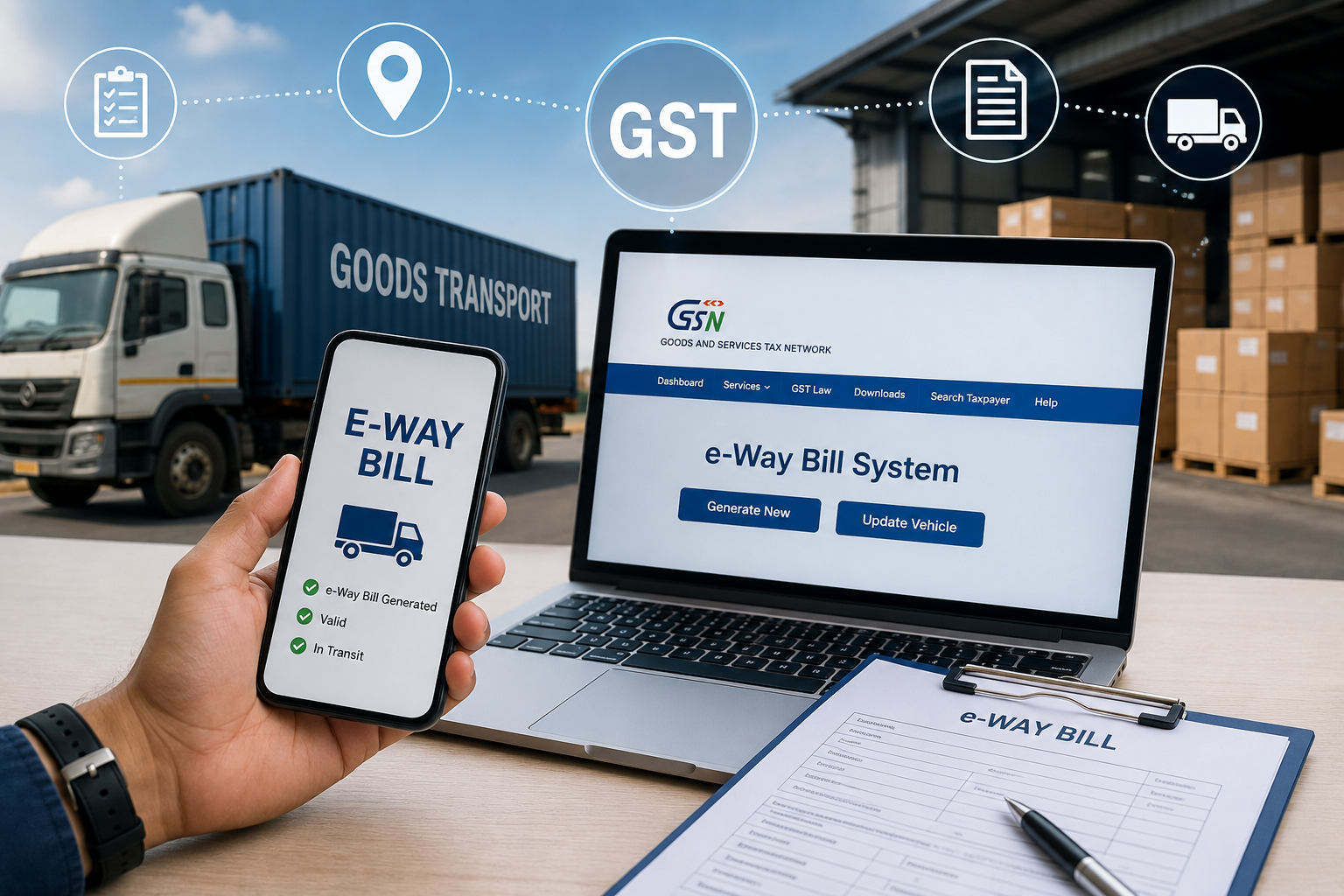
The proposed changes, including mandatory ‘Ship-To GSTIN’ and voluntary e-way bill closure, were scheduled to take effect from August 1.
GSTN has deferred the rollout until further notice after receiving feedback from businesses and technology providers.
Highlights
- GSTN has deferred two proposed e-way bill enhancements that were to be implemented from August 1, 2026.
- The changes included mandatory ‘Ship-To GSTIN’ capture and a voluntary e-way bill closure facility.
- The decision comes after industry representations highlighting implementation and system integration challenges.
- Businesses in sectors such as auto components, EPC and e-commerce flagged concerns over ERP and e-invoicing integration.
- Experts say the government is reworking the proposal instead of merely postponing its rollout.
- The existing e-way bill system will continue until a revised implementation roadmap is announced.
The Goods and Services Tax Network (GSTN) has put on hold two proposed enhancements to the e-way bill system after receiving extensive feedback from industry stakeholders over implementation challenges.
The proposed changes, which were scheduled to come into effect from August 1, 2026, included the mandatory capture of the ‘Ship-To GSTIN’ in Bill-to-Ship-to transactions and the introduction of a voluntary e-way bill closure facility. GSTN has now deferred both proposals until further notice.
The mandatory ‘Ship-To GSTIN’ requirement was intended to improve identification of the actual recipient of goods and strengthen the traceability of goods movement. The voluntary closure feature would have allowed taxpayers to close an active e-way bill in situations where the movement of goods was ultimately cancelled. The proposals also required changes to APIs used for ERP systems and e-invoicing integrations.
According to GSTN, the advisories issued on June 9 and June 17 regarding these enhancements have been withdrawn for the time being, and the implementation timeline has been suspended until a revised roadmap is announced.
Tax experts believe the decision reflects the government’s willingness to incorporate industry feedback. EY India Tax Partner Saurabh Agarwal said many businesses found it difficult to implement the proposed changes alongside the existing e-invoicing and Invoice Reference Number (IRN)-based e-way bill system, particularly in sectors with complex supply chains such as automobile components, engineering, procurement and construction (EPC), and e-commerce.
AMRG Global Managing Partner Rajat Mohan said the deferment would help businesses avoid operational disruptions while giving GSTN additional time to refine the system based on stakeholder inputs.
Under the GST regime, an e-way bill is mandatory for transporting goods valued above Rs 50,000. Introduced after the rollout of GST in July 2017, the digital system replaced physical interstate check posts, enabling seamless movement of goods while strengthening tax compliance through online monitoring.