
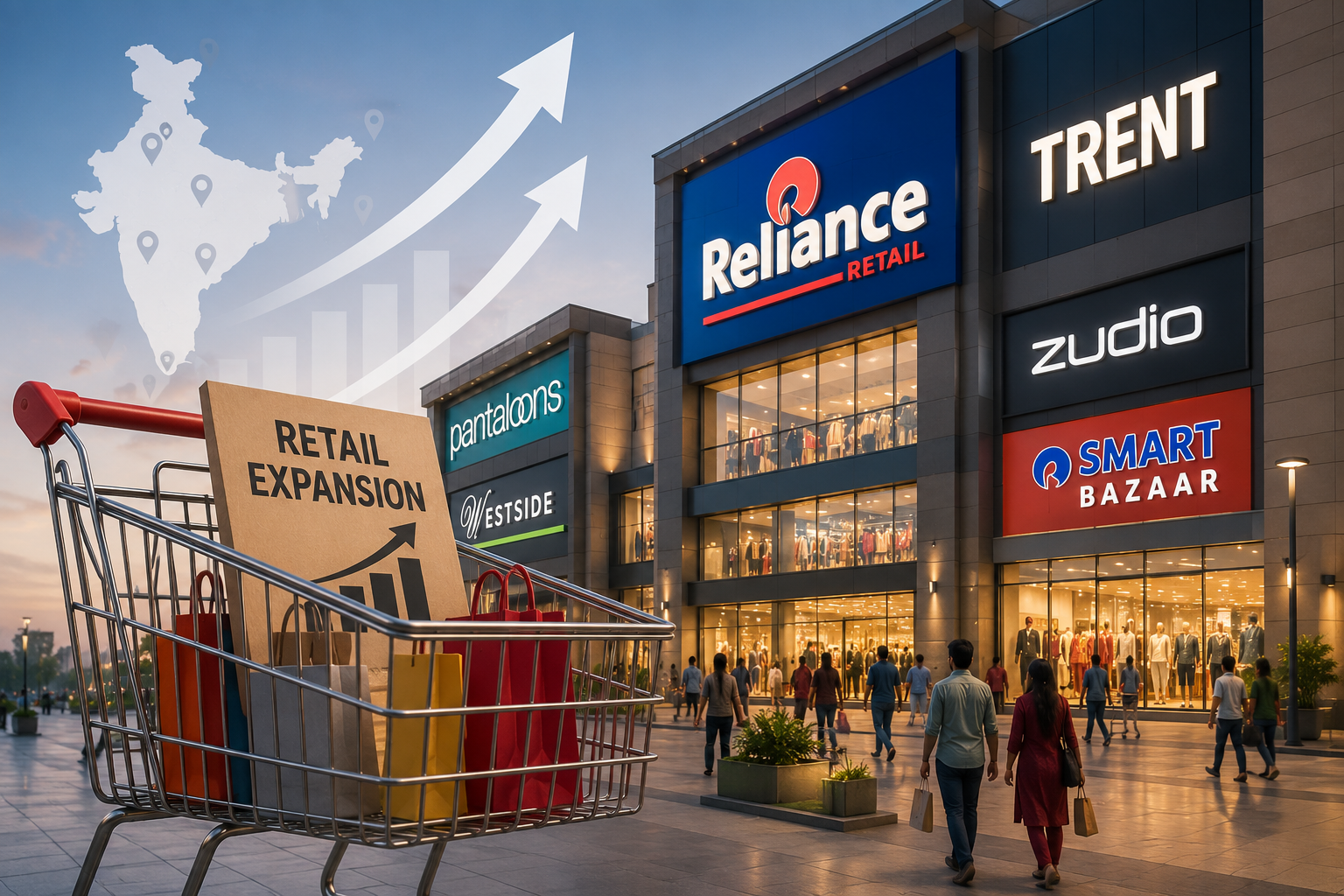
India’s leading retail companies are investing over ₹4,000 crore to open hundreds of new stores, betting on rising demand beyond metro cities. Highlights India’s biggest retail companies are making a strong bet on offline shopping by investing over ₹4,000 crore this financial year to expand their store networks across the country. The new investments highlight growing confidence in consumer demand, especially in smaller cities where organised retail continues to gain market share. Several leading retailers, including Reliance Retail, Trent, Arvind Fashions and Spencer Retail, have either raised fresh capital or announced expansion plans to increase their physical presence. Most of the new stores will be opened in Tier-II and Tier-III cities, where rising incomes and changing shopping habits are driving demand. Reliance Retail, India’s largest retailer, has significantly increased its long-term borrowings to fund store expansion and strengthen its omnichannel business. The company plans to continue investing in both physical outlets and digital platforms, allowing customers to shop seamlessly online and offline. Arvind Fashions is also preparing to add around 1.5 lakh square feet of retail space during FY27, while Spencer Retail is working towards improving profitability after restructuring its business. Other retailers are similarly focusing on expanding footprints in fast-growing markets. Industry experts say physical stores continue to play a crucial role even as online shopping grows. Customers still prefer visiting stores for categories like fashion, groceries, electronics and lifestyle products, while retailers use stores as fulfilment centres for faster deliveries. For consumers, the expansion means better access to branded products, more employment opportunities and improved shopping experiences in smaller towns. It also reflects strong confidence among retailers that India’s consumption story will remain a key driver of economic growth in the coming years.

Trump Tariffs Hit Pharma
US plan to impose a 100% tariff on imported generic medicines from 2028 raises concerns for Indian drugmakers, but the industry says it has time to adapt. Highlights Story India’s pharmaceutical industry is closely monitoring the US administration’s proposal to impose a 100% tariff on imported generic medicines from 2028. The move, announced by US President Donald Trump, could significantly affect global pharmaceutical trade, especially for Indian drugmakers that have a strong presence in the American market. India is currently the world’s leading supplier of affordable generic medicines to the United States. The country exports generic drugs worth nearly $9.7 billion to the US every year, making America the largest destination for Indian pharmaceutical exports. Despite the proposed tariff, industry executives believe there is enough time to prepare. Since the measure is expected to take effect only from 2028, companies can gradually adjust their strategies by expanding manufacturing in the US, increasing exports to other countries, and strengthening supply chains. Many Indian pharmaceutical companies already have manufacturing facilities, research centres and distribution networks in the US, which could help reduce the impact of higher import duties. Firms are also expected to focus on high-value specialty medicines and diversify into emerging markets. For consumers, any increase in tariffs could eventually lead to higher medicine prices in the US if import costs rise. However, healthcare experts note that Indian generic medicines have played a crucial role in making treatment affordable for millions of Americans, making a sharp disruption less likely. Although uncertainty remains over the final policy, India’s pharmaceutical sector is expected to use the transition period to adapt, ensuring that its global competitiveness and export growth remain intact.
Adani Eyes Airline Entry
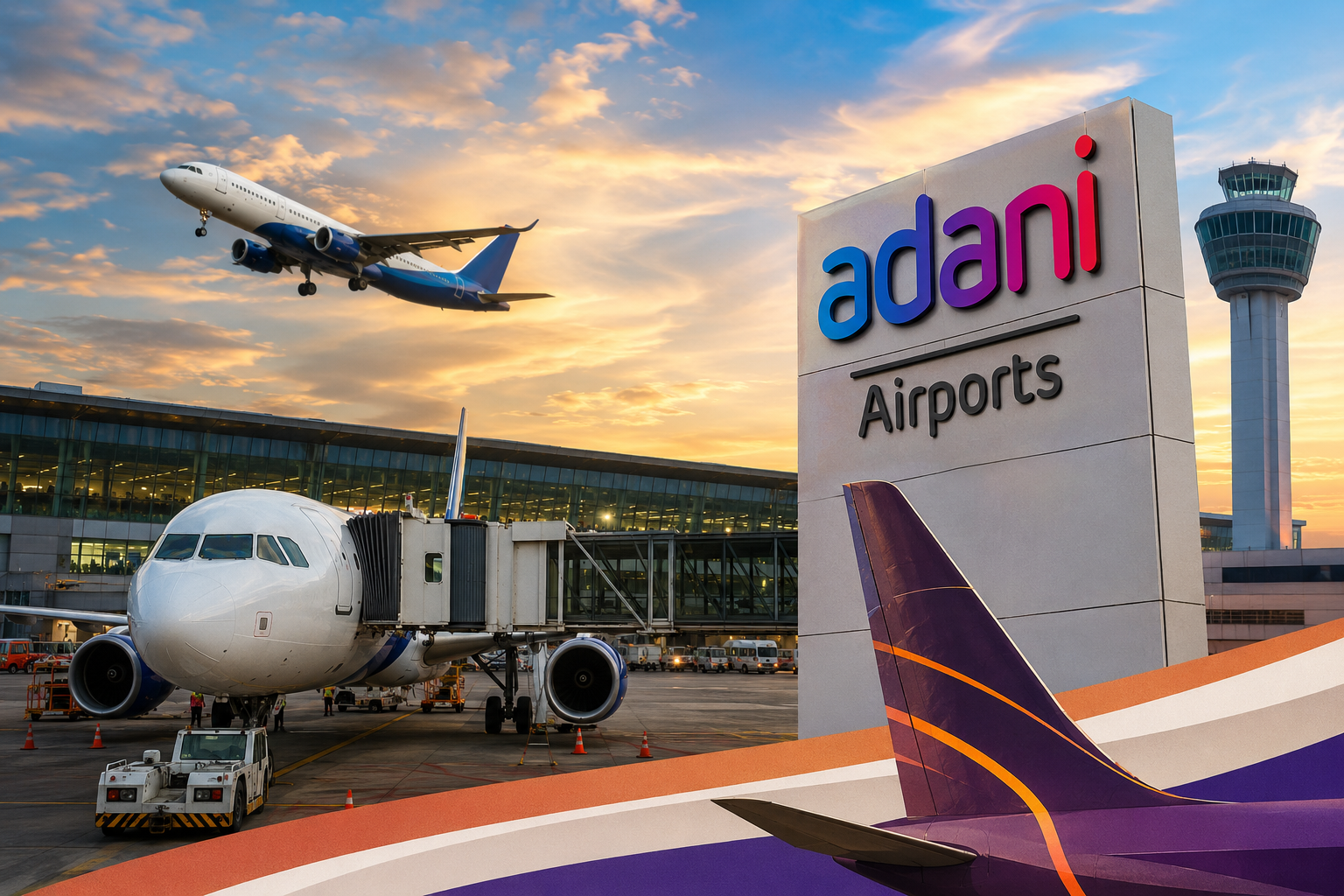
Centre may ease airport ownership rule, opening the door for Adani Group’s entry into the airline business. The proposed change could reshape competition in India’s aviation sector. Highlights The Central Government is exploring a major policy change that could pave the way for the Adani Group to enter India’s airline industry. According to reports, the government is considering relaxing the current rule that prevents operators of major airports from holding more than a 10% stake in an airline. At present, this ownership restriction applies to airport operators to avoid conflicts of interest. However, officials believe the rule may now be limiting investment and competition in India’s rapidly growing aviation market. The Civil Aviation Ministry has reportedly sought legal advice from the Solicitor General on whether the clause can be amended, including if such a change can be applied retrospectively to airport privatisation agreements signed in 2006. Since the clause forms part of these agreements, any amendment would need approval from the Union Cabinet. The Adani Group currently operates eight airports across India, including Mumbai Airport, and holds a 74% stake in Mumbai International Airport. The group has been expanding its presence in aviation through airport operations, maintenance, training and ground handling services. If the ownership cap is relaxed, Adani could either launch a new airline or acquire a substantial stake in an existing carrier. Government officials believe the move could increase competition in a market currently dominated by IndiGo and Air India, which together account for nearly 90% of domestic passenger traffic. For passengers, greater competition could eventually lead to more flight options, improved connectivity, better service quality and competitive fares. While the proposal is still under consideration, it signals the government’s intent to attract more investment and strengthen India’s aviation ecosystem.

India’s Wind Power Soars
India’s installed wind power capacity has reached 57,443 MW, while annual wind power generation touched a record 106 billion units in FY26.The country also retained its position as the world’s fourth-largest wind energy market with strong policy support. Highlights India’s wind energy sector has continued its strong growth trajectory, with the country’s total installed wind power capacity reaching 57,443 MW as of June 30, 2026. The latest figures released by the Ministry of New and Renewable Energy also show that wind power generation touched a record 106 billion units during FY 2025-26, reflecting the growing role of renewable energy in India’s electricity mix. The country added 6,057 MW of new wind capacity during FY26, significantly higher than 4,151 MW added in FY25 and 3,253 MW in FY24. Wind power generation also rose sharply from 83 billion units in both FY24 and FY25 to 106 billion units in FY26, highlighting improved capacity additions and better project performance. According to the GWEC Report 2026, India remained the fourth-largest wind energy market in the world as of December 31, 2025, reinforcing its position as one of the leading renewable energy producers globally. Among the states, Gujarat continues to lead with 16,086 MW of installed wind capacity, followed by Tamil Nadu (12,273 MW) and Karnataka (8,896 MW). Maharashtra, Rajasthan, Andhra Pradesh and Madhya Pradesh are also major contributors to India’s wind energy capacity. In terms of electricity generation, Gujarat produced the highest wind power during FY26 at 33,706 million units, followed by Tamil Nadu with 24,200 million units and Karnataka with 18,804 million units. The government has introduced several policy measures to accelerate renewable energy deployment. These include the Green Energy Corridor Scheme for transmission infrastructure, 100% foreign direct investment under the automatic route, Renewable Consumption Obligations, Green Energy Open Access Rules, offshore wind leasing regulations, viability gap funding for offshore wind projects, and updated bidding guidelines. These initiatives aim to strengthen renewable energy infrastructure, improve grid connectivity and attract greater private investment into the sector. With rising installations, higher power generation and continued policy support, wind energy is expected to play an increasingly important role in helping India achieve its clean energy and net-zero targets while reducing dependence on fossil fuels.
RailOne App Sees Massive Adoption
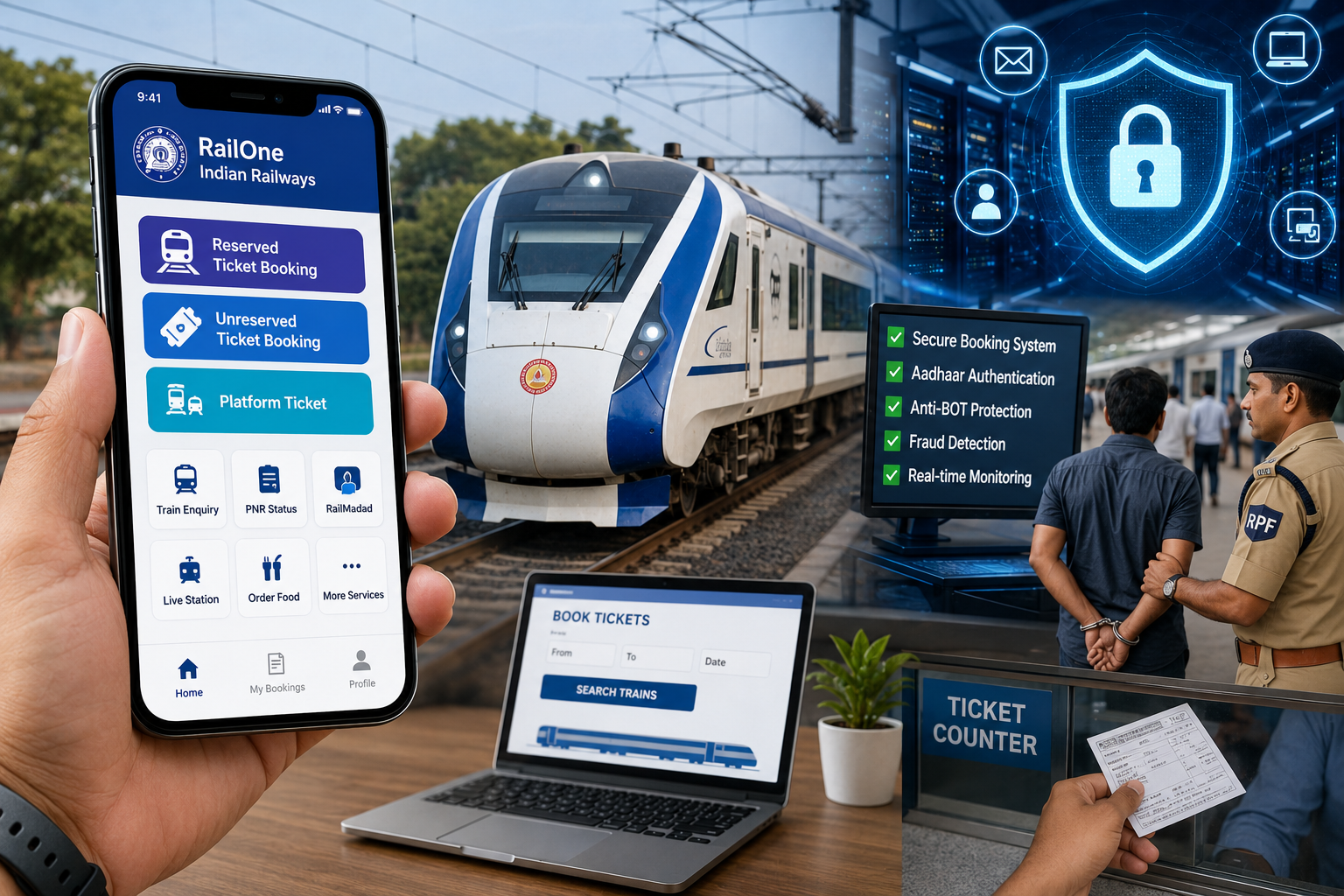
RailOne has crossed 4.55 crore downloads, with nearly 9.65 lakh tickets booked daily through the app.Indian Railways has also tightened cyber security and anti-fraud measures to make online ticket booking safer. Highlights Indian Railways’ digital transformation is gaining momentum, with the RailOne mobile application emerging as a popular platform for ticket booking and passenger services. According to the Ministry of Railways, the app has crossed 4.55 crore downloads and is now handling an average of 9.65 lakh ticket bookings every day, making railway services more accessible for millions of passengers. Launched on July 1, 2025, RailOne combines multiple railway services into a single platform. Passengers can book reserved, unreserved and platform tickets, check train and PNR status, and access RailMadad for grievance redressal without switching between different applications. The ministry said the app currently facilitates around 2.75 lakh reserved and 6.89 lakh unreserved ticket bookings daily, reflecting the increasing adoption of digital railway services. RailMadad has also strengthened passenger support. During FY 2025-26, the platform handled 6.94 lakh assistance requests, receiving 89.49% excellent and satisfactory feedback from users. Over the past three years, nearly 100% of passenger grievances have been resolved, highlighting improvements in service quality. To make online ticket booking safer and curb fraud, Indian Railways has introduced several cyber security measures. Aadhaar authentication is now mandatory for online Tatkal ticket booking, while Aadhaar-based OTP verification has been rolled out on selected trains to ensure genuine users get fair access. The Railways has also deployed advanced cyber security systems, including anti-bot technology, Content Delivery Networks (CDN), web application firewalls, intrusion prevention systems and round-the-clock monitoring by CERT-In and other agencies. These measures have helped reduce malicious traffic and improve booking performance for genuine users. Between January 2024 and June 2026, over 6.68 crore suspicious user accounts were permanently deactivated, while 6.22 crore accounts were temporarily suspended for verification. Authorities also blocked 13,343 suspicious email domains and filed 530 complaints on the National Cyber Crime Portal over fraudulent booking activities. The ministry said anti-bot systems now block nearly 64% of malicious booking attempts on average. During the last six months alone, about 57.74% of all requests received by the e-ticketing platform were identified as bot traffic and denied access. The shift towards digital ticketing is also evident in booking trends. Between June 2025 and June 2026, Indian Railways sold 65.08 crore reserved tickets, with 57.90 crore tickets (89%) booked online and only 11% purchased through reservation counters, highlighting the growing preference for digital booking platforms.

India Accelerates 6G Ecosystem
Bharat 6G Alliance has expanded to 90 members as India strengthens its roadmap for next-generation telecom technology.The government is backing research, spectrum planning and global standardisation to position India as a leader in 6G. Highlights India is stepping up preparations for the next generation of wireless communication by expanding the Bharat 6G Alliance and advancing its national roadmap for 6G technology. The initiative aims to strengthen India’s research, innovation and global leadership in future telecom technologies. The Bharat 6G Alliance (B6GA), an industry and academia-led organisation, has grown to 90 members as of July 15, 2026. Its members include telecom operators, equipment manufacturers, startups, research organisations, universities and other stakeholders from across the telecom ecosystem. To accelerate development, the Alliance has created seven specialised working groups focusing on key areas such as 6G technologies, spectrum planning, applications and use cases, devices and components, revenue models, sustainability and international outreach. These groups will help identify technology gaps, promote industry-academia collaboration, develop intellectual property (IPR) and recommend advanced research projects. The Department of Telecommunications (DoT) has also released a Spectrum Roadmap for 6G, prepared after consultations with industry stakeholders, including the Bharat 6G Alliance. The roadmap is expected to guide future spectrum planning and policy decisions needed for commercial 6G deployment. To strengthen indigenous research, the government has approved a three-year project under the Telecom Technology Development Fund (Digital Bharat Nidhi) to establish a 6G Terahertz Testbed at SAMEER, Kolkata, in collaboration with IIT Madras, IIT Guwahati and IIT Patna. The project has already demonstrated a high-speed line-of-sight communication link during the India Mobile Congress 2025. India is also actively participating in global standard-setting bodies such as the International Telecommunication Union (ITU), 3GPP and oneM2M. Through the Technology Development and Investment Promotion (TDIP) scheme, the government is providing financial support to eligible startups and MSMEs for international memberships, participation in global meetings, pilot testing and product validation. These efforts are expected to strengthen India’s role in shaping global 6G standards while boosting domestic innovation and future-ready telecom infrastructure.

How Samsung Flex Titanium Helps Users
Samsung’s new Flex Titanium technology aims to make foldable phones thinner, stronger and more durable. The innovation is designed to improve everyday usability while reducing common concerns about foldable devices. Highlights New Delhi: Samsung has introduced Flex Titanium technology in its latest foldable smartphones, including the Galaxy Z Fold 8 and Galaxy Z Fold 8 Ultra. The technology uses titanium-alloy films and support plates beneath the OLED display to make foldable phones stronger, thinner and more durable. For most consumers, this may sound like a technical upgrade, but it can make a noticeable difference in everyday use. One of the biggest concerns with foldable smartphones has always been durability. Since the display bends every time the phone is opened or closed, users often worry about long-term wear and tear. Flex Titanium provides additional structural support to the display, helping it better withstand repeated folding over time. Another visible benefit is the reduced display crease. While the fold line cannot be completely eliminated, Samsung says the new titanium-based structure makes the crease less noticeable, creating a smoother viewing experience for watching videos, reading documents and browsing websites. The technology also contributes to a thinner and lighter design. Titanium is known for offering high strength without adding much weight, allowing Samsung to build slimmer foldable devices that are easier to carry and more comfortable to hold. Users may also notice a smoother folding experience. The stronger internal structure works with the improved hinge mechanism, making it easier to open and close the phone while maintaining better alignment of the display. For everyday users, the biggest advantage is greater peace of mind. A stronger foldable screen means the device is better equipped to handle regular daily use, reducing concerns about accidental pressure, repeated folding and general wear. This could also help the phone retain its performance and appearance for a longer period. Although Flex Titanium does not make a foldable phone unbreakable, it represents another step toward making foldable smartphones more practical and reliable for mainstream consumers. As foldables become thinner, stronger and more durable, they are increasingly positioned as realistic alternatives to traditional smartphones.

Samsung Fold 8 Goes Wider
Samsung’s new Galaxy Z Fold 8 introduces a passport-style wider design with a tablet-like inner display.The premium foldable starts at ₹1,79,999 in India and focuses on media consumption and multitasking. Highlights Samsung has introduced the Galaxy Z Fold 8, a new premium foldable smartphone that brings back the short and wide phone design once seen on devices such as the BlackBerry Passport. Unveiled at Samsung’s Unpacked event in London, the Galaxy Z Fold 8 has been designed to look almost like an international passport when closed. Unlike traditional smartphones with tall displays, the device comes with a wider cover screen and opens into a nearly square, tablet-like display. The Galaxy Z Fold 8 features a 5.5-inch AMOLED cover display with a 10:16 aspect ratio. When unfolded, users get a 7.6-inch internal AMOLED screen with a 4:3 aspect ratio. Both displays support a 120Hz refresh rate. The wider internal display is aimed at users who frequently watch videos, browse websites, read e-books or use multiple applications at the same time. The 4:3 aspect ratio can reduce black bars while watching videos and allows more content to appear on the screen. Despite its wider body, the Galaxy Z Fold 8 weighs around 201 grams and has a relatively slim profile. However, its unusual shape may require some adjustment, particularly for one-handed use and carrying the device in smaller pockets. Samsung has equipped the device with its new Flex Titanium technology, which uses a titanium-based structure to improve durability, reduce the visibility of the display crease and make the folding mechanism smoother. The smartphone is powered by Qualcomm’s Snapdragon 8 Elite Gen 5 processor. It features a dual rear camera setup consisting of a 50-megapixel main camera and a 50-megapixel ultra-wide camera. It also gets 10-megapixel selfie cameras on both the cover and internal displays. The Galaxy Z Fold 8 houses a 4,800mAh silicon-carbon battery with support for 45W fast charging. Samsung has also introduced new artificial intelligence-based camera features, including My FanCam, which can track a selected subject and automatically adjust the video frame. The Galaxy Z Fold 8 starts at ₹1,79,999 in India and is priced from $1,900 in international markets. With its wider design, Samsung is targeting buyers looking for a premium lifestyle device that can offer both a smartphone and tablet-like experience.
RBI Sees Confidence Returning
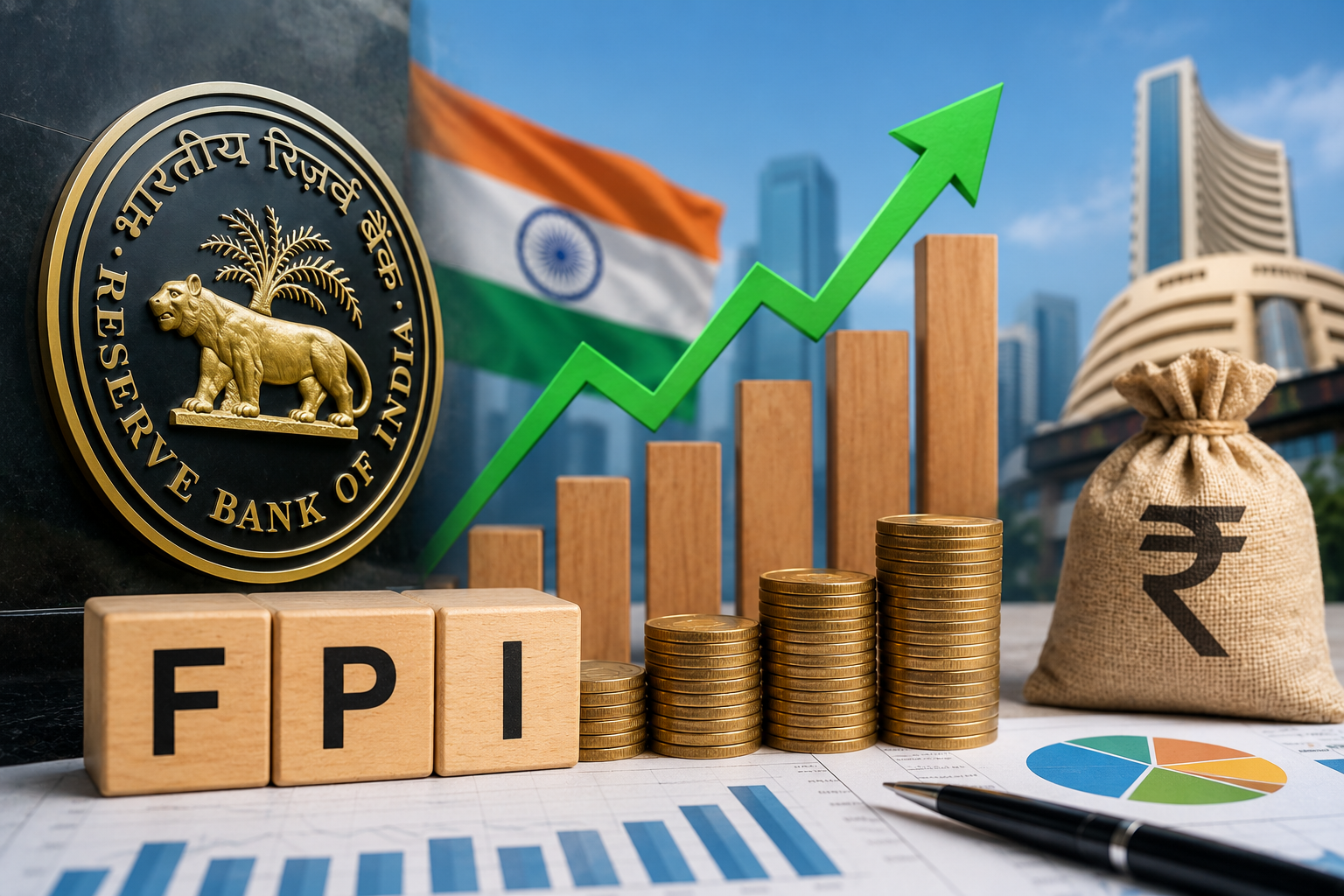
Reserve Bank Bulletin says foreign investment inflows reflect renewed confidence in India’s economy. Strong industrial activity, exports and FDI continue despite global uncertainties. Highlights The Reserve Bank of India (RBI) has said that the return of foreign investments in recent months reflects growing confidence in the Indian economy, even as the global economy continues to face geopolitical tensions and supply chain disruptions. In its July Bulletin, the RBI noted that India has remained one of the fastest-growing major economies in the world and continued to maintain strong economic momentum through June. The central bank said both industrial production and services sector activity remained robust, highlighting the resilience of domestic demand. According to the Bulletin, foreign portfolio investment (FPI) flows turned positive in June 2026 due to supportive policy measures and easing geopolitical tensions. Overseas investors infused USD 3.1 billion into Indian equity and debt markets during July (up to July 20), signalling renewed confidence in India’s growth prospects. Foreign direct investment (FDI) also remained healthy during April-May 2026. Japan, Singapore and Mauritius together accounted for around 74% of total equity inflows. Financial services, manufacturing, retail and wholesale trade, and computer services emerged as the biggest recipients of foreign investments. The RBI also highlighted that India’s external trade remained strong during the first quarter of FY27. It said the implementation of the India-UK Comprehensive Economic and Trade Agreement (CETA), along with progress on other bilateral trade agreements, is expected to further strengthen exports and imports. On inflation, the Bulletin noted that Consumer Price Index (CPI) inflation rose to 4.4% in June, the highest level in 18 months, mainly due to rising food and fuel prices. Prices of vegetables, edible oils, rice and wheat have also increased in July, although comfortable foodgrain stocks are expected to help contain inflationary pressures. The central bank, however, clarified that the views expressed in the Bulletin are those of the authors and do not necessarily represent the official position of the Reserve Bank of India.

Govt Pushes Higher Mango Pulp
Centre panel recommends 22–25% natural mango pulp in mango beverages.Proposal links 5% GST benefit to higher fruit content to support Totapuri farmers. Highlights The Centre is considering major changes to boost demand for Totapuri mangoes and improve farmers’ incomes. An expert committee has recommended making it mandatory for mango-based beverages to contain at least 22–25% natural mango pulp. It has also proposed that only beverages meeting this requirement should qualify for the concessional 5% GST rate. The recommendations were submitted to Agriculture Minister Shivraj Singh Chouhan by a committee headed by T. Damodaran, Director of ICAR-Central Institute of Subtropical Horticulture (CISH), Lucknow. The panel was formed after Totapuri mango prices fell sharply this season in Andhra Pradesh, Tamil Nadu and Karnataka, the country’s main producing states. According to the committee, delays in procurement by processing units, low fruit content in mango beverages and fluctuations in global prices have reduced demand for Totapuri pulp, hurting farmers. By increasing the mandatory pulp content, the government hopes to raise consumption of genuine mango pulp while also improving the nutritional quality of beverages. The Agriculture Ministry will now hold discussions with the FSSAI, GST Council and the Ministries of Finance, Food Processing, Health and Agriculture to finalise the proposed standards and tax structure. The panel has also recommended creating a Central Coordination and Price Stabilisation Committee. This body would estimate crop production, assess processing and export demand, and announce indicative procurement prices before each season, helping both farmers and processors plan better. To improve productivity, the committee suggested rejuvenating ageing Totapuri orchards in Andhra Pradesh through top-working, where existing trees are grafted with premium mango varieties such as Alphonso, Neelam, Himayat and Banganapalli. It also proposed expanding good agricultural practices, farmer training and demonstration projects. Other recommendations include mandatory procurement by registered processing units from May 15 every year, better coordination among farmers, FPOs and processors, and promotion of value-added products such as mango butter made from seed kernels. APEDA has also proposed expanding exports of Totapuri mangoes and processed products through cost-effective sea freight, while the government plans a coordinated strategy to strengthen India’s position in global mango markets. The Centre believes these measures will create a stronger, farmer-centric value chain and provide long-term income stability for Totapuri growers.