The Indian Sugar & Bio-energy Manufacturers Association has welcomed the new CAFE III fuel-efficiency norms, saying the framework provides an important regulatory push for ethanol-based mobility and India’s clean-energy transition.
New Delhi, Sep 30 — The Indian Sugar & Bio-energy Manufacturers Association (ISMA) has welcomed the government’s newly notified Corporate Average Fuel Economy (CAFE III) norms for M1 category vehicles, saying the framework could support the next phase of India’s ethanol journey.
The Power Ministry notified the CAFE III norms on Wednesday. ISMA said the framework strengthens the policy ecosystem for cleaner and more energy-secure mobility.
According to the industry body, the recognition of ethanol-based mobility through an 8% Carbon Neutrality Factor for E20-E30 vehicles and a 22.3% factor for Flex Fuel Ethanol Vehicles is an important step towards encouraging greater fuel and technology choice.
The norms also provide Volume Derogation Factors of 1.1 for Flex Fuel Vehicles and 2.5 for flex-fuel hybrids.
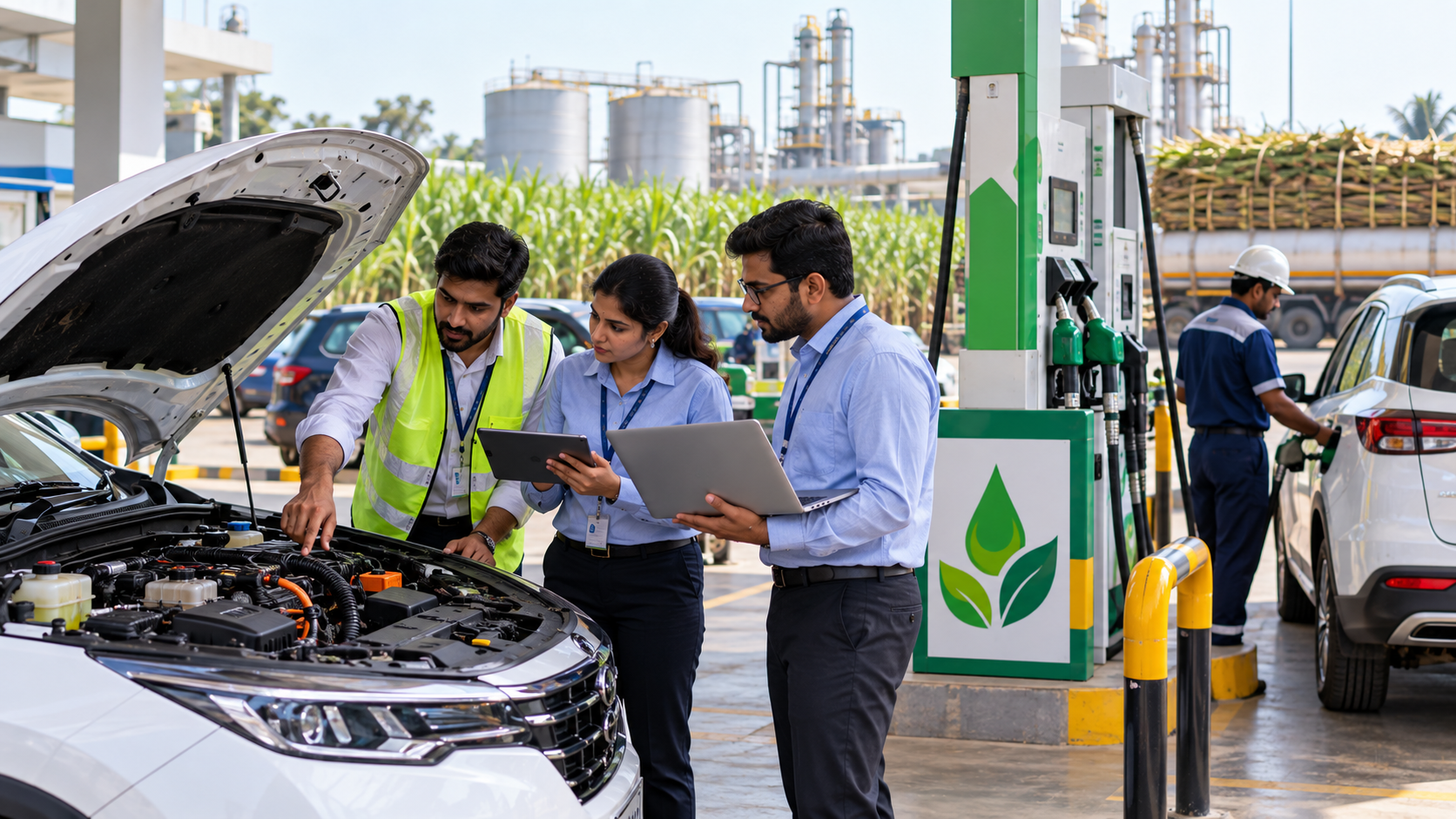
ISMA said that with E20 already achieved, E85 infrastructure being rolled out and commercially available flex-fuel vehicles entering the market, the CAFE III framework could create additional opportunities for utilising India’s growing ethanol production capacity.
The industry body said greater use of ethanol-based mobility could help reduce dependence on fossil fuels, improve energy security and support India’s shift towards a more self-reliant and lower-carbon transport sector.
The notification defines a Flex Fuel Ethanol Vehicle as one capable of operating on petrol-ethanol blends containing up to 85% ethanol, or E85, as well as 100% ethanol, or E100.
ISMA said recognition of ethanol’s carbon benefits within vehicle-efficiency regulations complements India’s broader push towards flex-fuel vehicles and flex-fuel hybrid technologies.
The association also said continued policy recognition of ethanol could support further investment across the ethanol value chain while strengthening India’s domestic biofuel ecosystem.