Key Highlights
- Delhi’s first E85 fuel dispensing station has been inaugurated on Pusa Road.
- The outlet was inaugurated by Petroleum and Natural Gas Minister Hardeep Singh Puri.
- E85 fuel has been priced at Rs 82.12 per litre in Delhi.
- E85 is approximately Rs 20 cheaper per litre than regular E20 petrol.
- The government plans to establish 50-100 E85 dispensing stations across major cities in the near term.
- Around 500 E85 stations are expected to be operational by the end of 2026.
- The nationwide network is projected to expand to 5,000 E85 pumps by the end of 2027.
Delhi Launches First E85 Fuel Station, Boosting India’s Ethanol Fuel Adoption Drive
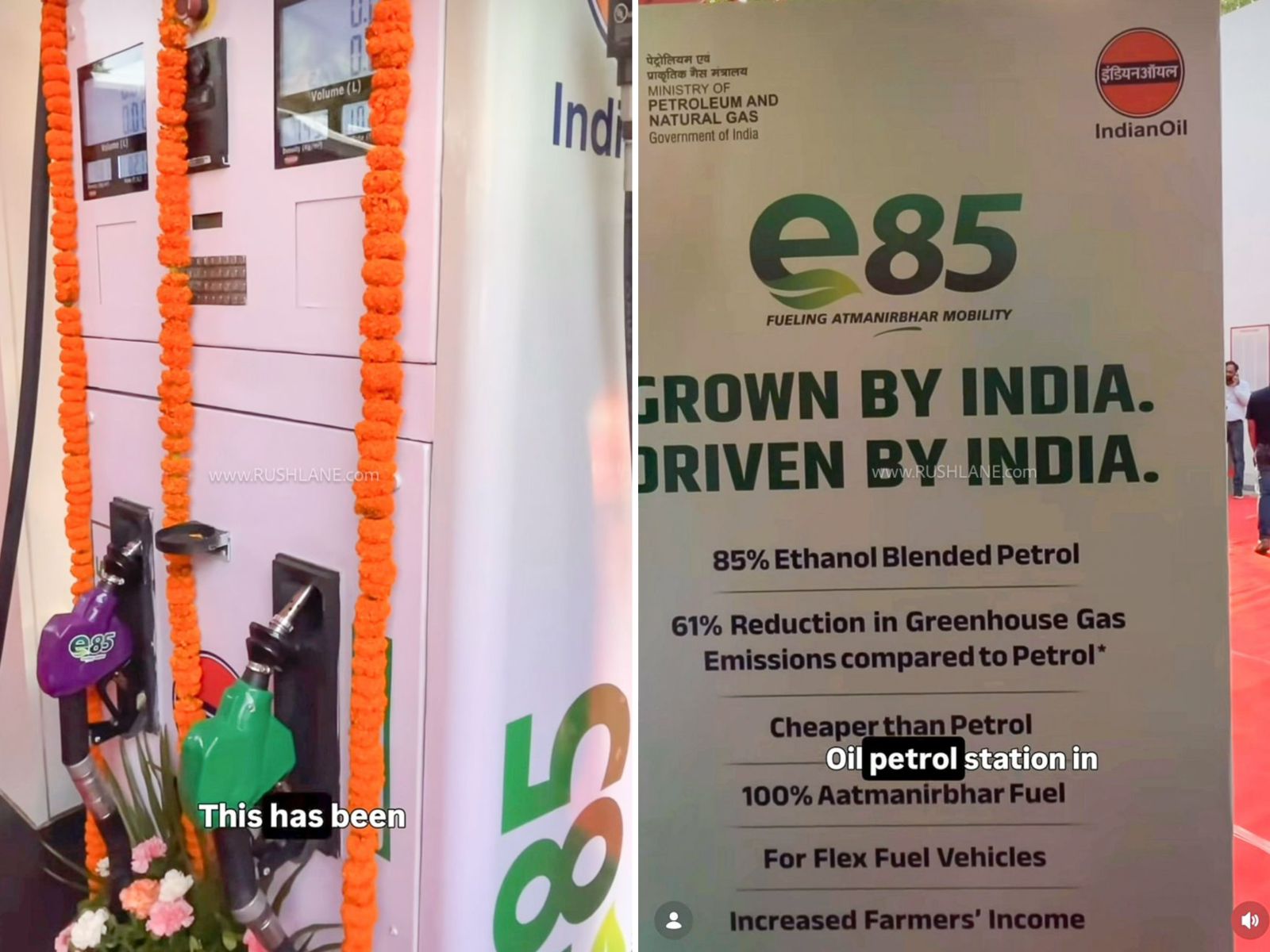
New Delhi: India has taken another significant step toward cleaner and more sustainable transportation with the launch of its first E85 fuel dispensing station in the national capital. The new facility, located at an Indian Oil fuel station on Pusa Road, was inaugurated by Union Petroleum and Natural Gas Minister Hardeep Singh Puri, marking the beginning of a broader rollout of high-ethanol fuel infrastructure across the country.
The introduction of E85 fuel is part of the government’s larger strategy to reduce dependence on imported crude oil, promote domestic biofuel production, lower carbon emissions, and provide consumers with more affordable fuel options.
E85 fuel contains up to 85% ethanol and 15% petrol, making it one of the highest ethanol-blended fuels currently being introduced for road vehicles in India. The fuel is specifically designed for flex-fuel vehicles that can operate on varying ethanol-petrol blends.
Competitive Pricing Expected to Attract Consumers
The newly launched E85 fuel has been priced at Rs 82.12 per litre in Delhi, making it substantially cheaper than conventional E20 petrol. According to officials, the price difference is approximately Rs 20 per litre, which could offer significant savings for vehicle owners using compatible flex-fuel models.
To help consumers identify the new fuel, E85 dispensers feature distinctive purple-colored nozzles and prominent E85 branding. The dedicated dispensing infrastructure is intended to ensure easy identification and prevent accidental fueling in incompatible vehicles.
Massive Expansion Plan Underway
The government has outlined ambitious plans to rapidly expand E85 fuel availability across major urban centers. In the initial phase, authorities aim to establish between 50 and 100 E85 dispensing stations across Delhi-NCR, Mumbai, Pune, and Nagpur.
The rollout is expected to accelerate further over the coming months. Officials have indicated that approximately 500 E85 fuel stations could become operational nationwide by the end of the year. Looking ahead, the government is targeting a network of around 5,000 E85 dispensing stations by the end of 2027.
The expansion aligns with India’s broader ethanol blending roadmap, which seeks to increase the use of domestically produced biofuels in the transportation sector while supporting farmers and the sugar industry through increased ethanol production.
Vehicle Compatibility Remains a Key Challenge
Despite the growing infrastructure push, one of the major challenges facing E85 adoption is the limited availability of compatible vehicles in the Indian market.
Currently, most vehicles sold in India are certified for E20 fuel, which contains up to 20% ethanol. Vehicles capable of running on E85 require specialized flex-fuel engines and fuel system components designed to handle higher ethanol concentrations.
Automakers have begun responding to the government’s ethanol mobility initiatives. Maruti Suzuki recently showcased the Wagon R Flex Fuel, widely regarded as India’s first E85-compliant passenger car prototype. In the two-wheeler segment, Hero MotoCorp has already introduced flex-fuel versions of the Splendor+ and HF Deluxe, aimed at supporting the transition toward higher ethanol blends.
Industry experts believe that wider adoption of E85 fuel will depend on both the expansion of fueling infrastructure and the availability of affordable flex-fuel vehicles. As manufacturers increase investment in ethanol-compatible technologies, the government expects consumer adoption to gain momentum over the next few years.
Supporting India’s Energy Security Goals
The launch of the first E85 station reflects India’s ongoing efforts to diversify its energy sources and reduce vulnerability to fluctuations in global crude oil prices. By encouraging greater use of ethanol produced from agricultural feedstocks such as sugarcane and grains, policymakers aim to strengthen energy security while creating new opportunities for the agricultural sector.
With fuel infrastructure now beginning to take shape and automakers introducing flex-fuel products, E85 is expected to become an increasingly important component of India’s clean mobility and alternative fuel strategy in the years ahead.