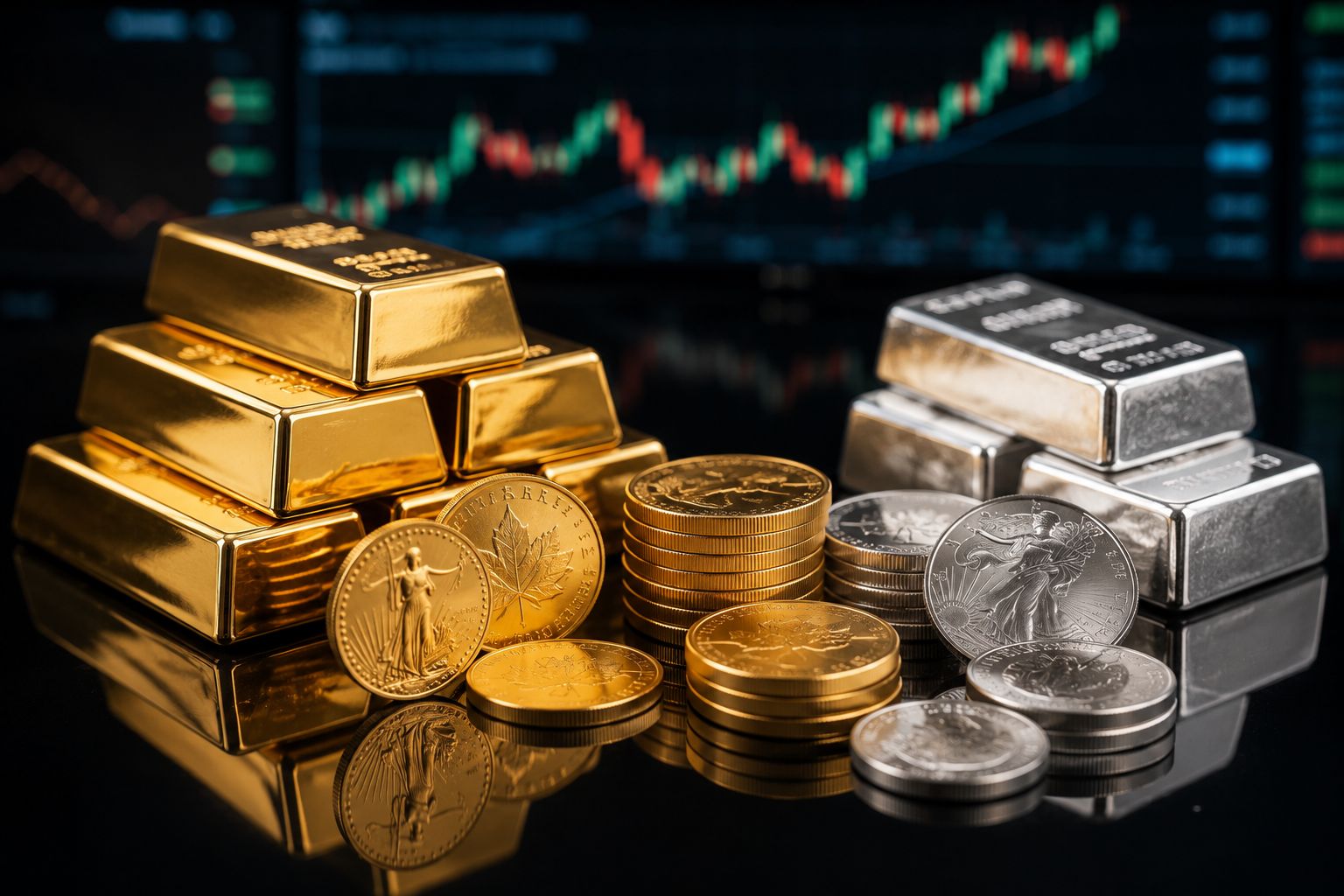
Bullion prices remain under pressure as easing geopolitical tensions, stronger US dollar and Fed policy expectations weigh on gold, while silver continues to find support from industrial demand.
Key Highlights
- Gold prices remain under pressure amid easing geopolitical tensions.
- Stronger US dollar continues to limit gains in bullion prices.
- Investors closely watching the US Federal Reserve’s interest rate outlook.
- Silver remains relatively resilient due to strong industrial demand.
- Safe-haven demand for gold weakens as global tensions ease.
- Analysts expect bullion prices to remain volatile in the near term.
- Inflation and central bank policies remain key market drivers.
- Long-term outlook for precious metals continues to remain positive.
New Delhi: Gold and silver prices are witnessing mixed trends in the global bullion market as investors assess easing geopolitical tensions, expectations around US Federal Reserve policy decisions and the movement of the US dollar. While gold continues to face selling pressure, silver has shown comparatively better resilience, supported by strong industrial demand.
Market analysts believe that the recent decline in geopolitical risks has reduced the demand for gold as a traditional safe-haven asset. Investors are increasingly shifting their focus towards economic indicators and the likely direction of interest rates in the United States.
A stronger US dollar has also weighed on bullion prices. Since gold is priced in dollars, an appreciating US currency generally makes the precious metal more expensive for international buyers, reducing demand and limiting upward price movement.
Silver, however, continues to receive support from industrial consumption. Apart from being a precious metal, silver is widely used in sectors such as electronics, solar energy, electric vehicles and advanced manufacturing. Growing industrial demand has helped silver outperform gold during periods of market uncertainty.
Experts say investors are closely monitoring upcoming economic data, inflation trends and comments from Federal Reserve officials for further signals on future interest rate decisions. Any indication of monetary policy easing could improve sentiment in the bullion market.
Despite the short-term volatility, analysts believe that precious metals remain an important part of diversified investment portfolios. Global economic uncertainty, inflation risks and central bank buying continue to provide long-term support for both gold and silver prices.
Market participants expect bullion prices to remain range-bound in the near term, with movements largely influenced by global macroeconomic developments, currency trends and geopolitical events.