Key Highlights
- GitHub Copilot switches to a usage-based AI credit system from June 1.
- Copilot Pro users receive $10 in monthly AI credits.
- Copilot Pro+ subscribers receive $39 in monthly credits.
- Pricing will now depend on token consumption instead of fixed usage.
- Developers have expressed strong criticism across Reddit and X.
- Many users are considering alternatives such as Cursor, Codex and DeepSeek.
- Microsoft says the change is necessary for long-term sustainability.
- Rising AI infrastructure and compute costs are driving pricing changes.
- Google recently introduced a similar credits-based model for Gemini.
- Pricing transparency is becoming a major issue across the AI industry.
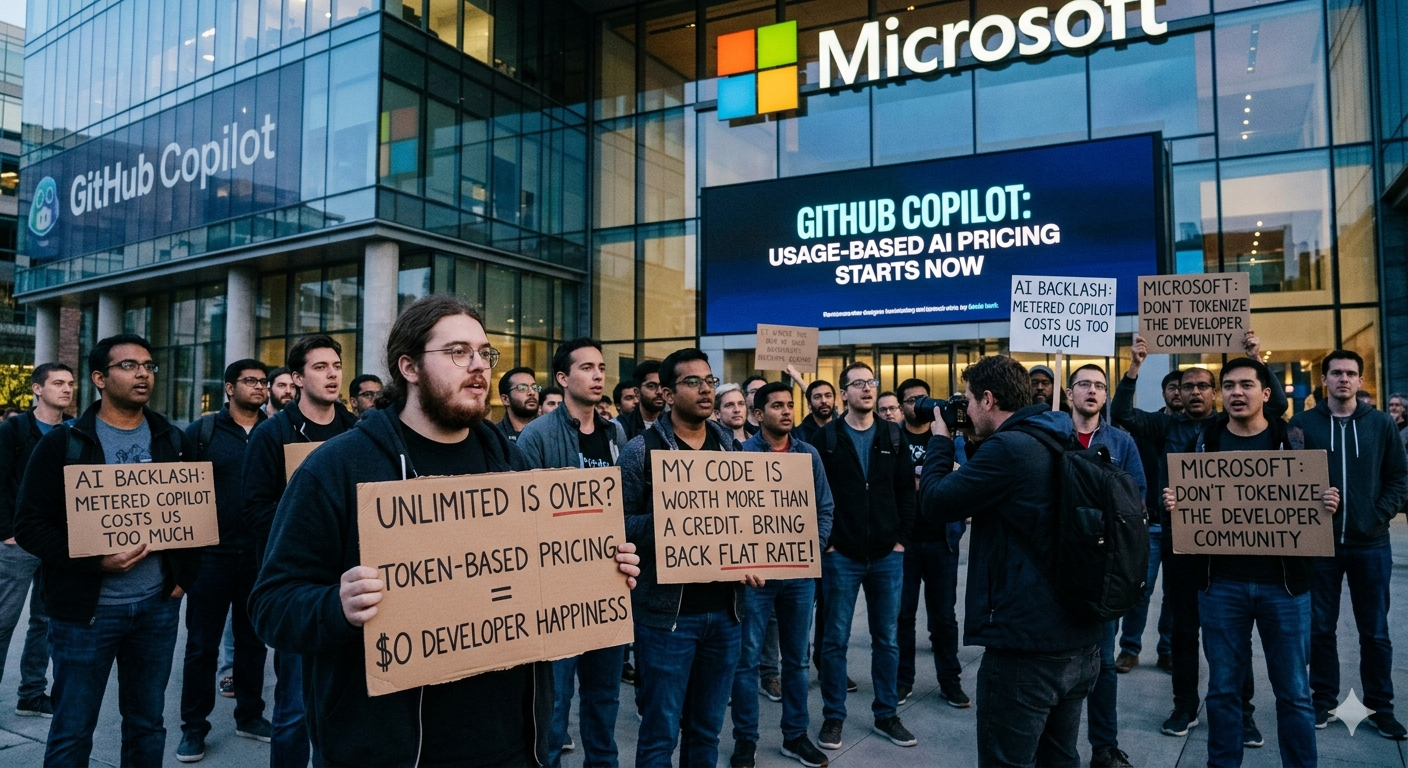
Microsoft is facing growing criticism from developers after announcing a major change to the pricing structure of GitHub Copilot, which will transition from a flat-rate subscription model to a usage-based AI credits system starting June 1, 2026. The move has sparked concerns among programmers who fear higher costs and reduced value compared to competing AI coding tools.
Under the new pricing framework, Copilot Pro subscribers will receive $10 worth of monthly AI credits, while Copilot Pro+ users will be allocated $39 in monthly credits. Instead of unlimited usage under a fixed monthly fee, developers will now consume credits based on token usage when interacting with AI models. Microsoft says the new structure better reflects actual usage patterns and is necessary to maintain a sustainable and reliable AI service as demand and computing costs continue to increase.
The announcement has triggered widespread criticism across developer communities, particularly on Reddit and X. Many users have expressed frustration over the shift away from predictable pricing, with some announcing plans to migrate to alternative coding assistants such as Cursor, Codex, Claude Code, DeepSeek, and OpenCode. Several developers argue that usage-based billing could significantly increase costs for heavy users who rely on AI tools throughout the development process.
Industry observers note that the change reflects a broader trend across the AI sector as companies seek to reduce the heavy subsidies that have fueled rapid adoption over the past few years. Rising infrastructure and compute expenses are forcing technology firms to rethink pricing models and align costs more closely with actual resource consumption. Some users believe the transition marks the beginning of a wider shift toward paid AI consumption rather than heavily subsidized access.
Microsoft is not alone in making such changes. Recently, Google also revised pricing and usage policies for its Gemini AI offerings by replacing daily prompt limits with a credits-based system. Similar to Copilot’s announcement, Google’s changes drew criticism from users who argued that the company had not clearly communicated the new usage limits. As AI adoption continues to expand, pricing transparency and affordability are emerging as major concerns for developers and businesses alike.