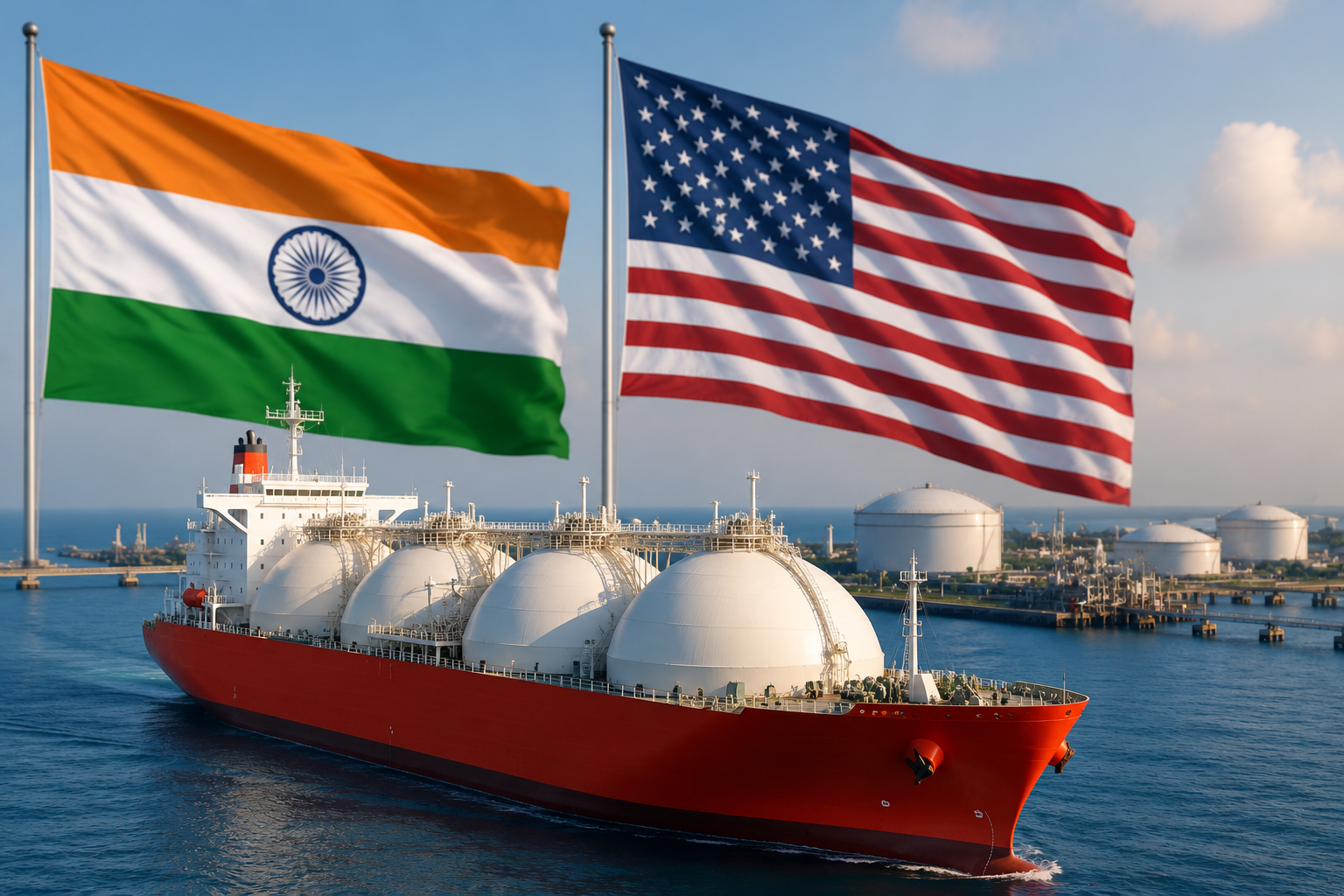
India had initially planned to source around 10% of its LPG requirement from the United States.
That share has now surged to about 67%, marking a major shift in India’s energy import basket.
Highlights
- US now accounts for around 67% of India’s LPG imports.
- India had initially planned to source only about 10% of its LPG requirement from the US.
- Petroleum Minister Hardeep Singh Puri highlighted the sharp change in sourcing.
- The initial US sourcing decision was not linked to Strait of Hormuz concerns.
- LPG is a crucial household cooking fuel, making stable supplies important for India.
- Diversifying import sources can help reduce dependence on any single region.
The United States has emerged as the biggest supplier of liquefied petroleum gas (LPG) to India, accounting for around 67% of the country’s LPG imports, Union Petroleum and Natural Gas Minister Hardeep Singh Puri has said.
The development represents a major change in India’s LPG sourcing strategy within a relatively short period. India had initially planned to source only around 10% of its LPG requirement from the United States.
Puri said the original decision to increase LPG purchases from the US was taken independently and was not linked to concerns surrounding developments in the Strait of Hormuz, an important route for global energy supplies.
At the time, questions were raised over the need to buy LPG from the US when India had access to suppliers located geographically closer. However, the country’s import pattern has since changed significantly.
“Today I’m happy to inform you that the United States accounts for something like 67% of our LPG imports,” Puri said.
The sharp increase means the US has become a dominant source in India’s LPG import basket. India continues to source crude oil and other energy products from several countries as it seeks to maintain adequate supplies while managing risks arising from changing geopolitical and global market conditions.
LPG remains particularly important for India because it is widely used as cooking fuel by households across urban and rural areas. Maintaining uninterrupted availability is therefore an important part of the country’s broader energy-security strategy.
Diversification of energy suppliers can help a large importing country reduce its exposure to disruptions in any particular region. India’s move to increase LPG purchases from the US also highlights how global trade flows can shift quickly in response to changing market conditions and supply considerations.
The development comes as India continues to balance energy affordability, supply security and diversification. With the US now accounting for about two-thirds of LPG imports, India’s sourcing pattern has undergone a significant transformation from the initial plan to import only a relatively small share of its LPG requirement from the American market.
Puri’s comments underline the government’s focus on securing stable energy supplies while adapting India’s import strategy to developments in international energy markets.