Company targets India’s nuclear expansion
Key Highlights
- DEE Development Engineers plans to enter India’s nuclear power segment.
- The company is exploring a joint venture with a global entity.
- The partnership would focus on nuclear piping fabrication solutions.
- The proposed project could require initial investment of over ₹100 crore.
- DEE aims to support India’s 100 GW nuclear capacity target by 2047.
- The company targets revenue of more than ₹2,500 crore by 2030.
New Delhi, September 1, 2026: DEE Development Engineers Ltd is planning to enter India’s nuclear power sector and is exploring a joint venture with a global partner for specialised piping fabrication solutions.
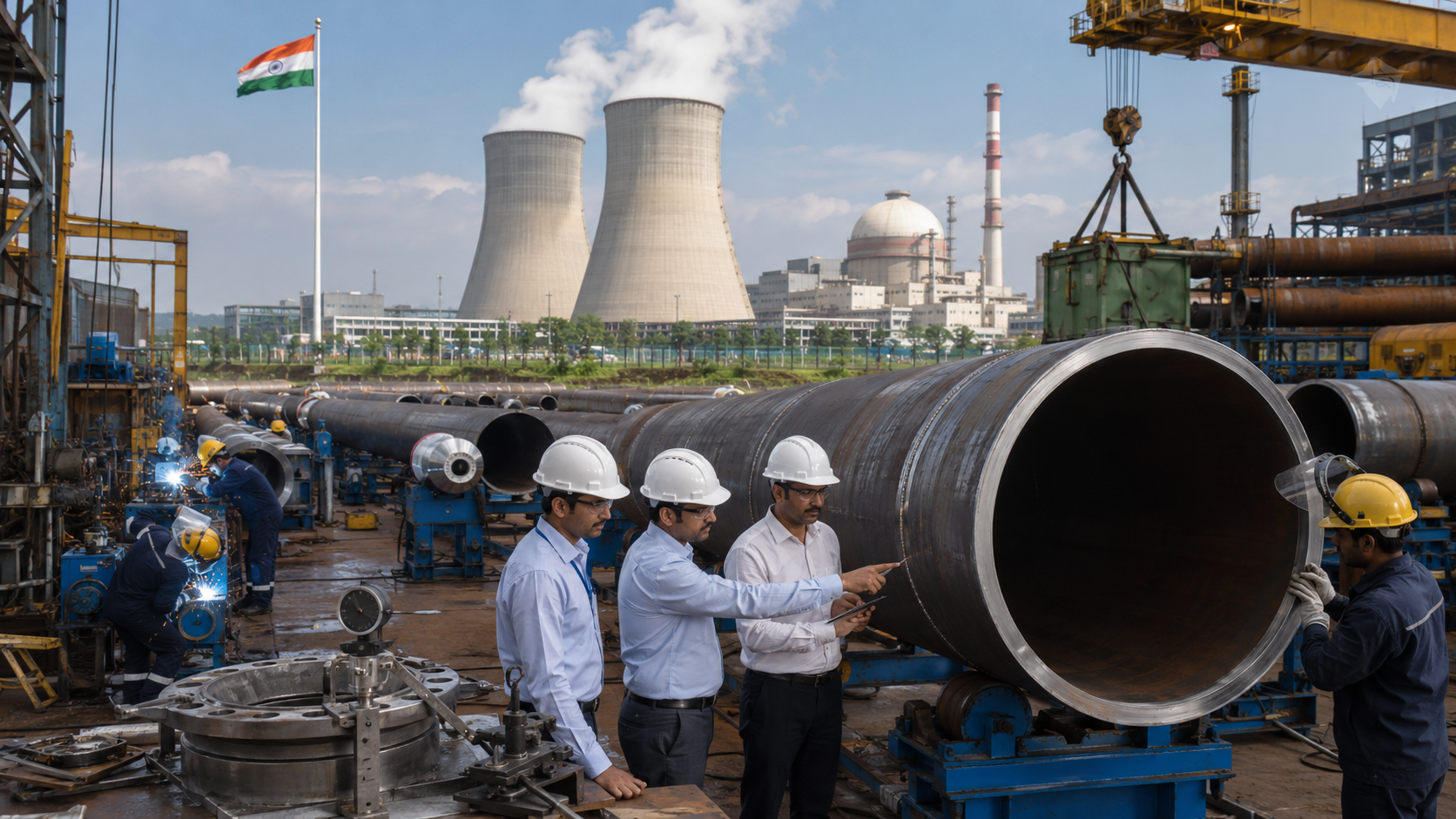
The BSE-listed company aims to support India’s plans to develop 100 GW of nuclear power capacity by 2047 by supplying piping fabrication solutions for upcoming nuclear projects.
Chairman and Managing Director K L Bansal said the company is in initial discussions with a global entity regarding the possibility of forming a joint venture.
The proposed partnership would focus on developing the technological and regulatory capabilities required for nuclear piping fabrication.
The company expects the joint venture to be finalised by the end of the year.
According to Bansal, such a project would require an initial capital expenditure of more than ₹100 crore.
The initiative could help reduce India’s dependence on imports for nuclear piping fabrication, which is an important component in nuclear power plant construction and maintenance.
DEE Development Engineers has also commissioned a heavy-wall seamless pipe manufacturing facility at Anjar in Gujarat.
The facility, developed with an investment of more than ₹100 crore, has an annual capacity of 7,000 tonnes and is intended to meet domestic requirements for specialised high-strength pipes used in major power projects.
The company recently expanded into the data centre segment after securing its first order for core piping from a private entity.
DEE currently has an order book of around ₹2,500 crore, with approximately 60 per cent of orders coming from power sector companies and 35 per cent from oil and gas companies.
The company aims to increase its topline to more than ₹2,500 crore by 2030 from ₹1,200 crore in FY26.