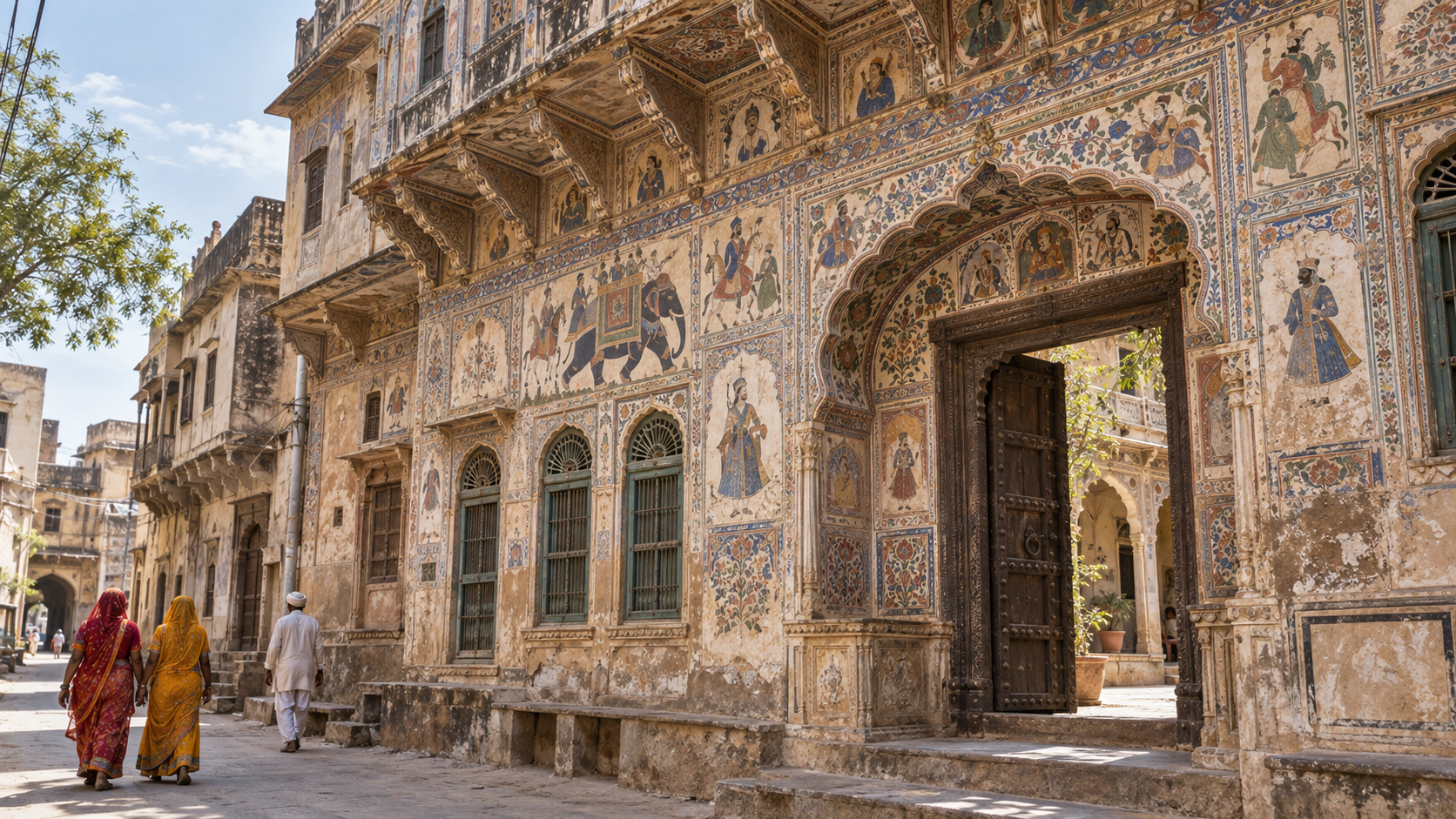
Historic havelis across 14 Rajasthan towns enter UNESCO’s Tentative List, taking the Shekhawati region a step closer to potential World Heritage status
Jaipur, September 5, 2026: Rajasthan’s historic Shekhawati havelis have gained international recognition with their inclusion in UNESCO’s Tentative List, marking a significant step towards securing potential World Heritage status for the region’s distinctive architectural and artistic legacy.
The nomination covers historic havelis and heritage properties spread across 14 locations — Alsisar, Bissau, Chirawa, Churu, Dundlod, Fatehpur, Jhunjhunu, Khetri, Laxmangarh, Mandawa, Mahansar, Nawalgarh, Ramgarh and Sikar.
Rajasthan Deputy Chief Minister Diya Kumari described the development as an important achievement for the state’s heritage conservation efforts. She said the recognition would strengthen initiatives to preserve Shekhawati’s architectural legacy while helping present the region to a wider international audience.
Rajasthan’s Open-Air Art Gallery
Located in northeastern Rajasthan, Shekhawati is particularly known for its elaborate havelis featuring richly painted façades, courtyards, gateways and interiors. The buildings form one of the region’s most distinctive cultural landscapes and document the wealth, artistic patronage and social history associated with Shekhawati’s historic merchant communities.
The frescoes cover an unusually broad range of subjects. Alongside religious and mythological imagery, the murals feature portraits, everyday activities, animals, plants and traditional decorative motifs.
Some paintings also depict technological and cultural changes that reached the region during the 19th and early 20th centuries, creating a visual record of how local artistic traditions interacted with changing lifestyles and outside influences.
The large concentration of painted mansions across multiple towns has made Shekhawati an important destination for travellers interested in architecture, history and cultural tourism.
Next Step Towards World Heritage Status
Inclusion on UNESCO’s Tentative List does not itself grant World Heritage status. Instead, it places a property among the sites that a country may consider for future nomination to the UNESCO World Heritage List.
The development is expected to provide fresh momentum for documentation, conservation, restoration and sustainable management of the historic properties across Shekhawati.
It could also strengthen the region’s tourism potential. While Rajasthan already attracts international visitors to destinations such as Jaipur, Udaipur and Jodhpur, greater global recognition could help position Shekhawati as another major heritage circuit.
Its combination of historic towns, traditional streetscapes, fresco-covered mansions and living cultural traditions offers opportunities for more immersive tourism while potentially supporting local businesses, guides, craftspeople and communities.
The challenge will be to ensure that increased tourism and international attention are accompanied by effective conservation. Protecting ageing structures and fragile frescoes while maintaining the character of historic towns will remain central as Rajasthan moves towards a possible future World Heritage nomination.